NASA astronauts Anil Menon and Canadian Space Agency astronaut Joshua Kutryk have completed US spacewalk 100 outside the International Space Station, installing and deploying the seventh International Space Station Roll-Out Solar Array (IROSA) on the station’s 2A power channel.
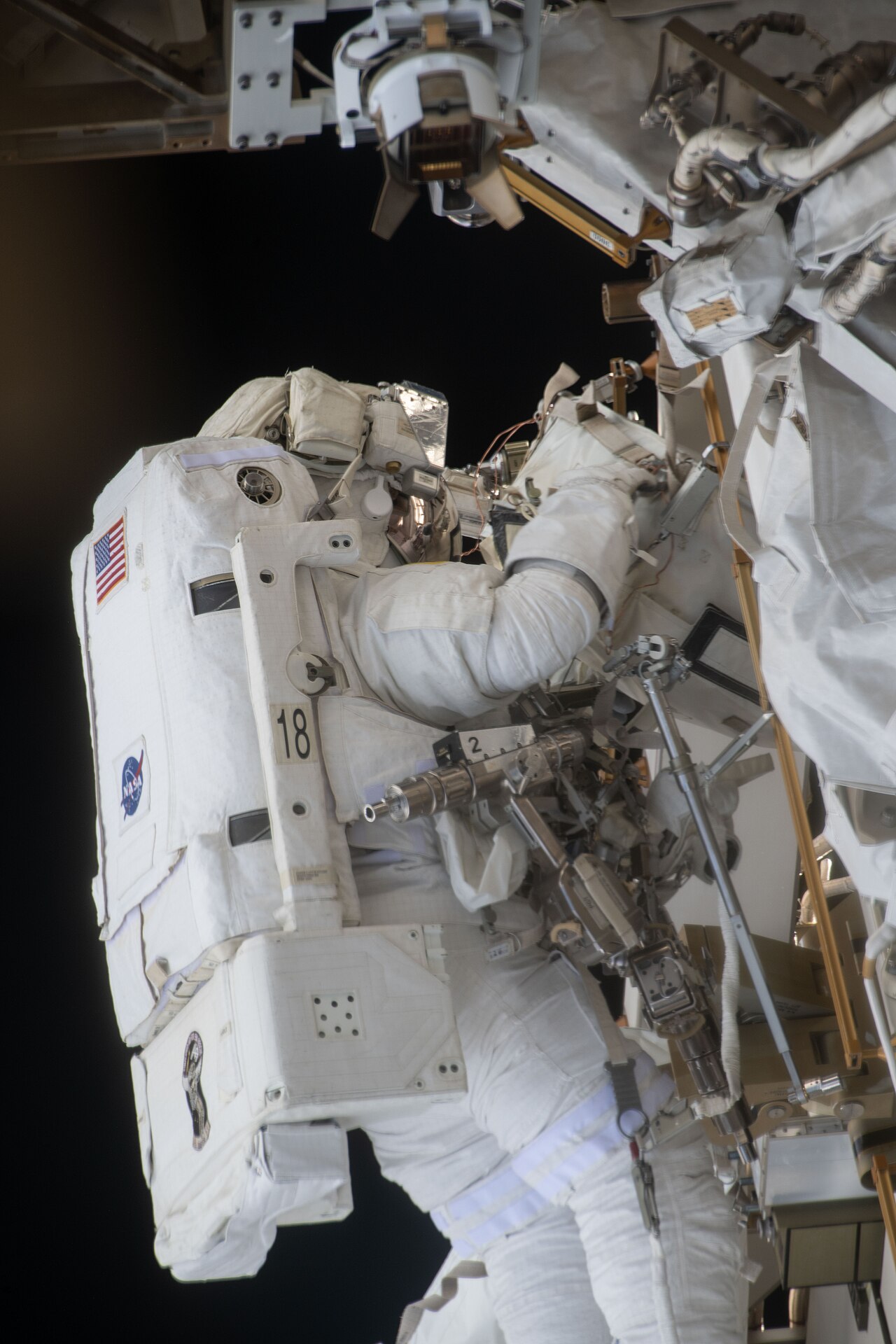
NASA said in its space station blog that the spacewalk concluded at 3:08 p.m. EDT on October 29, 2026, after 7 hours and 11 minutes outside the station. Menon served as spacewalk crew member 1, wearing a suit with red stripes, while Kutryk served as crew member 2 in an unmarked suit. The excursion was Menon’s fourth spacewalk and Kutryk’s first, and the 285th spacewalk supporting station assembly, maintenance and upgrades.
The pair exited the station’s Quest airlock at about 8 a.m. EDT. NASA astronauts Jessica Watkins and Luke Delaney supported the outing from inside the station, including operations of the Canadarm2 robotic arm, which helped move the rolled-up array to its installation site.
Why the new arrays matter
IROSA panels are compact, flexible solar arrays that unroll in orbit and mount in front of the station’s original solar wings, which have degraded after more than two decades in space. The seventh array adds generating capacity for critical station operations, including the station’s planned safe and controlled deorbit after it is retired in 2030.
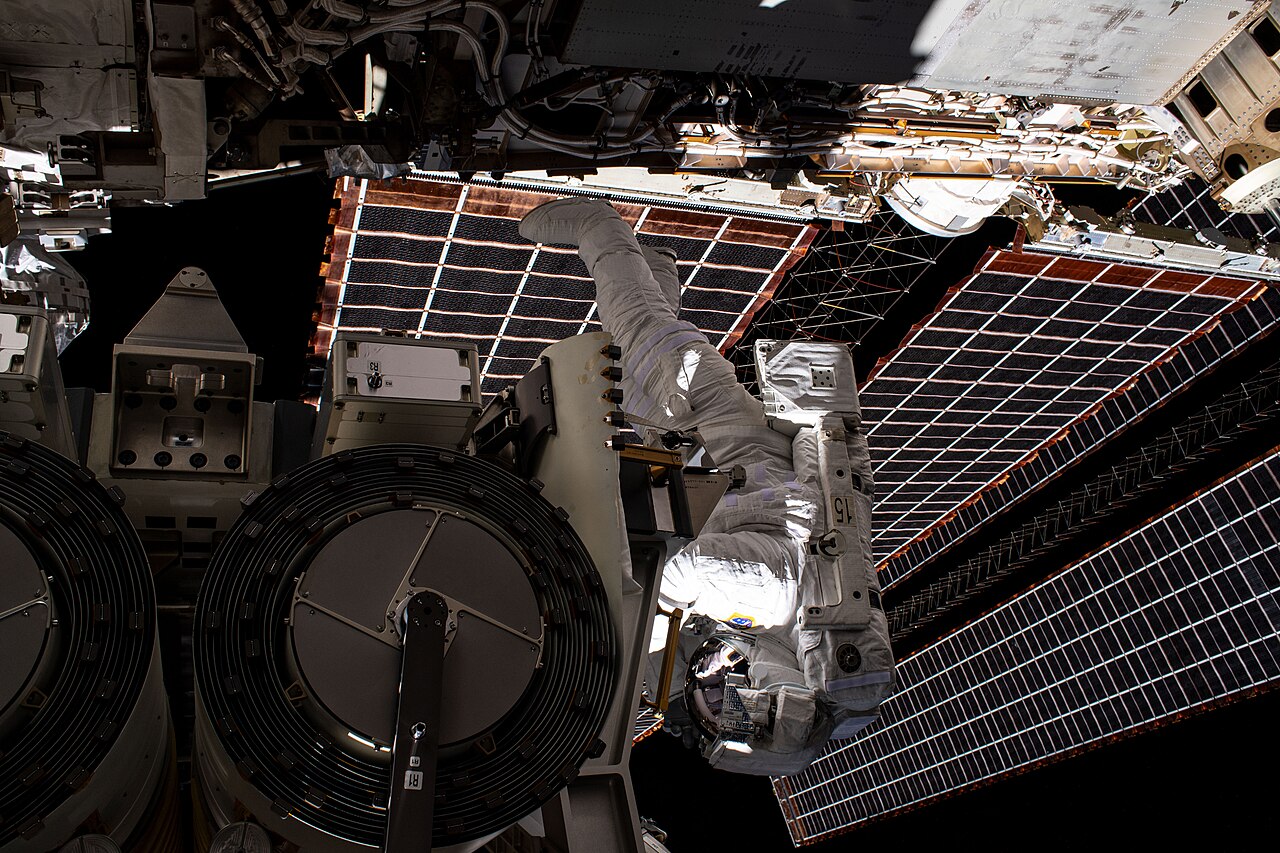
Once all eight arrays are installed, NASA says available power will rise by up to 30 percent, from 160 kilowatts to approximately 215 kilowatts. The upgrade, which began in 2021, will then be complete, giving the ageing orbital laboratory the power it needs for its final years of operation.
What happens next
Menon and Kutryk are scheduled to venture out again on Thursday, November 5, to install the eighth and final IROSA on the 3B power channel. NASA will provide live coverage beginning at 6:45 a.m. that day. After that outing, the station’s power-system augmentation will be fully installed.
FAQs
What is an IROSA? An International Space Station Roll-Out Solar Array: a thin, flexible panel that unrolls in orbit and is mounted in front of an existing station solar wing to boost its output.
Why does the ISS need new solar arrays? Its original wings have lost generating capacity over more than twenty years in orbit, so the roll-out arrays restore power for station operations and for the planned controlled deorbit.
What happens on November 5? Menon and Kutryk are scheduled to install the eighth and final IROSA on the 3B power channel, completing the power upgrade.
Sources
- NASA, “Spacewalkers Install Roll-Out Solar Array for Power Generation,” October 29, 2026 — nasa.gov
- NASA, “Astronauts Suit Up to Prepare for Power Upgrade Spacewalk,” October 29, 2026 — nasa.gov
- Spaceflight Now, “NASA nears end of space station solar array upgrade with Oct. 29 and Nov. 5 spacewalks” — spaceflightnow.com
- USA Today, “2 astronauts prep for landmark spacewalk at ISS” — usatoday.com
Related
- NASA’s Simulated Mars Crew Marks One Year Inside a Habitat — With 13 Days Still to Go
- Elon Musk Pledges a SpaceX Share to Every Child in America
- US Threatens EU With “Devastating” Retaliation Over Starlink Spectrum Restrictions