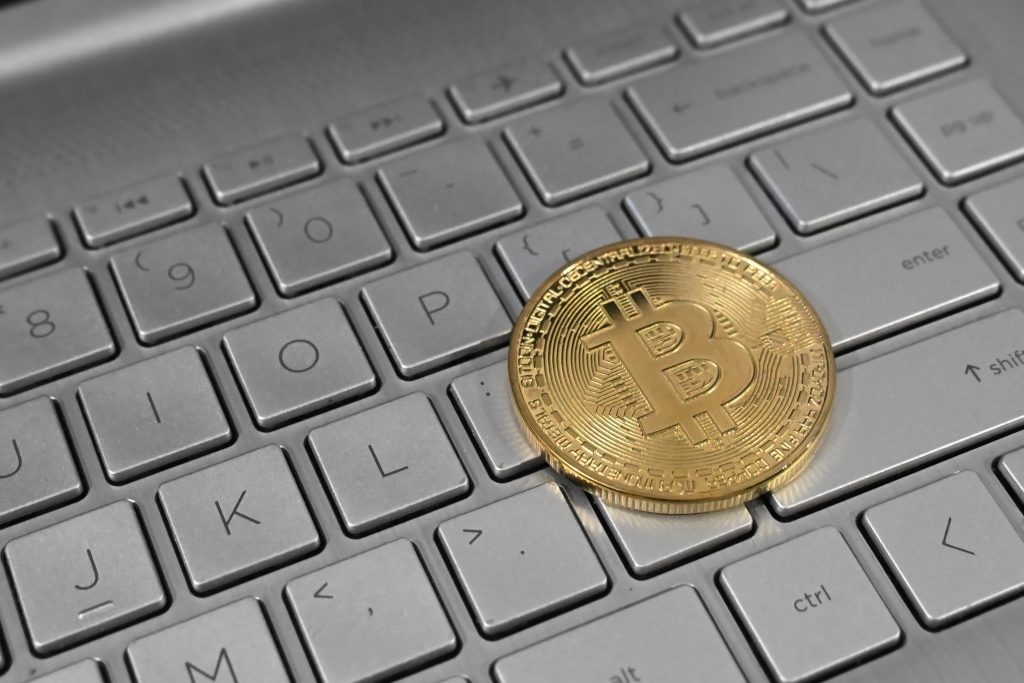
Summary: The Binance hack on 29 October 2026 affected $6.3 billion in digital assets, according to Binance, making it the largest crypto hack on record if that figure holds. Binance has paused withdrawals until its environment is confirmed secure and says it will cover all losses, while about half of the affected assets had been frozen at the time of reporting. Last updated: 30 October 2026. Figures in this developing story are still being updated, so treat early totals as attributed estimates, not final audited losses.
What happened in the Binance hack?
Binance, the world’s biggest cryptocurrency exchange, said on Thursday, 29 October 2026, that $6.3 billion (£4.7 billion) of digital assets had been impacted by a security incident on Binance.com. The BBC reported that several crypto industry observers had flagged concerns about a potential Binance hack hours before the exchange confirmed the issue, and that the incident eclipses the record-setting $1.5 billion hack on the Bybit exchange in 2025.
Binance said its initial investigation suggested the attack started with a compromised engineer’s laptop. Binance co-CEO Richard Teng said that access led to a service container, where the attacker submitted unauthorized withdrawal transactions. He stressed that the attacker did not simply use one engineer’s permissions and that this was not a single ‘one-click’ action, adding that the investigation had found no evidence so far of a wallet private key leak. Binance later said a subsequent investigation had uncovered additional points of breach, and that a detailed post-mortem would be shared once the investigation was complete.
Binance, founded in China in 2017, is estimated to have more than 300 million registered users worldwide, and the company said in 2024 that it had more than $160 billion in assets under its custody. The incident concerns Binance.com; Binance.US, the much smaller platform for American residents, said its platform was not affected.
How much was stolen in the Binance hack?
The answer depends on which figure you mean — and on when it was measured — so the numbers below are attributed to their sources rather than presented as one settled total.
Binance said $6.3 billion of digital assets had been impacted. That is the figure used in the headline of this article, because it is the exchange’s own reported total for assets affected. Binance also said about half of those assets had been frozen, but that many remained in the hands of the hackers.
Arkham Intelligence, which tracks crypto flows, estimated that digital assets worth more than $5.8 billion had been taken from Binance, according to Sky News reporting of Arkham’s data. Arkham-linked data also put hacker-linked addresses at about $5.88 billion in assets and reported about $2.54 billion frozen. The difference between the $6.3 billion and $5.8 billion figures is not a contradiction on its own: impacted assets, assets actually taken, assets frozen, and crypto prices at different times can all produce different totals.
Separately, the BBC reported that Tether and Circle said they had frozen a total of about $2.4 billion of assets in response to the potential Binance hack, and that World Liberty Financial said it had worked with partners to freeze stolen funds. Coinbase said it was unaffected by the incident and was monitoring the situation.

How did the Binance hack happen?
On the evidence Binance has shared so far, the attack was more complex than a single compromised password. Binance said an engineer’s laptop was initially compromised, giving an attacker access to a service container used to submit unauthorized withdrawals, and that later work found other breach points. The company said it was still gathering facts and would share more directly as it had them.
Attribution is also still being treated as an assessment, not a confirmed fact from Binance itself. Two analytics firms attributed the incident to a North Korean hacking unit called TraderTraitor, also known in the industry as Lazarus Group, according to the BBC. Chainalysis said it had ‘high confidence’ that the North Korean group was linked to the hack, and TRM Labs said several elements resembled earlier North Korean-linked incidents, including the Bybit hack. Binance did not directly respond to BBC questions about potential links to North Korea, but said it was working closely with law enforcement partners to confirm the identity of the criminals and bring them to justice. Western security agencies have previously said stolen funds are used to finance North Korea’s nuclear weapons and missile programmes, a claim the regime has denied in the past in relation to hacks.
Cyber-security firm Check Point said the attack also resembled a September hack on crypto exchange Bitget in which $388 million was lost, and argued that attackers increasingly target the systems and people with authority to use them, rather than only vault keys.
Is Binance safe after the hack?
That is the question many users are asking after searching ‘is Binance safe after the hack’, and the honest answer is that safety cannot be fully judged until Binance completes its investigation and restores services. What is verified is narrower: Binance said withdrawals are currently disabled until the environment is confirmed to be secure, and that it will ‘cover all losses’. Co-CEO Yi He thanked cryptocurrency issuers for freezing assets and wrote, ‘Safety first: withdrawals are currently disabled until the environment is confirmed to be secure.’
Users should therefore not assume that normal service has resumed just because a price chart is moving again, and should rely on Binance’s official status updates rather than social media claims about recovery, refunds or new withdrawal links. Any message asking you to connect a wallet to ‘recover’ hacked funds should be treated as a likely scam.
Are Binance deposits and withdrawals suspended?
Binance’s verified statement quoted by the BBC was that withdrawals are currently disabled until the environment is confirmed to be secure. That is why this article uses ‘withdrawals paused’ in its title rather than claiming a complete, permanent shutdown of every service. Some reporting on 29 October described a broader pause affecting deposits as well, so if you are asking about ‘Binance deposits suspended’, check Binance’s live status page and your own account notice before attempting a deposit or withdrawal, because the position may change as the investigation progresses.
What was the market reaction to the Binance hack?
Bitcoin dropped by more than 4% following the alerts about a potential Binance hack, according to the BBC, and the prices of other major cryptocurrencies including Ethereum and Solana also fell sharply. That kind of sharp, news-driven fall is common after a major exchange incident, because traders reassess counterparty risk and liquidity at the same time, but a single day’s move does not by itself prove a lasting trend. For wider market context, see Emadan’s report on Asian markets sliding as the Nikkei and Kospi fell ahead of the Bank of Japan decision.
What should Binance users do now?
If you use Binance, take these practical steps, in order:
- Do not panic-sell or move funds on the basis of an unverified social media post. Check Binance’s official announcements and your account status first.
- Do not click ‘recovery’ links, connect your wallet to an unknown site, or share a seed phrase or password with anyone claiming to help. Binance will not ask for your seed phrase.
- Turn on two-factor authentication and review recent logins, devices and withdrawal addresses if your account allows it.
- Keep screenshots and records of balances, transactions and any error messages, in case you need them later for a support or fraud report.
- If you believe you have been targeted by a related scam, follow the official steps in Emadan’s guide on how to report a fraud in the US, and report the scam to the relevant platform and authorities in your country.
- Wait for Binance to confirm when withdrawals are restored, rather than repeatedly retrying transfers while they are disabled.
Technology and market stories can move quickly during a security incident. For related technology coverage, see Emadan’s articles on OpenAI and ServiceNow expanding their partnership and prediction markets betting on Anthropic’s IPO.
Binance hack FAQ
Was Binance hacked?
Yes. Binance confirmed a security incident on 29 October 2026 affecting Binance.com, with $6.3 billion in digital assets impacted according to the exchange.
How much was stolen in the Binance hack?
Binance said $6.3 billion was impacted, while Arkham estimated more than $5.8 billion was taken. About half of the Binance total had been frozen at the time of reporting, and Arkham reported about $2.54 billion frozen. Final losses may differ as tracing and recovery continue.
Is Binance safe after the hack?
Binance says it will cover all losses and that withdrawals are disabled until the environment is confirmed secure, but its full post-mortem is not yet complete. Users should follow official updates and avoid recovery scams.
Are Binance deposits and withdrawals suspended?
Binance said withdrawals are currently disabled until the environment is confirmed to be secure. Some reporting described a broader pause, so check Binance’s live status before depositing or withdrawing.
Will Binance users get their money back?
Binance has said it will cover all losses, but it has not yet published the detailed terms or timetable for that commitment in the reporting reviewed for this article. Keep records of your account and transactions and follow official Binance updates.
Sources
- BBC News, ‘Crypto giant Binance hit by $6.3bn hack suspected to be largest in history’ — https://www.bbc.com/news/articles/cwg7xp8kx4v5o
- Reuters, ‘Hackers steal $6.3 billion from Binance in record heist blamed on North Korea’ (29 October 2026)
- Sky News reporting of Arkham Intelligence data on more than $5.8 billion taken
- Binance statements reported by the BBC, including statements by co-CEOs Richard Teng and Yi He
Note on verification: The claim that the breach began via a compromised DevOps engineer’s laptop was not used in this article, because the reputable reporting reviewed described a compromised engineer’s laptop in general terms, not a confirmed DevOps role. The claim that Bitcoin fell below $78,000 was also not used as a verified price, because the BBC reporting reviewed confirmed a fall of more than 4% without that exact level.
Related: if you spot fraud, you may qualify for a reward — read Trump’s $30,000 fraud whistleblower reward, explained.