Iran has exempted merchant ships from India, China, Iraq and Qatar from the transit restrictions it imposed on the Strait of Hormuz, a senior Iranian lawmaker has said, opening a limited passage through the waterway at the centre of the war between the United States, Israel and Iran. In effect, Iran exempts ships from Hormuz restrictions for four countries — India, China, Iraq and Qatar — while keeping the waterway restricted for everyone else.
Amir Hayat Moghadam, deputy chairman of the Iranian parliament’s National Security and Foreign Policy Committee, announced the exemptions in an interview with the Iranian Students’ News Agency (ISNA) on Tuesday. The announcement was reported by Indian and international media on Wednesday and Thursday.
“We have currently exempted four countries – India, China, Iraq and Qatar – from transit restrictions in the Strait of Hormuz. Ships from these countries pass freely, and the Americans do not intercept them either,” Moghadam was quoted as saying.
The exemptions do not amount to a full reopening of the strait. Ships from other countries still face Iran’s restrictions, and passage through the waterway remains severely disrupted. But for the four exempted countries, the decision eases pressure on shipping and trade routes that have been squeezed since the war began.
Why these four countries
Moghadam said each exemption had a distinct reason, tied to what he called mutual interests between Tehran and the four countries.
For India, the exemption is intended to help Iran import medicines from New Delhi. India is a major supplier of pharmaceuticals, and keeping that supply line open matters to Tehran as the war disrupts normal trade.
For China, the exemption is intended to secure Beijing’s political support. China is one of Iran’s most important remaining partners, and Tehran has an interest in keeping Chinese shipping — and Chinese backing — flowing.
Moghadam did not give a specific reason for the exemptions granted to Iraq and Qatar in the reports of his interview.
Who pays to pass — and who does not
The exemption is about access, not cost. Moghadam said Iran collects transit fees from Indian and Chinese vessels using the strait, while Qatari ships are allowed to pass without paying charges. He did not say whether Iraqi vessels have to pay a fee.
One point is unclear. The Economic Times reported, citing people familiar with the matter, that the Indian government had not paid transit fees for ships whose passage was negotiated by its Ministry of External Affairs. That report sits uneasily with Moghadam’s statement that Indian vessels pay fees, and neither side has clarified the discrepancy publicly. What is clear from the reporting is that the exemption grants passage; whether it is free passage depends on the country and the arrangement.
Why the Strait of Hormuz matters
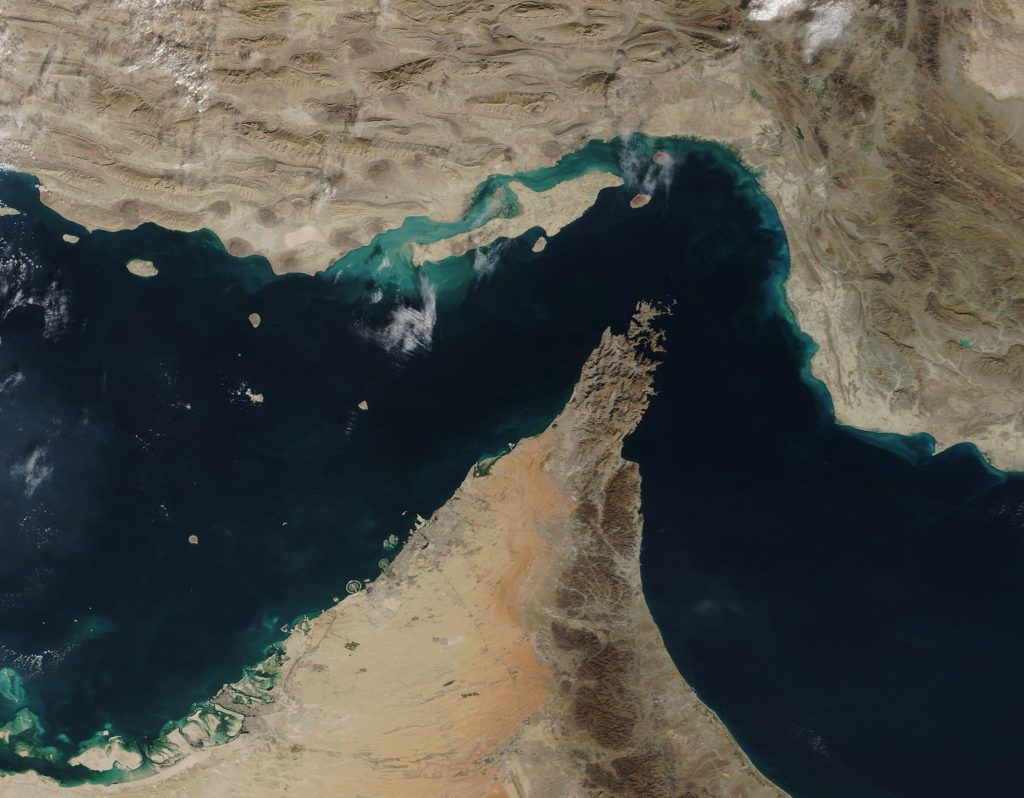
The Strait of Hormuz is the narrow waterway connecting the Persian Gulf with the Gulf of Oman, and in normal times it handles roughly 20 per cent of global energy supplies. Almost all oil and gas exported from the Gulf passes through it, which is why any disruption there moves oil prices and shipping costs worldwide.
Shipping through the waterway has been severely disrupted since 28 February, when the United States and Israel launched joint attacks on Iran, triggering retaliatory strikes. Iran subsequently imposed restrictions on shipping through the strait, allowing only selected vessels to pass.
Related coverage: Two tankers and a tugboat catch fire after a mine strike in Hormuz
The European Union has said Iran’s Islamic Revolutionary Guard Corps (IRGC) Navy introduced a system requiring ships to provide identification details, along with information about their cargo and destination, to obtain permission to pass.
The exemption announcement comes as the war grinds on and as diplomatic efforts continue in parallel. Qatar has said the United States and Iran are reviewing draft proposals to end the war, and US Vice President JD Vance has said the two sides have made progress toward a negotiated settlement. The exemptions suggest Tehran is also using access to the strait as a diplomatic tool — rewarding countries whose support or trade it values while keeping the waterway restricted for everyone else.
Related coverage: Qatar says the US and Iran are reviewing draft proposals to end the war
Related coverage: Khamenei warns of a broader response to a renewed US attack
What is still unclear
Several questions remain unanswered. It is not known how many ships from the four countries have actually used the exemption, or how long it will last. The status of Iraqi vessels — whether they pay fees like Indian and Chinese ships or pass free like Qatari ships — was not stated. And the exemption does not resolve the wider disruption: most of the world’s shipping still cannot pass freely, and the strait remains one of the most dangerous stretches of water for commercial vessels.
For India, the arrangement is significant given its dependence on the Middle East for energy supplies and its wider trade interests in the region. But as NDTV noted in its report, the exemption does not necessarily mean cost-free passage — Tehran’s concession is primarily about granting access rather than waiving the financial costs of crossing the waterway.
Related coverage: Indian sailor killed in attack on Al Jusufi off Oman
Frequently asked questions
Which countries are exempt from Iran’s Strait of Hormuz restrictions?
Merchant ships from India, China, Iraq and Qatar are exempt, according to Amir Hayat Moghadam, deputy chairman of the Iranian parliament’s National Security and Foreign Policy Committee.
Why did Iran exempt Indian ships?
Moghadam said the exemption for Indian vessels is intended to facilitate imports of medicines from India.
Why did Iran exempt Chinese ships?
Moghadam said the exemption for Chinese vessels is intended to secure Beijing’s political support.
Do exempted ships still pay to cross the strait?
According to Moghadam, Iran collects transit fees from Indian and Chinese vessels, while Qatari ships pass free of charge. It is not clear whether Iraqi vessels pay. The Economic Times reported that the Indian government had not paid fees for ships whose passage was negotiated by its foreign ministry.
Is the Strait of Hormuz fully open again?
No. The exemptions cover ships from four countries only. Shipping through the strait remains severely disrupted, and vessels from other countries still face Iran’s restrictions.
Sources
- Business Today — “Iran allows Indian ships through Hormuz, exempts 3 other countries” (4 Nov 2026): https://www.businesstoday.in/amp/india/story/iran-allows-indian-ships-through-hormuz-exempts-3-other-countries-565771-2026-11-04
- India TV News — “Iran exempts ships from India, China, Iraq and Qatar from Strait of Hormuz restrictions” (4 Nov 2026): https://www.indiatvnews.com/amp/news/world/iran-exempts-ships-from-india-china-iraq-and-qatar-from-strait-of-hormuz-restrictions-2026-11-04-1058666
- The Indian Express — “Iran exempts Indian commercial ships from Strait of Hormuz restrictions: Here is why Tehran made the exception” (4 Nov 2026): https://indianexpress.com/article/india/iran-exempts-india-china-ships-strait-of-hormuz-transit-restrictions-medicine-imports-10951007/
- NDTV — “Iran Exempts India And China From Hormuz Restrictions. Why It Matters” (5 Nov 2026): https://www.ndtv.com/world-news/iran-exempts-india-and-china-from-hormuz-restrictions-why-it-matters-12286645/amp/1
- The Statesman — “Iran exempts India, China, Iraq and Qatar from transit restrictions in Strait of Hormuz” (4 Nov 2026): https://www.thestatesman.com/world/iran-exempts-india-china-iraq-and-qatar-from-transit-restrictions-in-strait-of-hormuz-1503658888.html
- Khaama Press — “Iran Exempts India, China from Hormuz Restrictions” (5 Nov 2026): https://www.khaama.com/iran-exempts-india-china-iraq-qatar-hormuz-restrictions/