Last updated: October 30, 2026
The current inflation rate in the US is 3.7% over the 12 months ended September 2026, according to the Consumer Price Index (CPI) published by the U.S. Bureau of Labor Statistics (BLS). That is the headline number most people mean when they ask what the inflation rate is today: how much more, on average, urban consumers paid for a basket of goods and services than they did a year earlier.
The figure is higher than the 3.4% annual rate recorded for the 12 months ended August 2026, so on this measure inflation picked up in September rather than cooling further. On a monthly basis, consumer prices rose 0.6% in September after seasonal adjustment, a faster monthly increase than the recent trend and a reminder that the path back to lower inflation is rarely smooth.
The latest figure and what changed
The BLS released the September CPI on October 14, 2026. The main results were:
- All items (headline CPI): up 0.6% from August to September, and up 3.7% over 12 months.
- Core CPI (all items less food and energy): up 0.3% on the month, and up 2.6% over 12 months, compared with 2.4% in August.
- Food: unchanged on the month, and up 2.5% over 12 months. Food at home fell 0.1% on the month, while food away from home rose 0.2%.
- Shelter: up 0.4% on the month, and up 3.2% over 12 months.
In short, the annual headline rate rose because September’s monthly increase was large, not because every category moved in the same direction. Food prices were flat on the month, while energy and shelter did much of the pushing.
What is driving prices
Energy was the largest contributor to the September increase. The BLS reported that the energy index rose 5.2% on the month and 20.4% over 12 months. Gasoline jumped 9.1% on the month and 34.2% over the year, while fuel oil rose 15.3% on the month and 74.2% over the year. Electricity rose more modestly, up 0.2% on the month and 4.4% over the year.

That energy surge matters because fuel costs feed into transport and delivery as well as household budgets directly. At the same time, shelter, which carries a large weight in the CPI, continued to rise steadily, and services less energy rose 0.4% on the month and 3.1% over the year. Transportation services rose 0.6% on the month. Used cars and trucks rose 0.7% on the month but were still 1.5% lower than a year earlier, and medical care commodities fell 0.7% on the month and 3.3% over the year.

Food, by contrast, offered some relief in September. The overall food index was flat on the month, even though it remained 2.5% higher than a year earlier. For households, that distinction matters: a flat month does not mean groceries are cheap again, only that they did not get more expensive that month on a seasonally adjusted basis.
How the CPI is calculated
The BLS defines the CPI as a measure of the average change over time in the prices paid by urban consumers for a market basket of consumer goods and services. In practice, BLS price collectors track prices for thousands of items, from rent and gasoline to bread and medical care, and weight them according to how much households typically spend.
Two versions of the index are worth knowing. The headline CPI covers all items. Core CPI excludes food and energy, which can swing sharply from month to month, and is often used to judge the underlying trend. Neither measure is a cost-of-living index for any single household: your personal inflation rate depends on what you actually buy, especially housing, transport and food.
Monthly figures are seasonally adjusted to smooth out regular calendar patterns, while the 12-month change compares prices with the same month a year earlier. That is why a single hot month can lift the annual rate even if the longer trend is slower.
What it means for interest rates and households
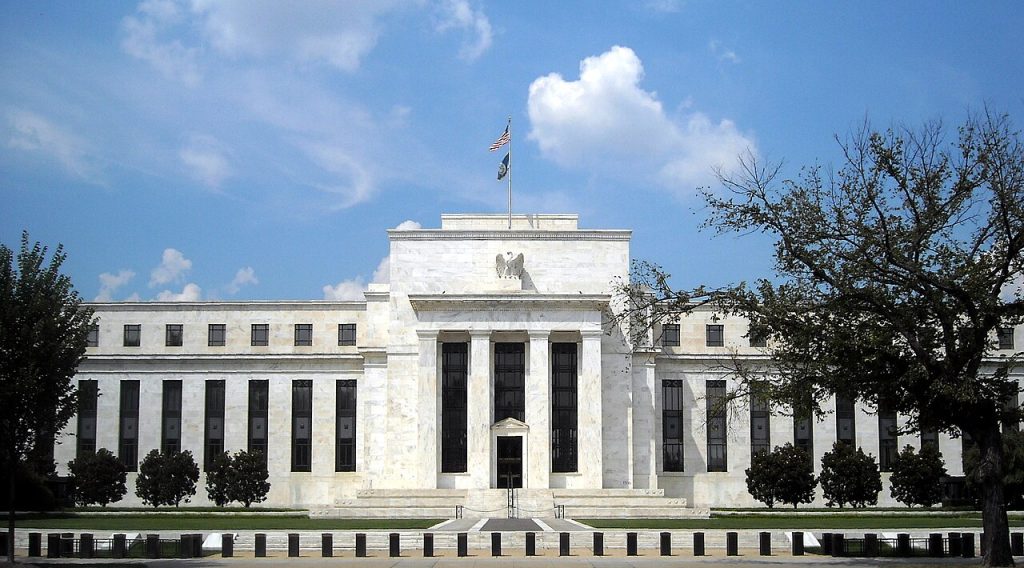
Inflation is central to the Federal Reserve’s decisions on interest rates. The Fed aims for 2% inflation over the longer run, a target that applies to its preferred gauge, PCE inflation, rather than to the CPI directly. CPI and PCE inflation usually move in the same direction but are not identical, so a 3.7% CPI reading should not be read as a 3.7% PCE reading.
Even with that caveat, a rise in the annual CPI rate makes the Fed’s job harder. When inflation runs above target, the central bank is more cautious about cutting interest rates, because lower rates can support spending and, in turn, prices. When inflation falls sustainably toward target, rate cuts become easier. The Fed held its policy rate at 3.75% to 4.00% at its October 28, 2026 meeting, and it has also announced fewer scheduled rate votes in 2027 and 2028, a change that puts more weight on each remaining decision. Read more: Fed to Vote on Interest Rates Just Seven Times in 2027 and Six in 2028, Warsh Announces.
For households, the practical effects show up in everyday budgets and borrowing costs. Higher inflation erodes purchasing power, especially for rent, fuel and food, and it can keep mortgage, auto loan and credit card rates higher for longer if the Fed stays cautious. Savers, on the other hand, may benefit from higher interest on deposits while rates remain elevated, although that benefit is reduced if prices are rising faster than the interest earned.
The broader economic picture is also relevant. The US economy grew 3.4% in the third quarter of 2026, while a separate PCE-based inflation measure stood at 3.6% in September, showing that growth and price pressures were both running warm at the same time. Read more: US Economy Grows 3.4% in Q3 as September Inflation Accelerates to 3.6%.
What to watch next
The next CPI release to watch is the October 2026 CPI, scheduled by the BLS for November 10, 2026, at 8:30 a.m. ET. Three things will matter most in that report: whether energy prices reverse or extend September’s jump, whether shelter continues to rise at its recent pace, and whether core inflation, which rose to 2.6% over 12 months in September, stabilizes or moves higher again.
Readers should also watch the Fed’s own commentary after the release. A single month rarely changes policy on its own, but two or three months in the same direction can shift expectations for the timing of the next rate move.
Frequently asked questions
What is the inflation rate today?
On the latest official CPI data, the US inflation rate is 3.7% over the 12 months ended September 2026. The BLS published that figure on October 14, 2026. It will be replaced by the October CPI figure when that report is released on November 10, 2026.
Is inflation rising or falling?
On the CPI measure, inflation rose in September: the annual rate moved up from 3.4% in August to 3.7% in September, and core inflation moved up from 2.4% to 2.6%. That is a one-month move, however, and it was driven heavily by energy. A longer run of data is needed before concluding that the broader trend has turned.
What is a normal inflation rate?
The Federal Reserve targets 2% inflation over the longer run, measured by PCE inflation. In practice, economists often describe inflation near 2% as normal or healthy, because it allows for modest price and wage growth without the distortions of very high inflation or the risks of falling prices. The current CPI rate of 3.7% remains above that level, even allowing for the difference between CPI and PCE measures.
Sources
- U.S. Bureau of Labor Statistics, Consumer Price Index Summary, September 2026 (USDL-26-1574, released October 14, 2026): bls.gov/news.release/cpi.nr0.htm
- U.S. Bureau of Labor Statistics, CPI home page and release schedule: bls.gov/cpi
- Federal Reserve, 2 percent longer-run inflation objective and related FOMC materials, via federalreserve.gov and fedsearch.org
Independent coverage: Associated Press, “Inflation worsened last month to 3.7% in sign that prices remain elevated as midterm elections near” (October 14, 2026): apnews.com/article/cpi-inflation-consumer-prices-affordability-3985019a54c82421e6112fb57baba048