Türkiye’s parliamentary Foreign Affairs Committee has approved a bill to ratify the Makkah Joint Defence Agreement between Türkiye, Saudi Arabia and Pakistan, advancing the trilateral pact toward full ratification.
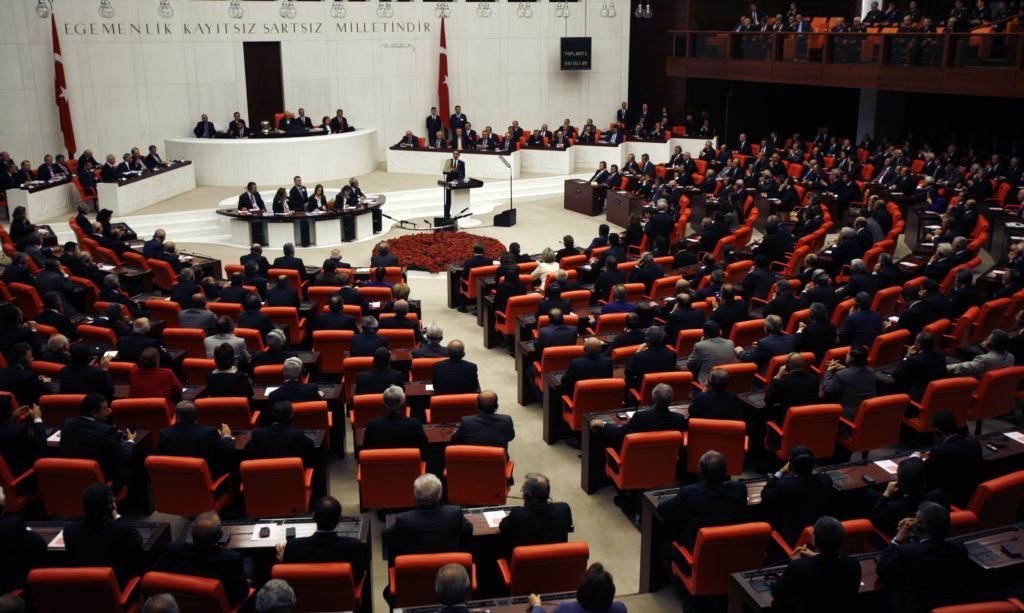
The committee approved the three-article ratification bill on Tuesday, October 27, following deliberations during which Deputy Foreign Minister Levent Gümrükçü answered lawmakers’ questions about the agreement. The bill must now be approved by the Turkish Parliament’s General Assembly for Türkiye to complete its domestic ratification process.
The 16-article agreement was signed in Makkah on August 7 by Turkish President Recep Tayyip Erdoğan, Saudi Crown Prince and Prime Minister Mohammed bin Salman, and Pakistani Prime Minister Shehbaz Sharif.
What the pact says
Under Article 2 of the agreement, an armed attack from outside their borders against any of the three countries is considered an attack on all of them. The pact provides for assistance to the country under attack, including through military capabilities, with measures to be determined through consultations and carried out in accordance with each country’s constitutional procedures and domestic law.
The agreement’s first article says the parties shall use “all necessary means” to eliminate threats to one another’s territorial integrity, sovereignty or internationally recognised borders, according to a text seen by Reuters. The collective-defence provision refers to Article 51 of the UN Charter, which covers the individual or collective right of states to self-defence against armed attack — a formulation similar in spirit to NATO’s Article 5.
Foreign Affairs Committee Chairman Fuat Oktay, a lawmaker from President Erdoğan’s ruling Justice and Development Party (AKP), stressed during Tuesday’s debate that the collective-defence provision would not automatically result in military action. Any measures, he said, would be taken within the framework of the countries’ constitutional requirements and national legislation following consultations among the parties. He described the alliance as resting on three main pillars: collective defence, counterterrorism cooperation and the development of domestic capabilities in the defence industry.
‘Entirely defensive,’ officials say
Speaking at the committee meeting, Gümrükçü said the agreement aimed to strengthen regional security through cooperation and collective defence.
“The Mecca agreement is not only an extension of the special friendly relations between the three countries, but also a concrete product of the regional ownership increasingly needed in our region,” Gümrükçü said. He described the framework as an initial step toward establishing a regional security framework based on cooperation and collective defence, adding that the three countries aimed to take responsibility for addressing regional challenges rather than waiting for solutions from outside the region.
Gümrükçü stressed that the agreement was entirely defensive in nature and did not target any country. He told lawmakers that Saudi Arabia and Pakistan had already completed their domestic ratification procedures and submitted the required official notifications — a claim reported from his committee testimony.
How it got here
Türkiye formally submitted the pact to Parliament for ratification on October 20, three parliamentary sources told Reuters, moving NATO’s second-largest army closer to a formal mutual-defence pledge with Riyadh. Parliamentary records show the treaty was formally submitted to lawmakers on October 21, and Parliament Speaker Numan Kurtulmuş said on October 22 that the relevant committee would consider it first, then submit it to the General Assembly for debate and a vote. If approved there, it will become law.
Reuters has also reported that, at an emergency meeting of the alliance in Riyadh earlier in October, the three countries agreed to ensure the “rapid deployment” of military forces and capabilities in Saudi Arabia. Türkiye, which has a robust defence industry, has condemned Houthi attacks on Saudi Arabia, expressed willingness to help meet Riyadh’s military technology needs, and agreed to join a Saudi-led coalition to ensure navigational safety in the Red Sea.

What happens next
The decisive step is now the General Assembly vote. If the assembly approves the bill, Türkiye will complete its ratification and the pact will become law domestically. What the pact means in practice — the scope and nature of any assistance — is to be decided by the three countries following an objective assessment of the assistance required, and within their available resources, including military capabilities.
Sources
FAQ
What is the Makkah Joint Defence Agreement?
A 16-article pact signed in Makkah on August 7 by the leaders of Türkiye, Saudi Arabia and Pakistan, under which an armed attack on one member is considered an attack on all, with assistance decided through consultations.
Has Türkiye ratified it yet?
Not yet. The parliamentary Foreign Affairs Committee approved the ratification bill on October 27; the General Assembly must still approve it for Türkiye’s domestic ratification to be complete.
Does the pact mean automatic military action?
No, according to the committee chairman. Any measures would follow consultations among the parties and each country’s constitutional procedures and domestic law.