China’s first crewed lunar mission will carry three astronauts, with two landing on the Moon while the third remains in lunar orbit, a senior programme official revealed at a space symposium in Beijing on Saturday, October 31, 2026. No launch date was announced.
Wang Xiang, deputy chief designer of China’s manned space programme and chief designer of its lunar exploration programme, disclosed the crew plan at the 7th Manned Space Academic Conference, held at Beihang University in Beijing, according to state broadcaster CGTN and the state-run Global Times.
The plan: two launches, one landing
The mission will use a lunar-orbit rendezvous approach described as “two launches, one landing.” Two Long March-10 rockets will be used:
- The first launch sends the Lanyue (meaning “Embracing the Moon”) lunar lander into lunar orbit.
- The second launch sends the Mengzhou (“Dream Vessel”) crewed spacecraft to meet it. After docking in lunar orbit, two astronauts transfer into the lander and descend to the surface for scientific exploration and sampling.
- The third astronaut stays aboard Mengzhou in lunar orbit, monitoring the mission and providing emergency support.
- When surface work is complete, the two astronauts lift off in the lander, re-dock with Mengzhou, and all three return to Earth together.
The astronauts for the lunar mission will be selected preferentially from the corps of astronauts who have already flown missions to China’s space station, according to reports of Wang’s remarks.
The goal: a landing before 2030
China aims to achieve its first crewed lunar landing before 2030, a goal the China Manned Space Agency has repeated since May 2026. A broader roadmap disclosed alongside the crew plan includes three uncrewed lunar verification missions and one crewed landing mission at the Wenchang Space Launch Site between 2028 and 2030, according to secondary reporting of the symposium.
Hardware development is under way. The Long March-10 rocket has completed tethered ignition tests, a low-altitude demonstration and validation flight, and a maximum-dynamic-pressure abort test of the crew capsule’s escape system. The Lanyue lander, designed to ferry two astronauts between lunar orbit and the surface, has completed a comprehensive landing and take-off test at Huailai county in northern Hebei province. Upcoming milestones include a verification flight of the Long March-10 and the first flights of Mengzhou and Lanyue, plus the Chang’e-7 mission.
What is new — and what is still unconfirmed
The two-launch architecture itself is not new: China committed to it publicly in 2023. What is new in Saturday’s reveal is the crew split — three astronauts, two landing — and the confirmation that the plan is proceeding through the symposium’s keynote address.
Two caveats matter. First, no launch date, surface-stay duration, or landing site has been announced. Second, the crew-size detail rests on state media’s report of Wang’s remarks: the China Manned Space Agency’s own account of the conference confirms the event and Wang’s keynote but does not state how many astronauts will fly or how the mission will be flown. The plan should therefore be read as a described plan from a named programme official, not as proof that the hardware or schedule is ready.
How it compares with the US Artemis programme
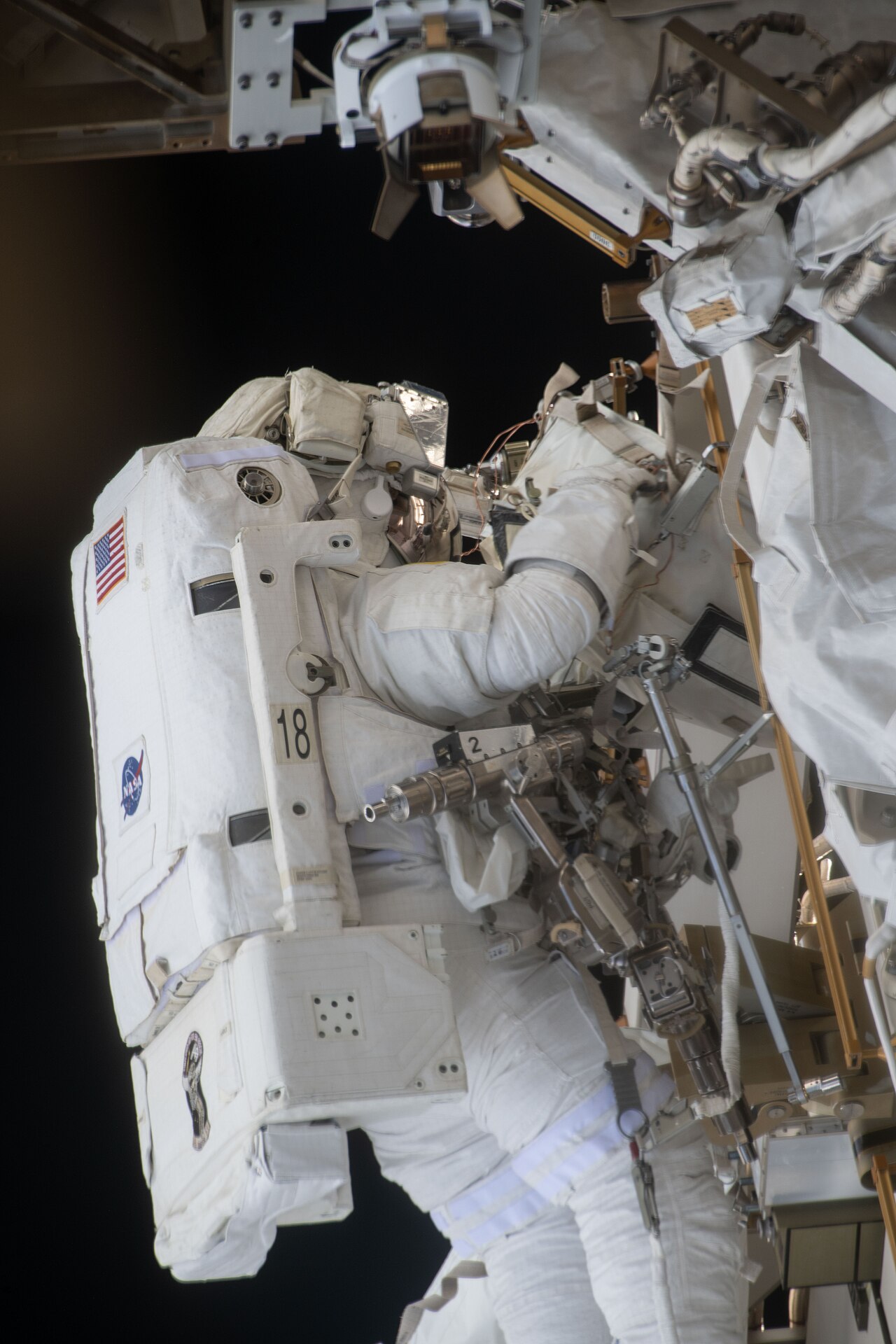
China’s effort runs in parallel with NASA’s Artemis programme. NASA’s Artemis II crewed lunar fly-by is scheduled for no later than April of next year, with a possible move up to February, while the Artemis III moon landing remains planned for mid-2027, subject to delays with the Starship human landing system, according to recent reporting. Unlike Artemis, which uses a single large launch system plus a separately developed lander, China’s plan uses two launches of the same Long March-10 rocket family. NASA also recently completed a milestone spacewalk.
FAQ
Q: When will China land astronauts on the Moon? A: China says before 2030. No specific launch date has been announced, and uncrewed verification flights are planned first.
Q: Why do two astronauts land while one stays in orbit? A: The third astronaut remains aboard Mengzhou in lunar orbit to monitor the surface mission and provide emergency support, returning to Earth with the other two after re-docking.
Sources
- CGTN: https://news.cgtn.com/news/2026-10-31/China-s-first-crewed-lunar-mission-Three-astronauts-two-to-land-1RGHkv1WkgM/p.html
- Daily Inference analysis (notes the CMSA-account caveat): https://dailyinference.news/articles/2026-10-31-report-two-of-chinas-three-moon-crew-would-walk-one-stays-up/
- CEMSG report of Wang’s remarks: https://news.cemsg.com/news/792.html
- South China Morning Post (Lanyue background): https://www.scmp.com/news/china/science/article/3321150/china-completes-key-lander-test-preparation-crewed-moon-mission-2030