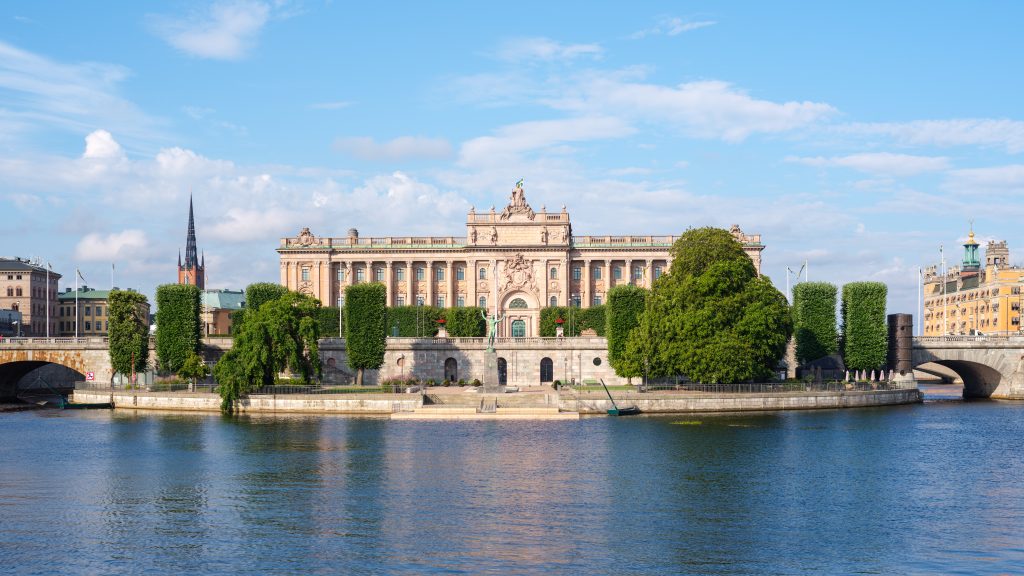
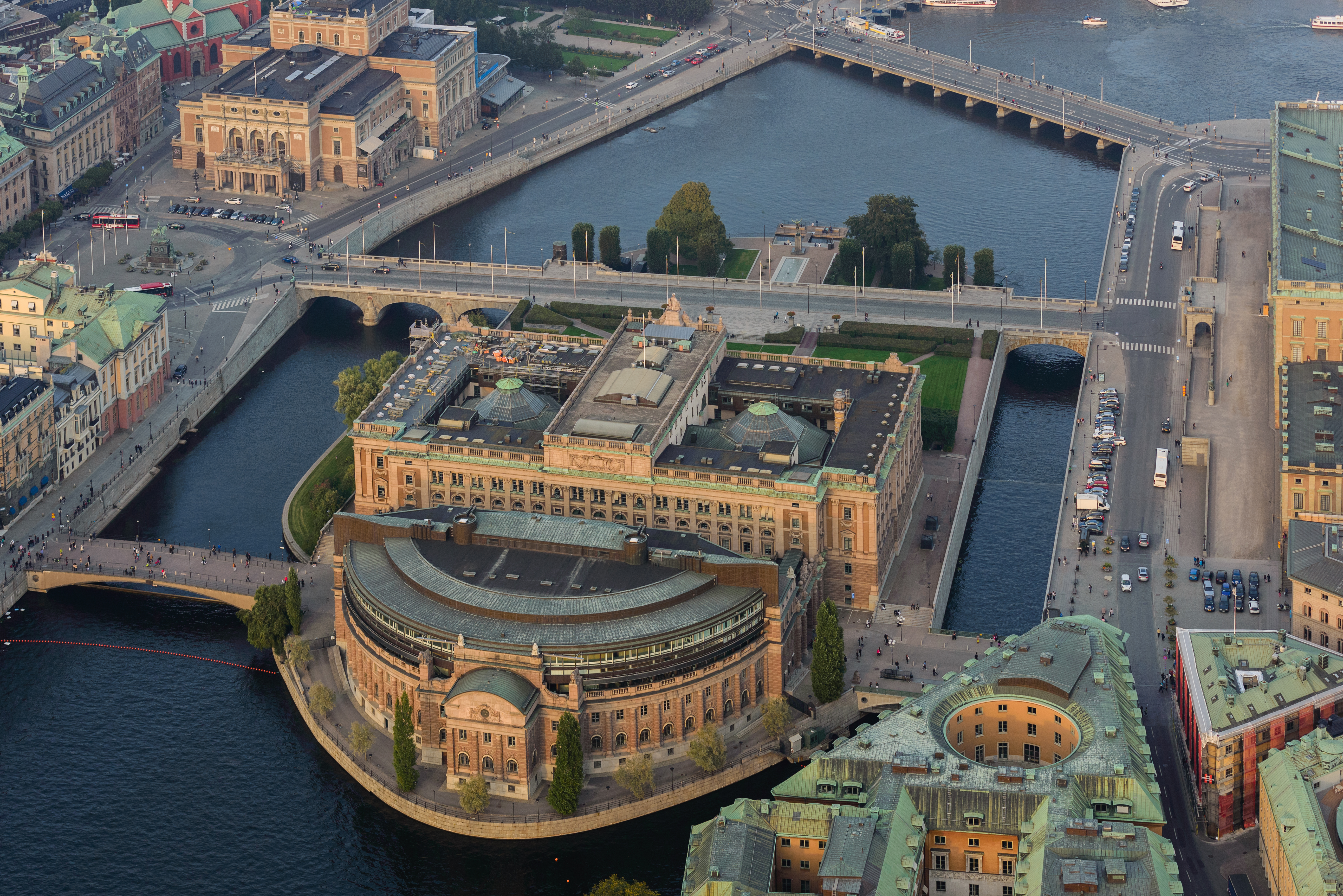
Sweden’s parliament will vote on Centre Party leader Elisabeth Thand Ringqvist as prime minister on Tuesday, 3 November, in the latest attempt to break the political deadlock left by September’s general election.
Speaker Andreas Norlén announced on Thursday, 29 October, that he would formally nominate Thand Ringqvist on Friday, 30 October, and put her to a vote at 13:00 local time (12:00 GMT) on Tuesday. The proposal is widely expected to be rejected — but the vote itself is part of a formal process that is gradually narrowing Sweden’s options for forming a new government.
A candidate who did not seek the job
Thand Ringqvist’s nomination carries an unusual twist: she has said she did not set out to become prime minister herself.
On 19 October, Norlén tasked her with exploring whether a centrist coalition led by Social Democrat leader Magdalena Andersson could be formed. On Monday, 26 October, she reported back that she had not been able to secure support for that arrangement.
Despite that, she has accepted the Speaker’s nomination to lead a proposed government made up of the Centre Party, the Social Democrats, the Christian Democrats, the Greens and the Liberals. In comments reported by Swedish media, she said her assignment was never about becoming prime minister herself, but about exploring a centrist government under Andersson’s leadership — and that, following discussions with the Speaker, he had assessed that nominating her was the next step.
The Speaker’s reasoning, as he explained it at a press conference, is about keeping the process moving and gradually increasing pressure on the parties to reach a solution, rather than letting the deadlock drift.
How the vote works — and why it is expected to fail
Sweden’s prime minister vote works differently from a simple majority contest. A candidate is rejected only if at least 175 of the Riksdag’s 349 members vote against. Abstentions therefore help a candidate pass, since they do not count toward the rejection threshold.
Even with that rule, Thand Ringqvist faces a steep climb. The parties named in the Speaker’s proposed line-up have not agreed to govern together, and at least one of them has already said it will vote against her.
Christian Democrat leader Ebba Busch said her party would vote against Thand Ringqvist and continues to back the incumbent prime minister, Ulf Kristersson of the Moderate Party. Green co-leader Amanda Lind criticised the Speaker’s decision, arguing that Kristersson should have been given the next chance to form a government immediately, so that option could be tested and ruled out sooner.

What happens if she loses
If Thand Ringqvist is rejected on Tuesday, Norlén has said he will give Kristersson one week to explore forming a government, with a report back due by Tuesday, 10 November. Kristersson continues to lead a caretaker government until a new administration takes office.
There is little indication so far that Kristersson, whose Moderate Party is the second largest after the Social Democrats, would be able to secure a majority either. If his attempt also fails, the task of forming a government could revert to Andersson at a later stage.
The stakes of the sequence are high. September’s ballot gave the centre-left 176 of the 349 seats, but while all four opposition parties favour Andersson as prime minister, they do not agree on who should be part of a new government. Lawmakers rejected Andersson’s bid to form a minority cabinet on 15 October, by 248 votes to 99 — the first of up to four votes before a fresh election must be called. Sweden last held an early election in 1958.
Why this vote matters even if it fails
A rejected vote is not a wasted one in Sweden’s system. Each vote tests a combination, forces parties to declare their positions publicly and moves the process one step closer to either a government or a new election, and voters elsewhere have just produced a historic 26-26 tie.
Tuesday’s vote will show, in hard numbers, how far the centrist line-up is from commanding support — and whether the Christian Democrats’ rejection, the Greens’ criticism and the other parties’ positions leave any workable coalition on the table. If none emerges, the next question will be whether Kristersson’s week of talks can succeed where two previous attempts have not.
Frequently asked questions
When is the vote on Elisabeth Thand Ringqvist?
Tuesday, 3 November at 13:00 local time (12:00 GMT), after her formal nomination on Friday, 30 October.
How many votes does she need to lose?
She is rejected if at least 175 of the 349 members of the Riksdag vote against her. Abstentions do not count toward rejection.
What happens if she is rejected?
Speaker Andreas Norlén will give Prime Minister Ulf Kristersson one week to explore forming a government, reporting back by 10 November.
Could Sweden hold an early election?
Yes, if four prime minister votes fail without producing a government, a fresh election must be called. Sweden last held an early election in 1958.
SOURCES:
- Reuters, “Swedish parliament to vote on Centre Party leader as prime minister despite gridlock”, 29 October 2026: https://www.reuters.com/world/swedish-parliament-vote-centre-party-leader-prime-minister-despite-gridlock-2026-10-29/
- The Straits Times (Reuters), “Swedish parliament to vote on Centre Party leader as prime minister despite gridlock”, 29 October 2026: https://www.straitstimes.com/world/europe/swedish-parliament-to-vote-on-centre-party-leader-as-prime-minister-despite-gridlock
- Sweden Herald, “Swedish Parliament to Vote on Centre Party Leader Elisabeth Thand Ringqvist for Prime Minister Tuesday”: https://swedenherald.com/article/speaker-andreas-norln-to-announce-next-step-in-government-formation-today
- DailySweden, “Elisabeth Thand Ringqvist faces vote to become Sweden’s prime minister”, 29 October 2026: https://www.dailysweden.com/article/elisabeth-thand-ringqvist-prime-minister-vote-november-3