Recordings published by Spanish media appear to show a high-speed train driver being told to continue at normal speed minutes before his train struck a stalled train near Urda, in a crash that has killed at least 69 people.
The audio, published by El País and the public broadcaster RTVE and reported by the BBC, captures exchanges between a Madrid control centre and the drivers of two trains travelling from Madrid towards Seville on Wednesday 28 October. It is the latest, and most detailed, evidence to emerge about the decisions taken in the minutes before the collision — but it does not, on its own, establish the cause, which remains under investigation.
Spain has declared three days of national mourning. The crash, near Urda in Toledo province, is the country’s deadliest rail disaster since a derailment near Santiago de Compostela killed 80 people in 2013.
What the recordings appear to show
In one recording, a control centre operator tells the driver of the Renfe train: “Continue your journey and then proceed under [Lateral Signalling Block], at normal speed with normal operation.” The driver asks: “At normal speed?” The controller replies: “Yes.”
The Lateral Signalling Block is a back-up system used when automatic signalling fails. The BBC reported that a computer fault in the automatic signalling system had brought traffic on the affected stretch to a stop.
In other recordings, the driver of the Iryo train, about 25km ahead, reports that communication with the train-control system has been lost and that the train is stationary in front of the entry signal at Urda. After being told to resume, the Iryo driver calls back: “The train won’t allow me to control the [security] system. That’s why I am still stopped in front of the entry signal.”
The recordings therefore suggest the controller had been told the Iryo train was still stationary as the Renfe train approached. The BBC and El País reported that the control centre apparently did not take decisive action after that warning, or warn the Renfe train to halt when there was still time. That interpretation is drawn from the published recordings; the investigation has not yet made a formal finding on the sequence.
The crash itself
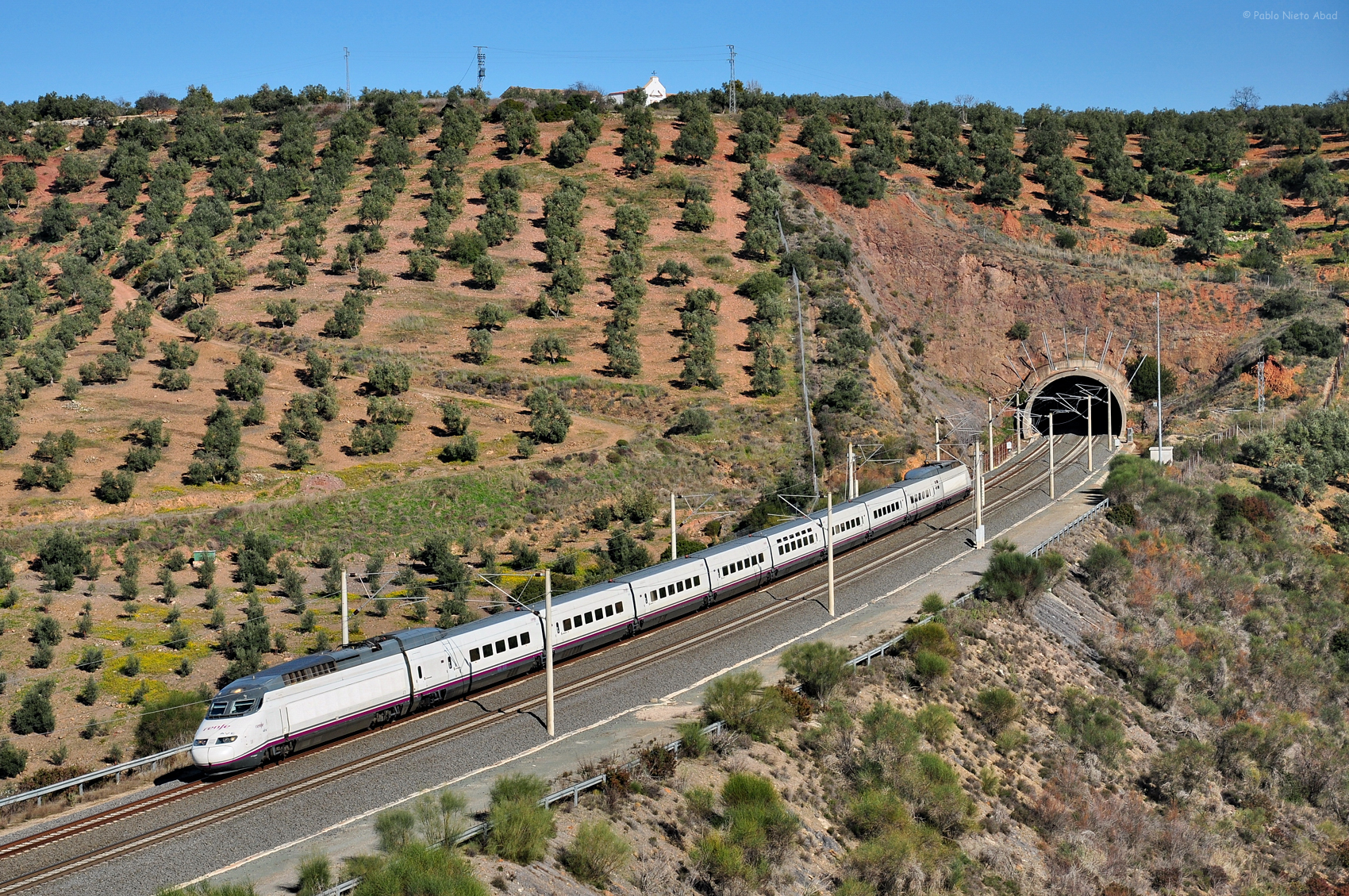
The Renfe train was carrying 397 passengers; the Iryo train ahead of it on the same line was carrying 147 passengers. The collision happened at about 08:53 local time on 28 October, on a straight stretch of track near Urda, around 130km south of Madrid. The Renfe train struck the rear of the stationary Iryo train, destroying carriages and throwing others down an embankment.
Transport Minister Óscar Puente has called the decision to let trains move again without speed restrictions “inexplicable”. He said that after such a signalling failure, trains should have been limited to 40km/h — slow enough to stop short of anything ahead — and that the ministry’s position was that the Renfe train should have been kept stationary by a red signal because the Iryo service was still on the same track.
According to the minister’s account, the Renfe train travelled about 25km at high speed before the impact, at a speed that could have reached up to 200km/h. A preliminary report from Spain’s rail accident investigation authority, reported on 30 October, estimated the impact speed at 160 to 200km/h. All hypotheses on the cause remain open, and the investigation will establish the facts.
The controller responsible has reportedly been questioned by police. Puente has said he has not blamed any individual, only set out what he described as the established facts, and has insisted Spain’s rail system is reliable and safe — a claim now under intense public scrutiny.
A provisional toll, and what is still unknown
The death toll is provisional and has moved as bodies have been recovered and identified. Castilla-La Mancha regional president Emiliano García-Page raised the toll to at least 69 on Thursday, after one more hospitalised victim died. Of 110 people admitted to hospital in the region, 60 had been discharged and 50 remained under treatment, 15 of them in a critical condition.
A figure of 74 dead briefly shown on Thursday by the rail accident investigation body was corrected to 69, and the transport ministry said the official figures are those given by the regional government. Readers should therefore treat 69 as the latest official toll, not a final count, while identification work continues.
Several questions remain unanswered: why the clearance to run at normal speed was given, why the warning that the Iryo train could not move did not stop the Renfe train, and whether maintenance, staffing or procedures at the Madrid control centre contributed. Prime Minister Pedro Sánchez has pledged a full investigation “to establish every last detail of this tragedy and strengthen safety measures to ensure it never happens again”, and has said victims’ families should receive compensation.
The crash is also the second major rail disaster in Spain this year, and it comes weeks before a snap election, adding political pressure to an investigation that will be judged on whether it answers those questions with evidence rather than assertion.
What the leaked audio does establish is narrower, but important: in the minutes before the collision, the drivers and the control centre were talking about a stalled train, a failed signalling system and a return to normal speed — and the train ahead was still stopped. Whether that sequence amounts to human error, a systemic failure or both is for the investigation to determine.
FAQ:
What do the leaked recordings show? They appear to show a Renfe driver being cleared to proceed at normal speed under a back-up signalling system, while the Iryo driver ahead reported his train could not move.
How many people died? At least 69, according to the latest official regional figure; the toll is provisional and a briefly published figure of 74 was corrected.
Has the cause been established? No. An investigation is under way; the government’s first hypothesis is human error, but all hypotheses remain open.
Sources:
- BBC, via reporting summarised in: https://www.timesnownews.com/world/europe/spain-train-crash-audio-reveals-chaos-driver-railway-operators-accident-death-toll-article-156432148/amp
- The Thursday Times, Spain train crash: leaked audio shows control centre told driver to go on ‘at normal speed’ before collision: https://thursdaytimes.com/2026/10/29/news/international/spain-train-crash-audio-control-centre-normal-speed-urda-renfe-iryo/
- AFP via Hespress, What we know about Spain’s deadly train crash: https://en.hespress.com/148211-what-we-know-about-spains-deadly-train-crash.html
- Emadan’s earlier report on the minister’s account: https://emadan.store/spain-minister-toledo-train-crash-red-signal-erroneous-restart-october-28/