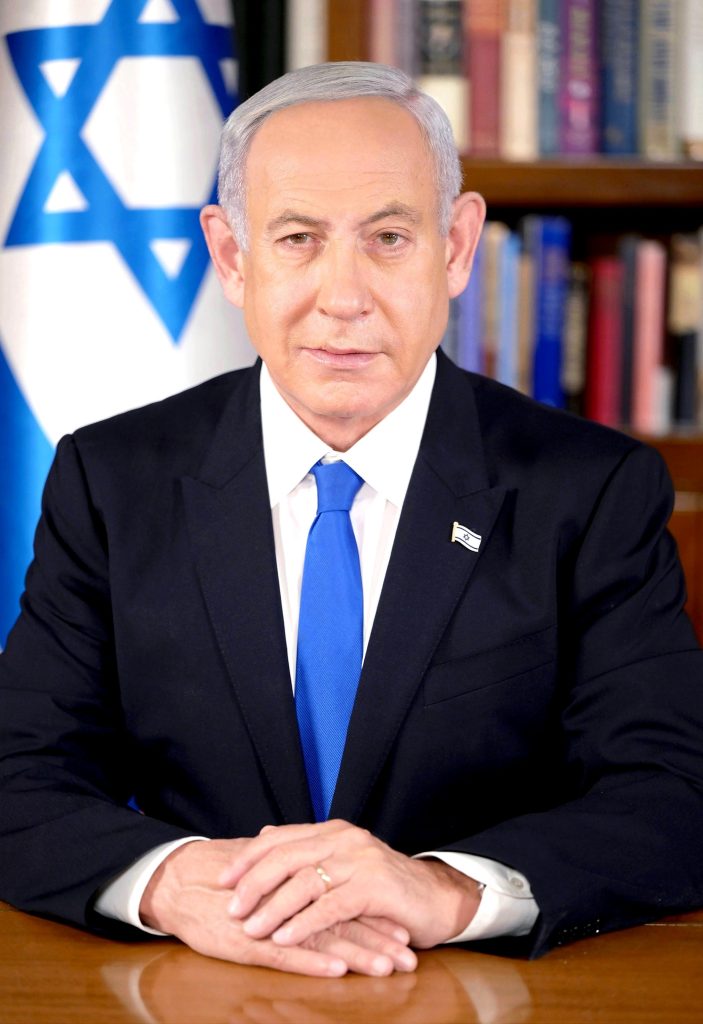
Partial results in Israel’s general election put Prime Minister Benjamin Netanyahu’s bloc ahead of the opposition, but still short of the majority needed to form a government, with counting continuing and the final outcome still open.
The latest partial figures published by the Central Elections Committee, reported by The Times of Israel, give the pro-Netanyahu bloc 54 seats in the 120-seat Knesset, the bloc led by Gadi Eisenkot 47 seats, and the Arab-led parties 19 seats, with 76.8 percent of ballot boxes counted. Sixty-one seats are required for a majority, so neither of the two main blocs can govern on its own on these figures.
Those numbers are provisional. They will change as more ballots are counted, and votes cast in double envelopes — including those of soldiers — are counted later. Full results are expected by October 29–30.
What the count shows so far
The counted vote has moved away from the picture painted by the exit polls. Projections published after voting ended had put the two main blocs tied at about 51 seats each, with the Arab parties at about 18. Once ballots were actually counted, Netanyahu’s bloc moved into the lead — but the lead is not a majority.
The count has also shifted during the day. At an earlier checkpoint, with 51.8 percent of ballots counted, the Netanyahu bloc stood at 55 seats, Eisenkot’s bloc at 49 and the Arab parties at 16, according to Reuters’ account of the partial results. By the latest update those figures had moved to 54, 47 and 19 respectively, as the Arab parties gained ground. Three parties remain below the 3.25 percent electoral threshold: Reservists, People of Israel and the Charedi Public party.
Both Netanyahu and Eisenkot vowed after the vote to form a government, despite neither being projected to win a majority. That contest — not just the seat totals — is what the coming days will decide.
The Arab parties are now the arithmetic that matters
The most consequential movement in the count is the rise of the Arab-led parties, the Joint List and Ra’am, to 19 seats. On paper, Eisenkot’s 47 seats plus 19 Arab seats would exceed the 61-seat threshold. In practice, that arithmetic runs into a political barrier both main blocs erected during the campaign: Eisenkot said he would not govern with Israeli Arab lawmakers, and Netanyahu has suggested a government relying on Arab votes would lack legitimacy.
Democrats leader Yair Golan has publicly challenged that position, urging the opposition to join with the Arab parties and form a government, arguing that the combined anti-Netanyahu forces hold a majority. His call, made while the count was still under way, is a political argument, not a settled coalition — and it depends on figures that are still moving.
The Arab parties’ gains follow a surge in Arab voter turnout, which Emadan News reported as reaching 77.7 percent overall turnout, the highest since 2001. Whether that turnout translates into governing influence, or into support for a minority government from outside a coalition, is the question the final count and the coalition talks will answer.
What happens next
First, the count must finish, including the double-envelope ballots. Then the formal process begins: the president consults party leaders and tasks one candidate with trying to assemble a coalition commanding at least 61 seats. If that candidate fails, the mandate can pass to another, and a failure by all sides could eventually lead to another election — an outcome neither bloc is presenting as its plan.
What is already clear is that the election has not produced a decisive winner. It has produced a hung parliament in which the bloc that finished first still needs partners, the bloc that finished second needs a political reversal on Arab parties to govern, and the parties that gained most are the ones both main blocs said they would not govern with.
Sources
- The Times of Israel, liveblog, October 28, 2026: https://www.timesofisrael.com/liveblog-october-28-2026/
- Malay Mail (Reuters), “Netanyahu bloc leads Israeli election count but falls short of majority,” October 28, 2026: https://www.malaymail.com/news/world/2026/10/28/netanyahu-bloc-leads-israeli-election-count-but-falls-short-of-majority/240991
- The Hindu, “Netanyahu bloc leads after half of Israeli votes counted but no majority,” October 28, 2026: https://www.thehindu.com/news/international/israel-election-results-counting-trends-netanyahu-eisenkot-arab-parties/article71634899.ece
- Related Emadan News coverage: exit polls and record turnout
FAQ
Who is leading the Israel election count? Netanyahu’s bloc, with 54 seats in the latest partial results — but that is short of a 61-seat majority.
Are the Israel election results final? No. The figures are partial, with 76.8 percent of ballot boxes counted at the latest update cited here, and double-envelope votes still to be counted.
What majority is needed to form a government in Israel? 61 of the 120 Knesset seats.