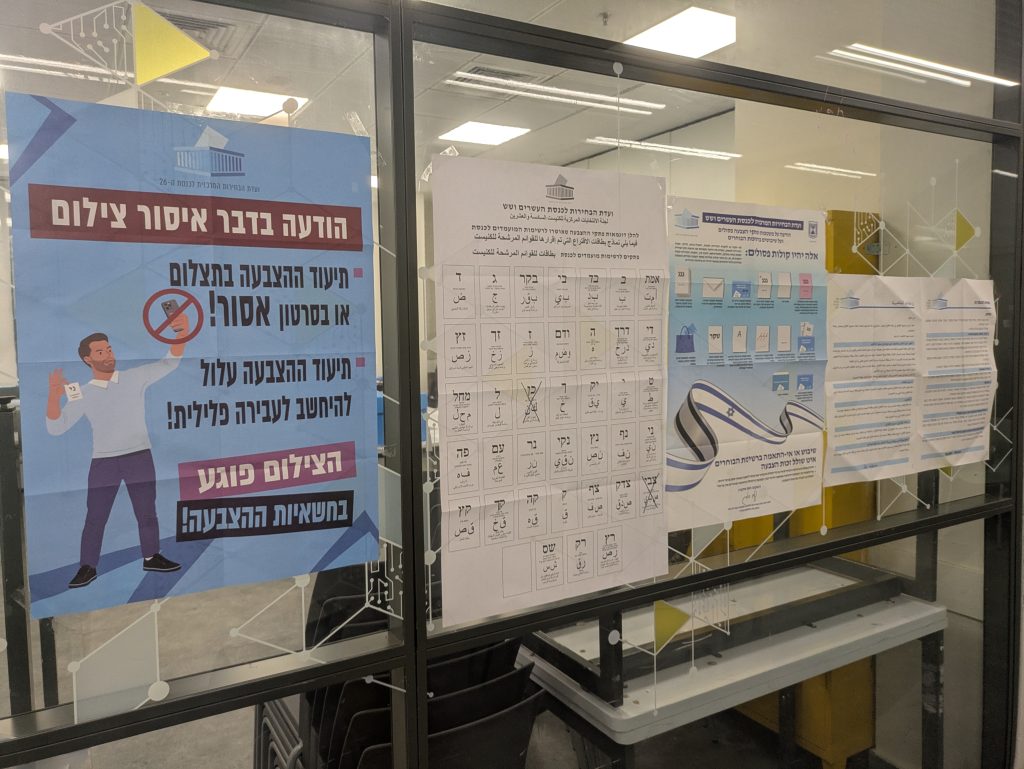
A surge in voting by Arab citizens of Israel helped drive turnout in Israel’s 27 October election to a near-final 77.7 percent, the highest rate since 2001, according to Central Elections Committee figures analysed by Haaretz.
Some 5,695,682 eligible voters had cast ballots by the 10 p.m. close of polls, out of about 7.33 million eligible voters. Turnout was up sharply from 2022, when it was about 71 percent, in an election widely described as the most consequential in Israel’s history and the first national vote since the 7 October 2023 Hamas attacks.
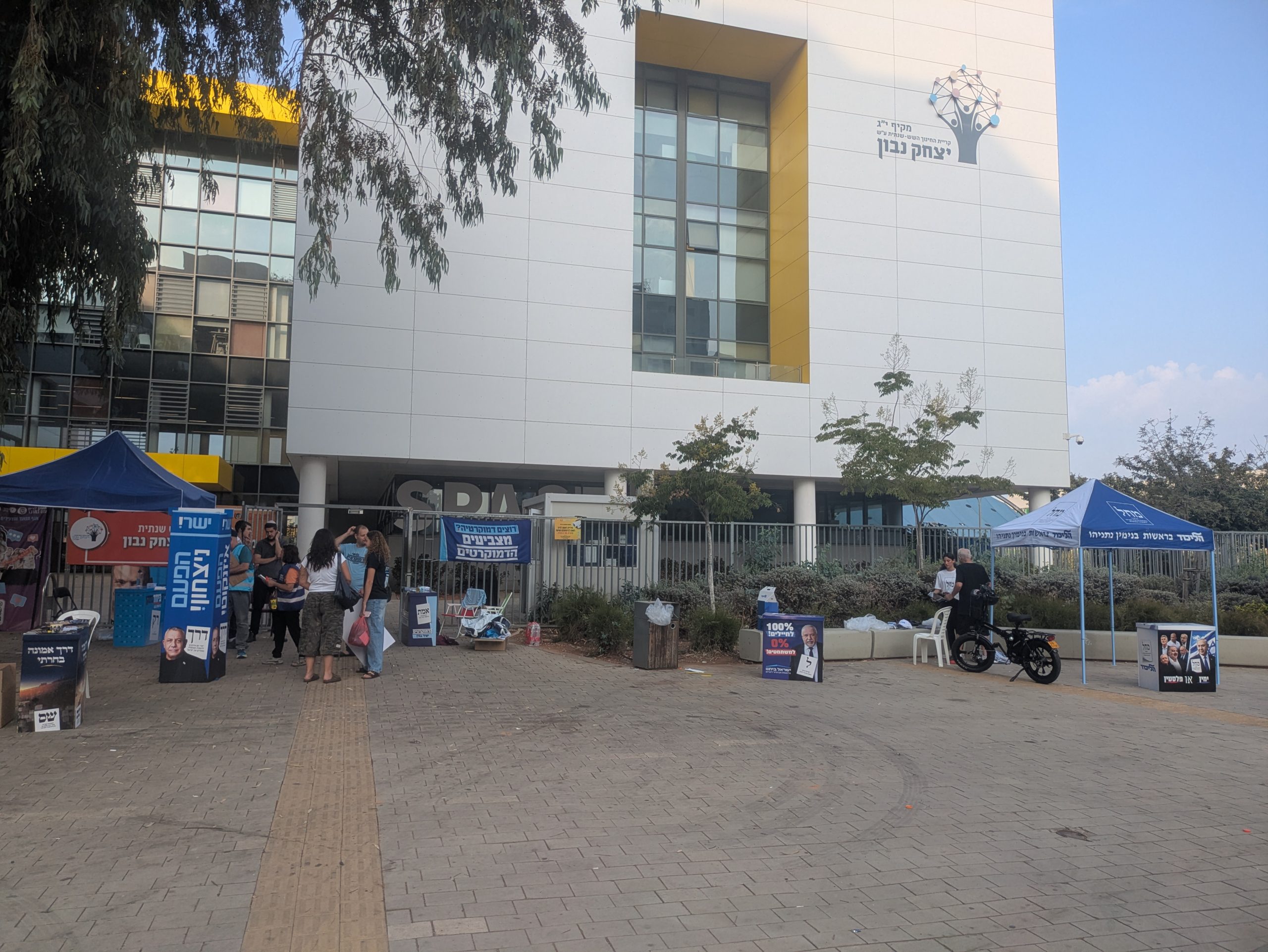
Arab towns record dramatic jumps
Polling-station data shows the surge was particularly pronounced in Arab communities, where turnout in several major towns matched or passed the total recorded on election day in 2022.
In Umm al-Fahm in northern Israel, 75.7 percent of eligible voters had cast ballots by 10 p.m., compared with a final 2022 turnout of 51.33 percent in the town. In Nazareth, turnout reached 72.2 percent, up from a final 2022 turnout of 55.75 percent.
Israel’s Channel 12 reported that turnout among the Arab community inside Israel reached about 80 percent. That figure is a media report, not a Central Elections Committee figure, and is attributed as such here.
Haaretz stressed that the surge was not limited to Arab communities: such a dramatic national increase would be difficult to achieve without higher participation across much of the population. In central Israel, Rosh Ha’ayin recorded 82 percent turnout and Modi’in-Maccabim-Re’ut 79.2 percent, while Tel Aviv stood at 65.4 percent, Jerusalem at 65.9 percent and Haifa at 61.6 percent.
Right-wing leaders urge supporters to vote
The turnout figures triggered an urgent mobilisation drive from the right. Prime Minister Benjamin Netanyahu urged supporters to vote, saying: “We need it to be high too. You all need to stream to the polls. This is a fateful moment.”
Far-right Finance Minister Bezalel Smotrich said turnout “in the Arab sector is unprecedented” and warned that a “dangerous left-wing government” could take power, adding: “Do not despair! It is still possible to win.”
Netanyahu had repeatedly warned supporters ahead of the vote about high turnout among Palestinian citizens and the left, campaigning under the slogan “the right or Palestine”. Palestinian candidate Ahmad Tibi said voters were casting ballots in “unprecedented” numbers.
Prominent politicians from Arab-led lists have accused right-wing figures of incitement against Palestinian citizens, who make up 20 percent of Israel’s population, and of questioning their legitimacy to vote. Those accusations are reported here as claims made by those politicians, not as established fact.
Delays reported in Arab communities
The Association for Civil Rights in Israel filed a complaint with the Central Elections Committee warning that widespread delays could be suppressing the vote among Palestinian citizens. It said delays had been reported in at least 18 communities and asked the committee to investigate “whether these delays are deliberate”.
The group also reported a large presence of police and National Guard officers at a polling station in the Negev desert, raising concerns that officers were using crowd control as a pretext to prevent people from entering to vote. Turnout among soldiers had climbed beyond 68 percent by 5 p.m., higher than the 65 percent tracked at the same stage in 2022.
What the turnout means for forming a government
High turnout raises the stakes of Israel’s 3.25 percent electoral threshold: the more votes cast, the more votes a party needs to enter the Knesset. That arithmetic matters because first exit polls showed no clear winner, with neither Netanyahu’s bloc nor former military chief Gadi Eisenkot’s bloc reaching the 61 seats needed for a majority in the 120-seat Knesset.
Both Netanyahu and Eisenkot have ruled out partnering with Arab parties, citing a lack of shared values, although some scenarios discussed after the vote envision Arab parties propping up a minority government to ensure Netanyahu is removed from office. The head of the Arab-majority Joint List has said the party “cannot be ignored”.
The figures reported here are near-final, based on the 10 p.m. count, not the final certified results, which are still to come. Any party’s seat total can still move as remaining ballots are counted.
Frequently asked questions
What was turnout in Israel’s 2026 election? Near-final turnout was 77.7 percent by the close of polls on 27 October, with 5,695,682 ballots cast — the highest rate since 2001, according to Haaretz’s analysis of Central Elections Committee data.
How high was Arab voter turnout? Channel 12 reported about 80 percent turnout among the Arab community inside Israel. Town-level data shows Umm al-Fahm at 75.7 percent and Nazareth at 72.2 percent, well above their final 2022 levels of 51.33 percent and 55.75 percent respectively.
Does high turnout decide who forms the government? No. Exit polls showed no clear winner, and a party or bloc still needs 61 of the 120 Knesset seats. High turnout mainly raises the number of votes needed to clear the 3.25 percent threshold.
Sources
- Haaretz, “Breaking Down Israel’s Historic Election Day Turnout”: https://www.haaretz.com/israel-news/elections/2026-10-27/ty-article/.premium/breaking-down-israels-historic-election-day-turnout/000001a1-7e21-d848-afe1-7f2ba3310000
- Al Jazeera, “Israel election turnout hits 77.7%, highest since 1999”: https://www.aljazeera.com/amp/news/2026/10/27/israel-election-turnout-highest-in-50-years-as-voting-continues
- Jerusalem Post, “Arab voter turnout surges past 2022 figures as haredi strongholds lag behind”: https://www.jpost.com/israel-election-2026/article-913061
Related: our exit-poll report — https://emadan.store/israel-election-exit-polls-no-clear-winner-netanyahu-eisenkot/
Correction: This article originally compared the 10 p.m. town figures with 2022 figures that were not the final 2022 totals. The 2022 comparators have been corrected to the final 2022 turnouts (Umm al-Fahm 51.33 percent; Nazareth 55.75 percent) as reported by the Jerusalem Post.