At least 30 people have died after two high-speed trains collided in central Spain on Wednesday morning, regional authorities said, warning that the death toll is expected to rise as rescue teams reach the most damaged carriages.
The crash happened near the towns of Urda and Los Yébenes in Toledo province, on the high-speed line linking Madrid with Seville in south-western Spain. Spain’s rail infrastructure manager, Adif, said services between Madrid, Ciudad Real and Andalusia were suspended after the collision.
What happened
Castilla-La Mancha regional government spokeswoman Esther Padilla told state broadcaster TVE that the two trains were travelling in the same direction, from Madrid towards Seville, when one ran into the rear of the other, which had stopped on the track. Two carriages derailed.
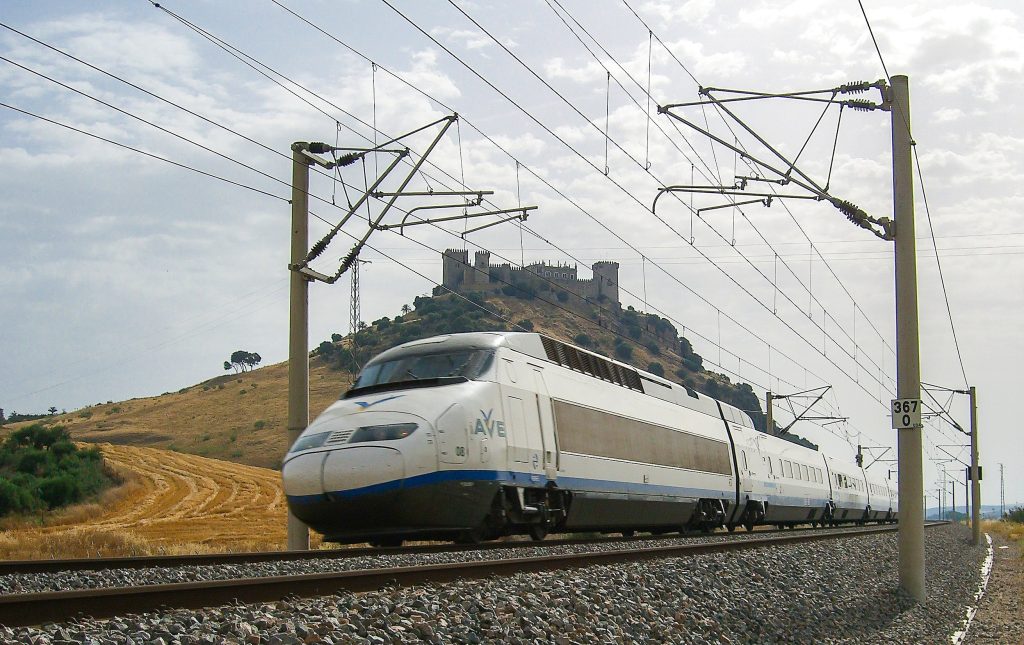
The train ahead was an Iryo service, Iryo 6076, running from Madrid-Puerta de Atocha to Seville-Santa Justa with 147 passengers on board. Behind it was a Renfe AVE service, AVE 2080, which had left Madrid Atocha at 8 a.m. for Seville carrying 397 passengers. Two of the Iryo train’s carriages fell down an embankment, according to emergency service sources cited by Spanish newspaper El País.
Authorities first confirmed 10 deaths. Padilla later confirmed at least 30 deaths, adding that “that number will surely rise”. No official count of the injured had been confirmed at the time of writing; the injured were being taken to hospitals in the area, and emergency services spoke of dozens hurt, several seriously.
Rescue effort under way
Spanish Health Minister Mónica García told TVE that emergency workers were focusing on rescuing survivors and bodies from the two most damaged carriages. “It was a high-speed impact, so we are expecting this to be a tragedy,” she said.
Firefighters from surrounding towns were deployed alongside three medical helicopters and two mobile intensive care units, according to El Mundo. The mayor of nearby Urda, Manuel Galán, told TVE that civil protection authorities had asked his town hall to prepare a sports pavilion to receive affected passengers. Regional president Emiliano García-Page said he was travelling to the crash site.
Prime Minister Pedro Sánchez said he was shocked by the serious accident and remained in constant contact with Transport Minister Óscar Puente and García-Page.
Cause not yet known
The cause of the crash has not been established. Padilla told TVE it was not known, and Adif said it was analysing its systems and the sequence of events. El País reported that government sources attributed the crash to a human error at the control centre in Madrid, but that account has not been confirmed by Adif or the government, and a court in nearby Orgaz has taken up the case.
The Associated Press described the crash as the second major train accident in Spain this year.
What happens next
Rescue and recovery work at the scene is continuing, and the death toll is expected to be updated as crews reach the derailed carriages. Adif has not said when Madrid-Andalusia high-speed services will resume. Travellers on the route should expect cancellations and delays until the line is cleared and inspected.
Why it matters
The Madrid-Seville line is one of Spain’s busiest high-speed corridors, and a rear-end collision between two trains travelling in the same direction raises immediate questions about signalling, traffic management and how a stopped train ahead was protected. Those questions will only be answered by the official investigation, but the scale of the casualties already makes this one of Spain’s worst rail disasters in recent years.
What is confirmed — and what is not yet known
Confirmed: the collision, the location, the two operators and passenger counts given by the regional government, at least 30 deaths, and the suspension of Madrid-Andalusia services.
Not yet confirmed: the final death toll, an official injured count, and the cause of the crash. Higher tolls carried by some outlets during the day were not reconciled with the regional government’s confirmed figure and are not used here.
FAQ
Where did the Spain train crash happen? Near Urda and Los Yébenes in Toledo province, on the Madrid-Andalusia high-speed line, south of Madrid.
How many people died in the Toledo train collision? At least 30 deaths had been confirmed by the Castilla-La Mancha regional government, which warned the figure would rise.
Are Madrid-Seville trains running? No. Adif suspended high-speed services between Madrid, Ciudad Real and Andalusia after the crash.
Sources
- Associated Press, “At least 30 dead in crash between two trains in central Spain, media say”, 28 Oct 2026: https://www.wesanews.org/national-international-news/2026-10-28/at-least-30-dead-in-crash-between-two-trains-in-central-spain-media-say
- Al Jazeera, “Train collision in Spain kills at least 30 people”, 28 Oct 2026: https://www.aljazeera.com/news/2026/10/28/injuries-reported-after-two-trains-collide-in-spain?traffic_source=rss
- Geo News, “Death toll in Spain high-speed train crash near Toledo rises to 30”, 28 Oct 2026: https://www.geo.tv/latest/688667-at-least-10-people-dead-in-spain-after-two-high-speed-trains-collide
- El País reporting via Nationale, “Spain train crash: at least 30 dead near Toledo”, 28 Oct 2026: https://www.nacionale.com/en/articles/spain-train-crash-toledo-urda-ave-iryo-collision-at-least-30-dead