Intel delivered its strongest data-centre growth in 15 years in the third quarter of 2026 — and its shares still tumbled after hours. The chipmaker’s weak fourth-quarter guidance, a persistent personal-computer slowdown and disruption from a fatal explosion at its Israeli factory combined to overshadow a quarter in which adjusted profit comfortably beat expectations.
Intel reported third-quarter revenue of $16.51 billion, up 21% year over year. That was broadly in line with analyst expectations — reported consensus figures ranged from about $16.44 billion to $16.56 billion depending on the data provider — rather than a clear beat or miss. Adjusted earnings per share of $0.52 beat the roughly $0.40–$0.41 consensus, more than doubling from $0.23 a year earlier. On a GAAP basis, however, earnings per share were $0.60, down 33% from $0.90 a year earlier, and net income attributable to Intel fell 18% to $3.32 billion, from $4.06 billion.
Data centres surge, PCs slide
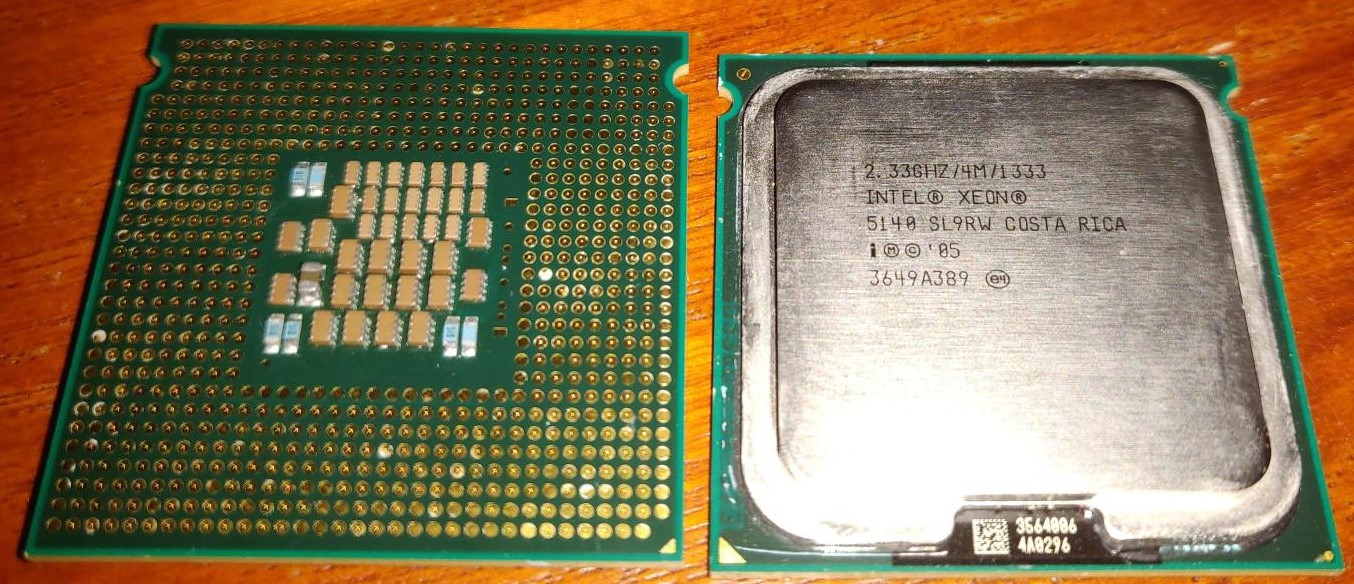
The split inside Intel’s business was stark. Its Data Center and AI segment surged 78% to $7.3 billion, with operating income rising to about $3.0 billion from under $1.0 billion a year earlier. Chief executive Lip-Bu Tan and chief financial officer David Zinsner described it as the company’s strongest data-centre revenue growth in 15 years, driven by robust demand for its Xeon server processors for AI workloads, with supply — not demand — now the constraint.
The Client Computing and Physical AI group, which sells processors for personal computers, went the other way: revenue fell 5% to $8.1 billion, missing the roughly $8.9 billion analysts had expected. Intel Foundry revenue rose 58% to $6.7 billion. Management said the PC slowdown is expected to continue at least through the first half of 2027, compounded by an industry-wide memory-chip shortage affecting the broader supply chain.
The guidance that moved the stock
For the fourth quarter, Intel guided revenue of $15 billion to $16 billion and non-GAAP earnings per share of $0.25, with GAAP earnings of $0.10. Analysts had expected roughly $17.1–$17.3 billion in revenue and $0.43–$0.45 in adjusted earnings — so the midpoint of Intel’s revenue range sits about $1.5 billion below consensus, and its earnings guide is roughly half the expected figure. Intel also guided a fourth-quarter non-GAAP gross margin of 38%, a steep step down from the 44.1% reported in the third quarter.
Shares fell about 17% in after-hours trading on Thursday, to around $76–$77, after closing down 3.6% at $92.07 in the regular session — though after-hours reports varied as trading moved, with some outlets recording falls of more than 20% at one point before the decline narrowed. Even after the drop, the stock remained up sharply for the year, having more than doubled through Thursday’s close, but it had already fallen about 35% from its record high in June.
Part of the guidance shortfall is specific and tragic. On October 14, an explosion at Intel’s Kiryat Gat fabrication facility in Israel killed two workers and disrupted production for about two weeks. Intel estimates the incident will reduce fourth-quarter revenue by about $300 million and gross margins by roughly 200 basis points, with a similar revenue impact expected in early 2027. Production at the facility was expected to begin ramping up again by the end of the week.
Why it matters
Intel’s quarter is a useful corrective to a simple AI-boom narrative. The AI infrastructure buildout is genuinely lifting demand for server processors — Intel’s data-centre surge, alongside record quarters at Samsung and TSMC, shows that. But Intel is still managing two different cycles at once: a fast-growing server business constrained by supply, and a shrinking PC business facing weak demand and memory shortages, plus a factory disruption that directly hits the next quarter’s numbers.
Investors, in other words, did not sell Intel because its third quarter was weak. On adjusted profit and data-centre growth, it was strong. They sold it because the fourth quarter now looks materially weaker than they had modelled — lower revenue, much lower earnings, and thinner margins — and because management gave them no reason to expect the PC side to recover soon.
Whether the sell-off proves overdone will depend on the next two data points: whether data-centre demand stays supply-constrained rather than fading, and whether the Kiryat Gat disruption really is contained to the roughly $300 million Intel has flagged, rather than spilling further into 2027.
What remains uncertain
Revenue consensus figures differ by provider ($16.44–$16.56 billion), so Intel’s $16.51 billion is best described as broadly in line, not as a decisive beat or miss. After-hours share moves fluctuated during Thursday evening, so the 17% figure is the after-hours fall reported by Morningstar/Dow Jones, with wider intraday swings noted in other coverage. The Kiryat Gat revenue and margin impacts are Intel’s estimates, not final figures, and the PC recovery timing is management’s projection, not a guarantee.
FAQ: Did Intel beat Q3 expectations? On adjusted profit, yes — $0.52 versus about $0.40–$0.41 expected. Revenue of $16.51 billion was broadly in line with consensus. Why did Intel shares fall then? Fourth-quarter guidance of $15–$16 billion in revenue and $0.25 adjusted EPS was well below the roughly $17 billion and $0.43–$0.45 analysts expected. What drove the guidance miss? A PC slowdown expected through at least early 2027, memory shortages, and about $300 million of lost Q4 revenue from the Kiryat Gat factory explosion. How strong was the data-centre business? Revenue jumped 78% to $7.3 billion, Intel’s strongest data-centre growth in 15 years.
Sources: Morningstar / Dow Jones, “Intel Shares Tumble on Lower 3Q Profit, Weak 4Q Guidance” — https://www.morningstar.com/news/dow-jones/2026102918431/intel-shares-tumble-on-lower-3q-profit-weak-4q-guidance ; Intel via Morningstar / Business Wire, “Intel Reports Third-Quarter 2026 Financial Results” — https://www.morningstar.com/news/business-wire/20261029327355/intel-reports-third-quarter-2026-financial-results ; CTech, “Intel shares plunge as Israel factory blast compounds weak outlook” — https://www.calcalistech.com/ctechnews/article/7djs538lu ; TalkMarkets, “Intel Stock Plunges 17% After Weak Q4 Forecast Overshadows AI Growth” — https://talkmarkets.com/article/intel-stock-plunges-17-after-weak-q4-forecast-overshadows-ai-growth
Related coverage: Qualcomm unveiled the Snapdragon 8 Elite Gen 6 at IMC 2026.