Google’s first space data center satellite is online — and its first AI reply from orbit was a haiku. Google announced on October 30, 2026 that its Project Suncatcher prototype had returned what the company calls the first-ever AI response from a data-center-class Tensor Processing Unit (TPU) in orbit.
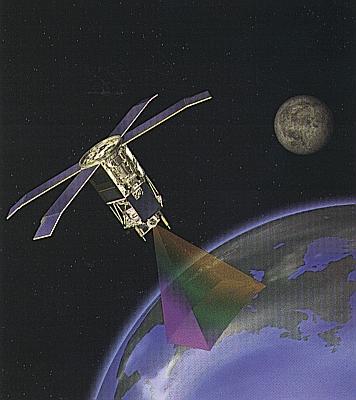
The prototype launched on October 1, 2026 aboard a SpaceX Falcon 9 Transporter-18 rideshare mission, alongside more than 100 other spacecraft, built in partnership with Planet. After about three weeks of commissioning, engineers sent their first prompt during a ground-station pass: they asked the onboard Google DeepMind Gemma 4 open model to write a haiku about being in space.
As the satellite passed Svalbard, Norway, it downlinked the reply:
Blue marble below
Data streams in silent grace
Starlight feeds my core.
A ‘Hello World’ moment, not a service
Travis Beals, Google’s Senior Director of Paradigms of Intelligence, called the milestone the mission’s “Hello World” moment. Google then tested space-themed limericks and telemetry prompts that report the technical status of the payload systems, and a spokesperson told TechCrunch the satellite was operating nominally.
The test matters because it proves the full chain works in orbit: prompt uplink, model execution on the satellite’s TPU, and response downlink. It does not yet prove the chips will run reliably over time in space.
What the hardware is — and its limits
TechCrunch reports the prototype carries four Google TPUs and generates up to 1 kW of electricity, but can run only one TPU at a time, for about 20 minutes, because of thermal constraints. Those power and run-time figures come from TechCrunch’s reporting; Google’s announcement post itself gives no such figures, and no latency or throughput performance numbers have been reported.
Google says the next tests will examine how the TPUs perform under thermal stress and in the space radiation environment — the conditions that separate orbit from a terrestrial data center. Google has said the next milestone is twin interconnected satellites in 2027.

Why Google is trying this
Project Suncatcher, announced in November 2025, is a long-term research moonshot exploring whether solar-powered satellites carrying TPU AI chips could one day scale machine learning in space. A peer-reviewed paper on the research behind the mission is published in the journal Joule. This prototype is an early research demonstration, not a product or service users can access, and no pricing or availability has been announced.
What is still unknown
No results from the thermal and radiation tests have been reported yet. Whether data-center-class chips can reliably run sustained workloads in orbit — and whether space data centers could ever be economical, a goal Google targets for the 2030s in reporting of the project — remains unproven.
Related coverage
Read Emadan’s recent Google AI coverage: Google is shutting down Jules, its AI coding agent, on December 31.
Frequently asked questions
What is Project Suncatcher? Google’s research project testing whether TPU AI chips can run machine-learning workloads aboard solar-powered satellites in low Earth orbit.
What was the satellite’s first AI reply? A haiku generated by the onboard Gemma 4 model: “Blue marble below / Data streams in silent grace / Starlight feeds my core.”
Can anyone use this space data center? No. It is a single research prototype, not a commercial service, and no pricing or availability has been announced.
Sources
TechCrunch, “Google’s first data center satellite is online and writing poetry” — https://techcrunch.com/2026/10/30/googles-first-data-center-satellite-is-online-and-writing-poetry/ ; Unite.AI, “Project Suncatcher’s Orbiting TPU Delivers Its First AI-Generated Haiku” — https://www.unite.ai/project-suncatchers-orbiting-tpu-delivers-its-first-ai-generated-haiku/ ; Google Research announcement, October 30, 2026, as reported by TechCrunch and Unite.AI.