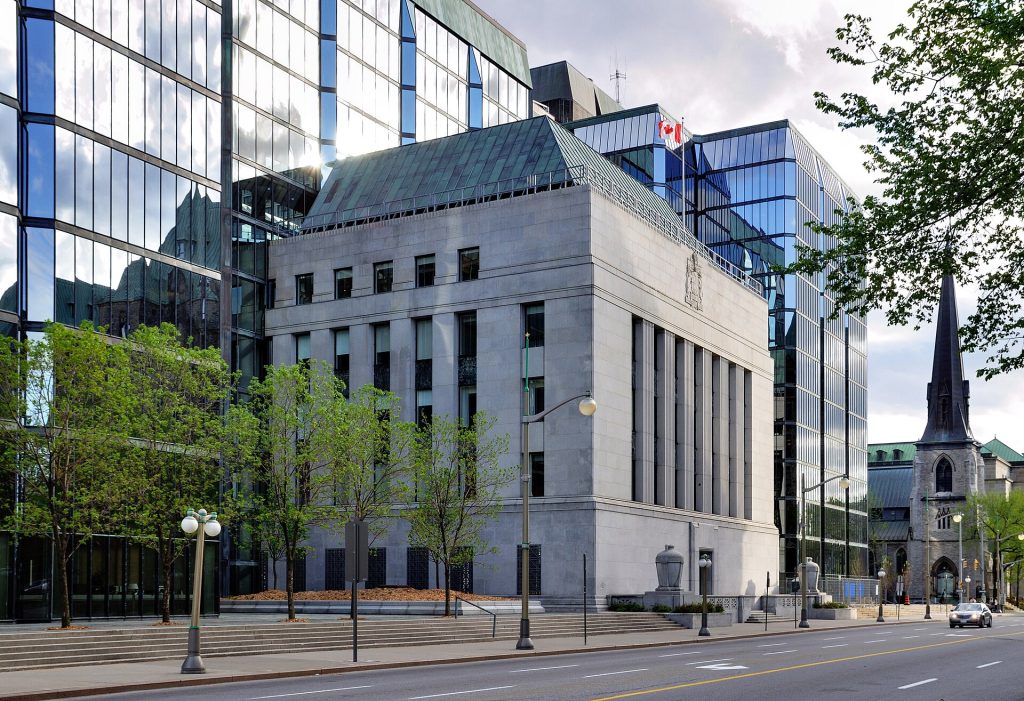
The Bank of Canada has raised its policy interest rate by 25 basis points to 2.50%, its first increase since July 2023, saying a worsening inflation outlook means it can no longer afford to wait.
Governor Tiff Macklem, announcing the decision on Wednesday, October 28 alongside Senior Deputy Governor Carolyn Rogers, said two developments since the Bank’s July report had forced the move: the outlook for inflation had deteriorated, and the economy had proved more resilient than expected.
Why the Bank moved now
“With the outlook for inflation substantially higher and the economy showing resilience, an increase in the policy rate is needed to reduce the risk that elevated energy prices could spill over and become generalized inflation,” Macklem said in his opening statement.
The main driver is energy. With the war in the Middle East persisting, global oil prices have risen and are expected to remain higher for longer, Macklem said — hitting Canadians at the petrol pump and raising costs for many businesses. Annual inflation hit 3.2% in September, above the Bank’s 1% to 3% target range, driven almost solely by higher energy and energy-related transport costs.
The Bank also raised its forecasts sharply: inflation for 2027 is now expected at 3.1%, up from 2.0% predicted in July, while growth this year is put at 1.0%, up from 0.7%. Macklem said inflation was expected to end this year at 3.5% and stay around 3% for most of next year before returning close to the 2% target by the middle of 2028.
More hikes possible — but no promise
Macklem left the door open to further increases without committing to them. “There could be a need to raise the policy rate further, but given the uncertainties, we will proceed carefully,” he said, adding that Governing Council agreed risks to inflation had increased and there was less scope for monetary accommodation.
The caution reflects genuine uncertainty. Developments in the Middle East and Canada-US trade relations remain fluid, and the Bank is unsure how much energy costs will seep into prices more broadly. The case for holding had real weight: inflation excluding petrol was 2.2%, core measures remained close to 2%, and the economy still has unused capacity. The economy has also lost 110,000 jobs in two months, according to decision-day reporting.
Markets had largely priced in the move. After Macklem warned at IMF meetings in Bangkok on October 17 that the Bank would likely raise its inflation outlook, overnight swaps moved from pricing roughly a 35% chance of an October hike to nearly 90%, and 19 of 34 economists polled by Reuters expected one.
What it means for borrowers
The rate remains below the midpoint of the Bank’s neutral rate, estimated at 2.75% — the level that neither stimulates nor restrains the economy — so today’s move is a step toward neutral rather than outright tightening.
For borrowers, the practical effect runs through the prime rate, which lenders use to set variable mortgage rates and home equity lines of credit. Existing fixed-rate mortgages are unaffected. For anyone renewing or shopping for a mortgage, the five-year Government of Canada bond yield still matters more than the Bank’s move for fixed rates.
The next decision will hinge on whether energy-driven inflation spreads into broader prices, or fades as the Bank expects by 2028. If inflation stays near 3% through next year, Macklem’s warning suggests another rise is plausible; if it cools, the Bank can afford to wait.
The decision follows our earlier preview of central banks edging toward rate hikes as energy inflation bites, and contrasts with New Zealand’s central bank, which surprised markets the same day by holding at 2.75%.
Frequently asked questions
What is the Bank of Canada’s new rate? The policy interest rate is now 2.50%, up 25 basis points from 2.25%.
Why did the Bank raise rates? Mainly because the inflation outlook worsened on higher energy prices, while the economy proved resilient enough to absorb a rise.
Will there be another hike? Macklem said further rises may be needed but that the Bank will proceed carefully — no schedule was committed to.
Sources
- Reuters — Full text: Bank of Canada head sees less room for monetary accommodation (Macklem statement)
- Reuters via WDSM — Bank of Canada raises key interest rate, says another hike possible
- Nesto — Bank of Canada raises its rate to 2.50% in first increase since 2023
- Marshall & Co — Bank of Canada rate hike: Ottawa impact (Macklem remarks summary)