The United States will remove South Africa and Rwanda from its African Growth and Opportunity Act (AGOA) duty-free trade programme from 1 January 2027, the Office of the US Trade Representative (USTR) announced on Monday 2 November. President Donald Trump has notified Congress and both governments of his intention to terminate their beneficiary status, following the annual interagency review of countries’ eligibility for the programme, USTR Ambassador Jamieson Greer said in a statement. The decision is a significant blow to South Africa in particular. South Africa has been AGOA’s largest beneficiary over the past 25 years, accounting for 54 percent of all AGOA-related exports to the United States, according to BusinessTech’s report of the announcement.
Why Washington says it acted
Greer said the review found that the governments of Rwanda and South Africa were ‘engaging in practices that are inconsistent with AGOA’s eligibility criteria’. The statement added: ‘These concerning and pervasive practices include, but are not limited to, barriers that undermine American trade and investment and practices that pose a threat to US national security and foreign policy interests in the region.’ The Associated Press noted that the statement did not give specific examples of the trade barriers or the security and foreign-policy issues behind the finding. That gap matters: the announcement establishes Washington’s stated reasons in general terms, but it does not, on its own, prove any particular allegation against either government. AGOA eligibility is reviewed every year. Under the programme’s rules, any removal requires 60 days’ notice to Congress and to the country concerned, which is why the change takes effect at the start of January rather than immediately.
What changes on 1 January 2027
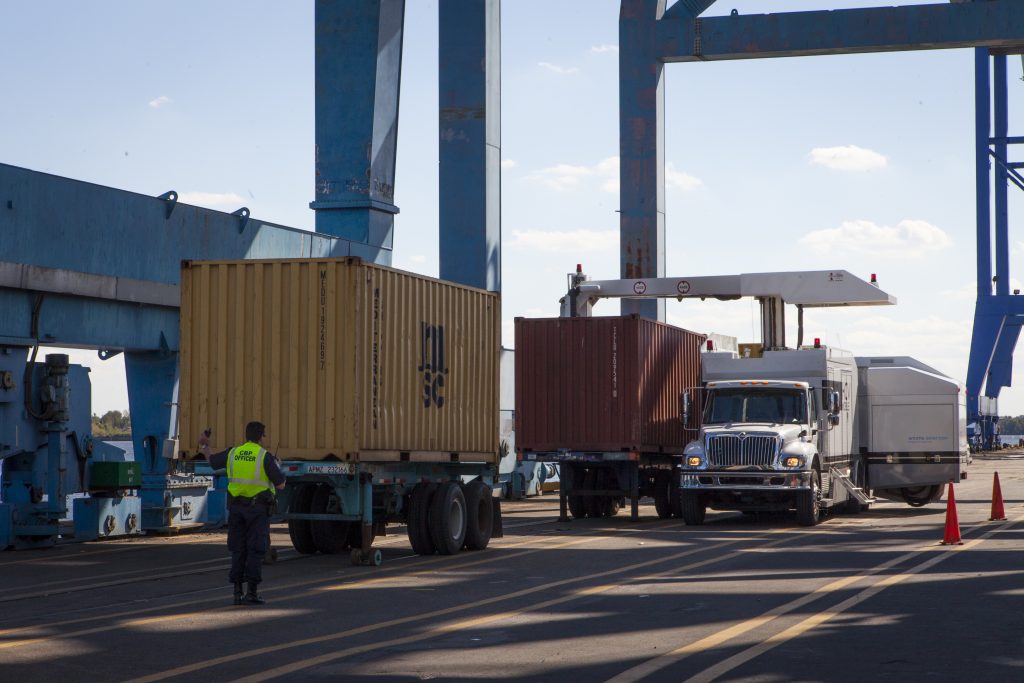
Removal from AGOA does not end trade with the United States, and it is not a ban on South African or Rwandan exports. It removes preferential, duty-free treatment. From 1 January, affected exports will instead face the United States’ standard tariff regime — the normal duties applied to countries without a preferential trade arrangement. In practice, that makes those goods more expensive and less competitive in the American market. For South Africa, agricultural economist Wandile Sihlobo said the loss of AGOA would add a tariff of around 3.4 percent on top of the 12.5 percent tariffs the United States already has in effect against South Africa, as reported by BusinessTech. He described the move as South Africa’s ‘graduation’ out of AGOA, in the sense that access continues, but at slightly higher tariffs.
What is at stake for South Africa
South Africa exported about $1.7 billion worth of goods to the United States under AGOA in 2025, according to Reuters reporting of the announcement. The sectors most exposed include cars, agriculture, processed foods, chemicals and metals. Among farm goods, citrus, wine, table grapes, avocados and macadamia nuts are among those that have benefited most from duty-free access. A 2023 US Department of Agriculture report found that two-thirds of South Africa’s agricultural exports to the United States entered tariff-free under AGOA. The National Agricultural Marketing Council estimated the exclusion could reduce South Africa’s welfare by $20.8 million and cut output in the vegetables, fruits and nuts sector by 1.3 percent. Those are estimates of the effect, not confirmed outcomes, and the real impact will depend on how exporters, buyers and the government respond. Jobs are the sharpest concern. South Africa’s labour federation Cosatu has expressed deep concern about the potential impact on thousands of agricultural and manufacturing jobs, according to reporting of the announcement.

Pretoria’s response
South Africa’s Trade, Industry and Competition Minister, Parks Tau, said before the announcement that the government was prepared for the outcome and that the economy would remain stable regardless of the decision, as it seeks other international markets. BusinessTech also reported Tau as saying South Africa will have 60 days to address the concerns raised by the United States before any suspension, full or partial, could take effect. The Department of Trade, Industry and Competition has said it prepared an economic response package with business and labour to support affected sectors and protect jobs. Tau had said last week that South Africa hoped for a favourable decision, arguing that continued market access would be in the best interest of both countries. Bilateral trade reached $28.8 billion in 2025, according to figures cited in South African reporting, with more than 600 American companies operating in South Africa.
Rwanda and the wider context
Rwanda will also lose its preferential trade status from the same date, though the announcement coverage carried far less detail on Rwanda’s specific exports than on South Africa’s. Washington has been increasing economic pressure on Rwanda over its alleged backing of the armed M23 rebel group in the neighbouring Democratic Republic of Congo, Vanguard reported. The United States recently sanctioned Rwanda’s defence ministry over those ties, which the Rwandan government denies. The USTR statement itself did not link the AGOA decision to any single incident, and that alleged backing should be reported as an allegation, not as an established fact.
What AGOA is
AGOA was introduced by the US Congress in 2000. It grants eligible sub-Saharan African countries tariff-free access to the American market for more than 1,800 products, alongside products covered by the Generalized System of Preferences. The programme was renewed until the end of 2028, but eligibility is reviewed annually against criteria including progress towards a market-based economy, the rule of law, political pluralism and due process, and removing barriers to US trade and investment. South Africa has been a beneficiary since the programme’s launch in 2000. Its removal therefore ends a 26-year preferential arrangement, even though ordinary trade continues.
What happens next
The 60-day notice period gives both governments time to raise the concerns cited by Washington, and gives exporters time to plan for shipments landing after 1 January, when the new tariff treatment applies. Whether either country regains eligibility in a future annual review will depend on that review process, not on this announcement alone. For now, the confirmed facts are the decision, the date, the stated general reasons, and the scale of South Africa’s AGOA exports. The specific policies Washington objects to, beyond the general categories in the statement, have not been spelled out publicly.
Frequently asked questions
When do South Africa and Rwanda lose AGOA access? From 1 January 2027, following the announcement on 2 November 2026 and the required 60 days’ notice.
Does this stop South Africa trading with the United States? No. Exports continue, but without duty-free treatment under AGOA. Exporters will face standard US tariffs instead.
Why did the US remove them? The USTR said both governments were engaging in practices inconsistent with AGOA eligibility, citing trade and investment barriers and practices said to threaten US national security and foreign-policy interests. No specific examples were given in the statement.
How big is South Africa’s AGOA trade? About $1.7 billion of goods were exported to the US under AGOA in 2025, and South Africa accounts for 54 percent of all AGOA-related exports to the US.
Sources
Reuters, ‘US to suspend South Africa, Rwanda from duty-free trade access’, 2 November 2026 — https://www.reuters.com/world/africa/us-suspend-south-africa-rwanda-duty-free-trade-access-2026-11-02/
Moneyweb (Bloomberg), ‘South Africa, Rwanda lose access to Agoa’, 2 November 2026 — https://www.moneyweb.co.za/news/south-africa/south-africa-rwanda-lose-access-to-agoa/
The Citizen, ‘US to exclude South Africa and Rwanda from Agoa duty-free deal’, 2 November 2026 — https://www.citizen.co.za/news/news-world/us-to-exclude-south-africa-and-rwanda-from-agoa-duty-free-deal/
BusinessTech, ‘United States deals severe blow to South Africa’, 2 November 2026 — https://businesstech.co.za/news/business/882363/united-states-deals-severe-blow-to-south-africa/
Associated Press via Reflector, 2 November 2026 — https://www.reflector.com/news/national/the-trump-administration-will-cut-south-africa-and-rwanda-from-the-agoa-trade-program/article_c3a0eb08-ee2c-5b57-8e50-1863d870fe98.html
Vanguard, ‘US to exclude S. Africa, Rwanda from Africa duty-free trade deal’, 2 November 2026 — https://www.vanguardngr.com/2026/11/us-to-exclude-s-africa-rwanda-from-africa-duty-free-trade-deal/