South Africa heads to local elections on November 4 amid mounting social tensions, with immigration, unemployment, crime and failing municipal services dominating campaign debate and security concerns rising in several provinces.
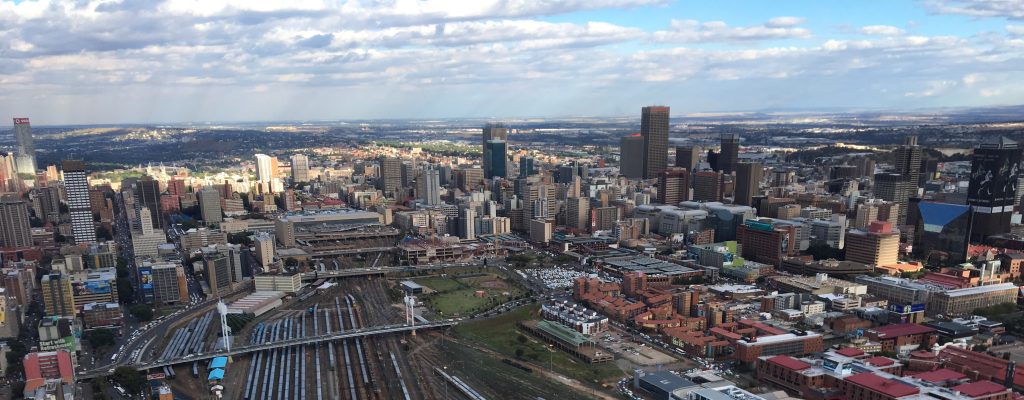
Featured photo: Johannesburg, 2017. Mark Hillary, CC BY 2.0.
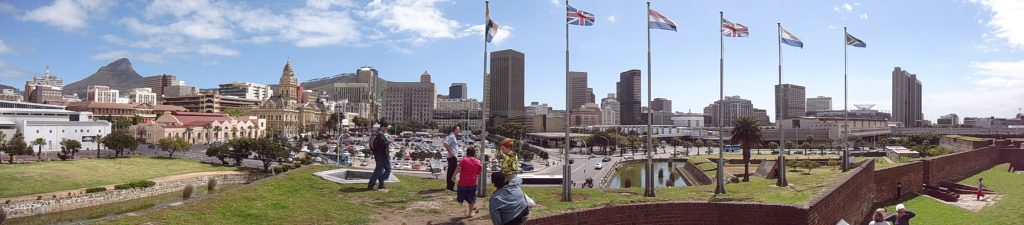
File photo: Flags, Castle of Good Hope, Cape Town, 2012. E trousdale, CC BY-SA 3.0.
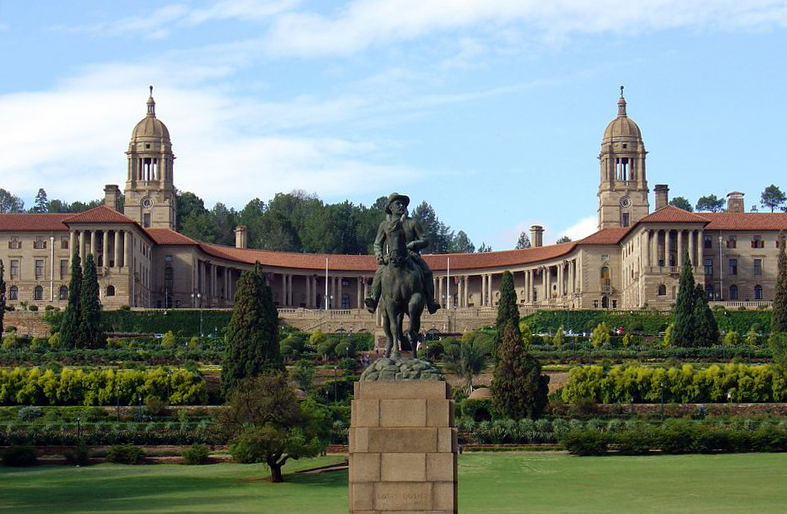
File photo: Union Buildings, Pretoria. Davinci77, CC BY-SA 3.0.
What is at stake
The Independent Electoral Commission (IEC) has certified 136,790 candidates to contest 10,526 council seats across eight metropolitan municipalities, 44 district municipalities and 205 local municipalities. The IEC has continued preparations despite the heightened tensions.
Why tensions are high
Demonstrations and anti-immigrant protests earlier in October, including unrest in Johannesburg’s Soweto township and in Durban, raised public-safety concerns. Police arrested dozens of people in connection with public violence, property damage and unlawful gatherings, according to the reports.
KwaZulu-Natal
Tensions have remained particularly high there, with concerns over further violence against foreign nationals and commercial establishments. President Cyril Ramaphosa authorised the deployment of 510 South African National Defence Force soldiers to the province from October 9 to November 30 to assist police operations. Authorities have also sought court orders to prevent planned demonstrations in Durban, citing public safety.
Underlying grievances
Many low-income communities still face limited access to housing, education and healthcare more than three decades after apartheid. Residents have complained of unreliable water and electricity supplies, deteriorating roads, inadequate sanitation, poor waste management and delays in housing provision. In areas where competition for jobs and business opportunities is intense, irregular migration has increasingly become a focus of public criticism; anti-immigrant groups argue undocumented foreign nationals add pressure on employment and public services. These claims are reported as campaign arguments, not verified as fact about migration’s effects.
What voters say
Reporting from Nongoma and Nkandla in KwaZulu-Natal found residents citing water outages, blackouts, crime and unemployment as reasons to vote, with some saying illegal immigration would influence their choice. One young voter said he wanted a party that would bring more jobs for young people.
What is not yet known
The outcome of the November 4 vote, and whether the security measures prevent further unrest, are not yet known. No new IEC announcement beyond continued preparations was reported in the October 30 coverage.
Frequently asked questions
When are South Africa’s local elections?
November 4, 2026.
How many seats are contested?
10,526 council seats.
Why were soldiers deployed in KwaZulu-Natal?
To assist police from October 9 to November 30 amid tensions.