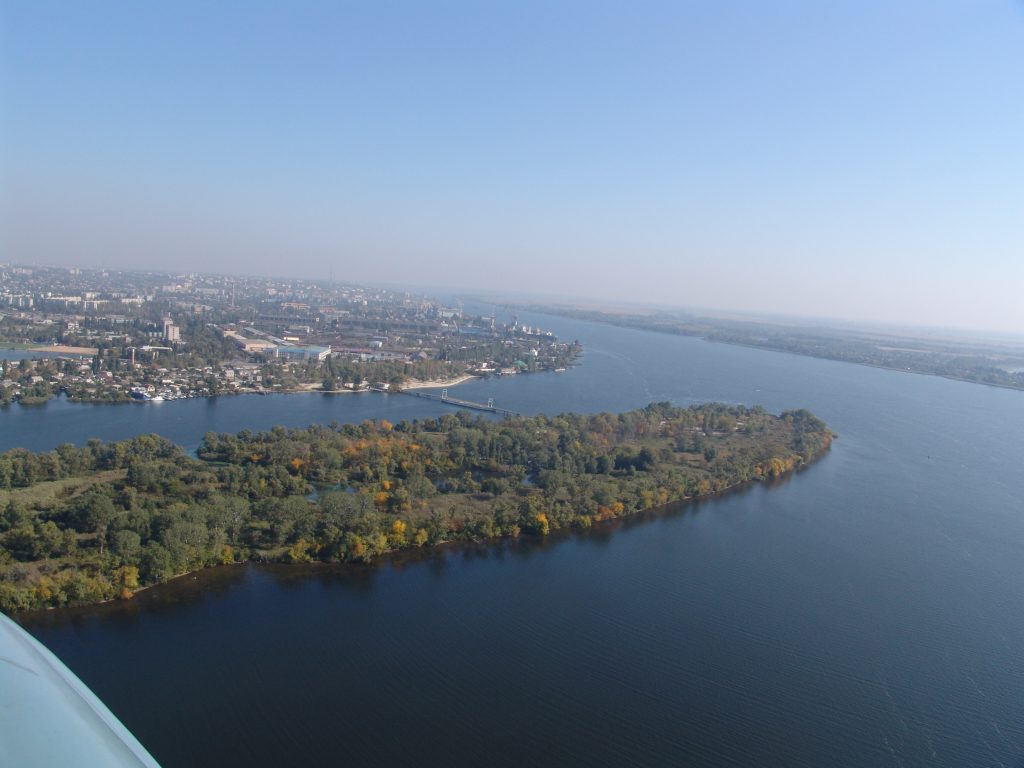
Hundreds of residents evacuated from the Russian-occupied town of Oleshky arrived in Ukraine on Saturday, completing a journey out of the war-ravaged Kherson-region town under a rare truce brokered with help from United States First Lady Melania Trump.
Ukrainian President Volodymyr Zelenskyy said on X on Saturday: “As of now, Ukrainian citizens from Oleshky have crossed the Ukrainian border in the Chernihiv region. All of them will receive the assistance they need.” He added: “I thank the American side and US First Lady Melania Trump for their mediation.”
An Agence France-Presse journalist saw residents, some draped in Ukrainian flags, disembark from buses and tearfully embrace loved ones. AFP said it could not report the precise location of the arrival for security reasons.
The long way out: buses, Anapa, Gomel
The evacuees began leaving Oleshky in bus convoys on Friday. Those travelling to Ukrainian-held territory were bused to the Russian city of Anapa and then flown to Gomel in Belarus, according to Russia’s Defence Ministry and Belarusian state media. Four planes carrying evacuees landed in Gomel on Saturday, Ukrainian lawmaker Davyd Arakhamia said, adding that the passengers would be on Ukrainian territory “within hours”.
Ukraine’s human rights commissioner, Dmytro Lubinets, accompanied the group and travelled to Oleshky on Friday with his Russian counterpart to supervise the evacuation. “We will be home soon!” Lubinets wrote in a video post from Gomel airport.
Ukrainian and Russian officials had visited Oleshky together on Friday, delivering aid and marshalling those who wanted to leave, in a rare show of cooperation between the warring sides.
A reunion after 1,711 days
CNN reported one reunion in detail: Dmytro had not seen his wife Larisa for 1,711 days, and the couple embraced at the border on Saturday afternoon, both wrapped in Ukrainian flags. Larisa had lost a third of her body weight under the occupation, CNN reported. Another resident, Tamara, told CNN she had initially been reluctant to evacuate because of her animals; many evacuees arrived with pets.
The director of the Chernihiv Regional Hospital, Andriy Zhydenko, waited at the border with staff to provide medical assistance to the arrivals, CNN reported.
How many people left — and what is still unconfirmed
Neither Kyiv nor Moscow has confirmed the exact number of people evacuated, Al Jazeera and the South China Morning Post both report. Coverage describes the arrivals as “hundreds”. Separately, Melania Trump posted on Friday that the humanitarian convoy could safely evacuate more than 750 people — that is the convoy’s capacity figure, not a confirmed count of arrivals, and this article does not present it as one.
Around 2,000 residents, compared with about 24,000 before Russia’s full-scale invasion, were still in Oleshky ahead of the operation, according to Kyiv’s estimates. The Institute for the Study of War, a US-based conflict observer, says about 40% of Oleshky’s prewar population managed to flee to Ukrainian-controlled territory early in the fighting, when escape was still possible. Access routes to the town have since been heavily mined, and evacuation across the Dnipro River directly into Ukrainian-controlled territory is not possible.
The truce — and what happens when it ends
The ceasefire in the southern Kherson region began at 3am on Tuesday and is expected to continue until Sunday evening. AFP describes it as the longest pause in fighting anywhere on the front line since Russia invaded Ukraine in February 2022. Announcing the ceasefire last week, Melania Trump described Oleshky as being “on the brink of disaster” and said that without her intervention, bringing aid to its residents would have been “impossible”. Pope Leo XIV also pressed Russian and Ukrainian leaders to allow aid deliveries and civilian evacuations.
What happens after Sunday evening is not yet clear. Lubinets and his Russian counterpart have raised the possibility of further humanitarian operations for people in frontline towns, but no follow-up operation has been confirmed. The estimated 2,000 residents were offered the choice of travelling to Ukrainian- or Russian-held territory, or remaining in the city with replenished food and medical supplies.
Related coverage: Russia Halts Kherson Strikes as Oleshky Ceasefire Takes Effect for Aid and Evacuations
Frequently asked questions
How did the Oleshky evacuees reach Ukraine? By bus out of Oleshky on Friday, then by air from the Russian city of Anapa to Gomel in Belarus, and then across the border into Ukraine’s Chernihiv region on Saturday.
How many people were evacuated? The exact number has not been confirmed by Kyiv or Moscow. Reports describe “hundreds” of arrivals; the figure of more than 750 was the convoy’s stated capacity, not a confirmed arrival count.
How long does the ceasefire last? The truce began at 3am on Tuesday and is due to end on Sunday evening.
Sources
- CNN, “Reunited after 1,711 days: Oleshky evacuees return to Ukraine under Melania Trump-brokered ceasefire”, 31 October 2026 — https://www.cnn.com/2026/10/31/europe/under-melania-trump-brokered-ceasefire?cid=external-feeds_iluminar_meta
- Al Arabiya (AFP), “Evacuees from Russian-occupied Oleshky arrive in Ukraine”, 31 October 2026 — https://english.alarabiya.net/News/world/2026/10/31/evacuees-from-russianoccupied-oleshky-arrive-in-ukraine
- South China Morning Post (AFP), “Evacuees from Russian-occupied Oleshky arrive in Belarus, Ukraine next”, 31 October 2026 — https://www.scmp.com/news/world/russia-central-asia/article/3372828/russia-occupied-oleshky-evacuees-arrive-belarus-ukraine-next
- The Week (AP), “Civilians from Russian-occupied Oleshky arrive in Belarus on their way to Ukraine”, 31 October 2026 — https://www.theweek.in/wire-updates/international/2026/10/31/civilians-from-russian-occupied-oleshky-arrive-in-belarus-on-their-way-to-ukraine.html
- Al Jazeera, “Evacuees from Russian-occupied Oleshky arrive in Ukraine via Belarus”, 31 October 2026 — https://www.aljazeera.com/news/2026/10/31/hundreds-from-russian-occupied-oleshky-land-in-belarus-en-route-to-ukraine