Quick Answer: China’s economy grew 4.5% year-on-year in the third quarter of 2026, official data showed on Monday, beating the 4.4% forecast in a Reuters poll of economists. The rebound, up from a more-than-three-year low of 4.3% in Q2, was powered by a 36.3% export surge in September and a fresh government stimulus push.
China’s economy gained modest momentum in the third quarter of 2026, official data released Monday showed, as record export shipments and targeted government stimulus helped lift growth above expectations.
Gross domestic product expanded 4.5% year-on-year in the July–September period, according to the National Bureau of Statistics (NBS), beating the 4.4% median forecast in a Reuters poll of 50 economists and improving on the second quarter’s 4.3% — the weakest reading in more than three years, per Nikkei Asia.
Key Takeaways
- China GDP grew 4.5% year-on-year in Q3 2026, above the 4.4% Reuters poll forecast and Q2’s 4.3%.
- January–September China GDP growth of 4.6% keeps Beijing within its full-year target of 4.5%–5%.
- Exports jumped 36.3% in September, pushing the nine-month trade surplus to $938 billion.
- Beijing announced a 550 billion yuan ($82 billion) government stimulus package of unused local-government debt quotas.
- Weak domestic demand remains the big risk: retail sales rose just 1.1% in September while property investment fell 20.6%.
What the Q3 China GDP Numbers Show
On a quarter-on-quarter basis, China’s economy expanded 1.2%, accelerating from 0.9% in April–June and beating expectations for a 1.1% rise, according to Reuters. For the first nine months of 2026, growth averaged 4.6% — squarely inside the government’s annual target range of 4.5% to 5%.
Industrial output rose 5.5% year-on-year in September, up from 5.2% in August, while retail sales grew 1.1% — a notable improvement on August’s 0.4% but still far below pre-pandemic norms. High-tech manufacturing value-added climbed 14.3% over the first nine months, underscoring Beijing’s strategy of redirecting credit from property toward technology industries.
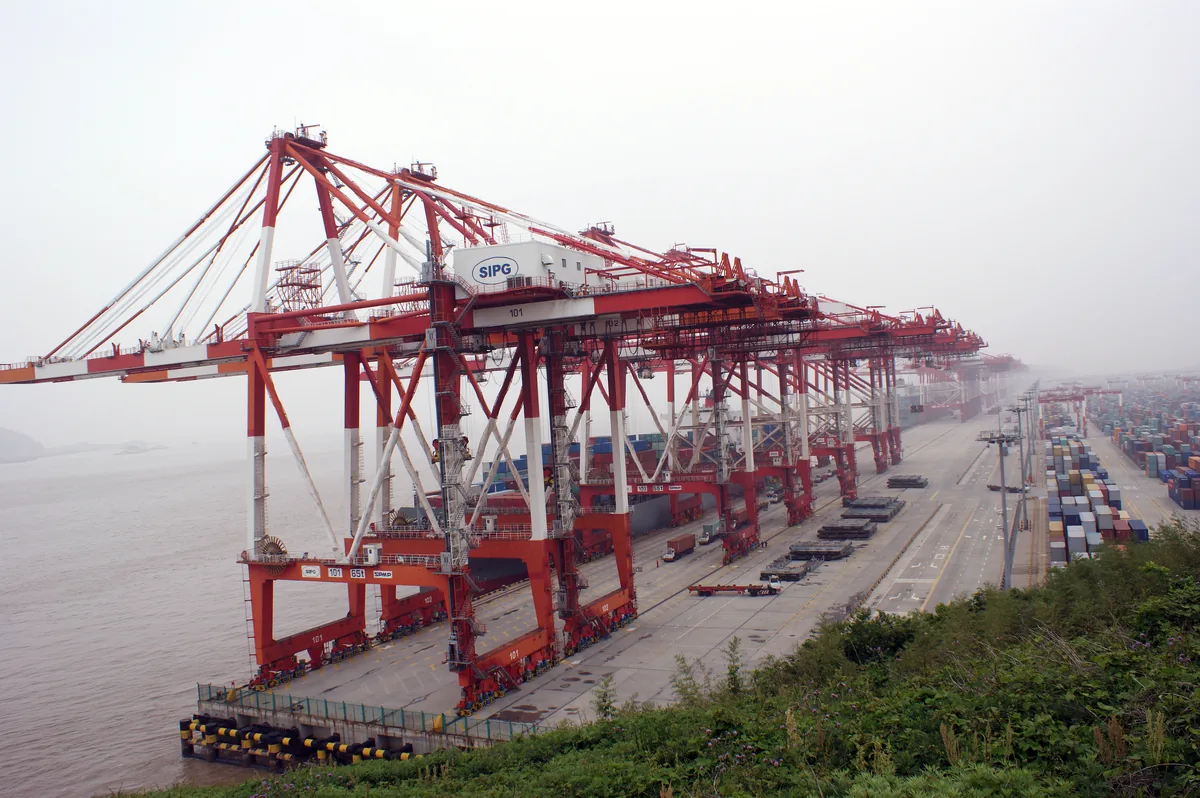
The bright spot was trade. Exports surged 36.3% in September, driven by semiconductor-related products and automobiles, while imports rose 31%. That left China with a trade surplus of $938 billion for the first nine months of the year, keeping it on track to surpass last year’s record of nearly $1.2 trillion — a trajectory that, as Reuters notes, is likely to intensify trade tensions with major partners, including the European Union. Read our earlier coverage of energy markets here: Ukraine Drone Strike Hits St. Petersburg Oil Terminal.
The Export Engine — and the Consumer It Masks
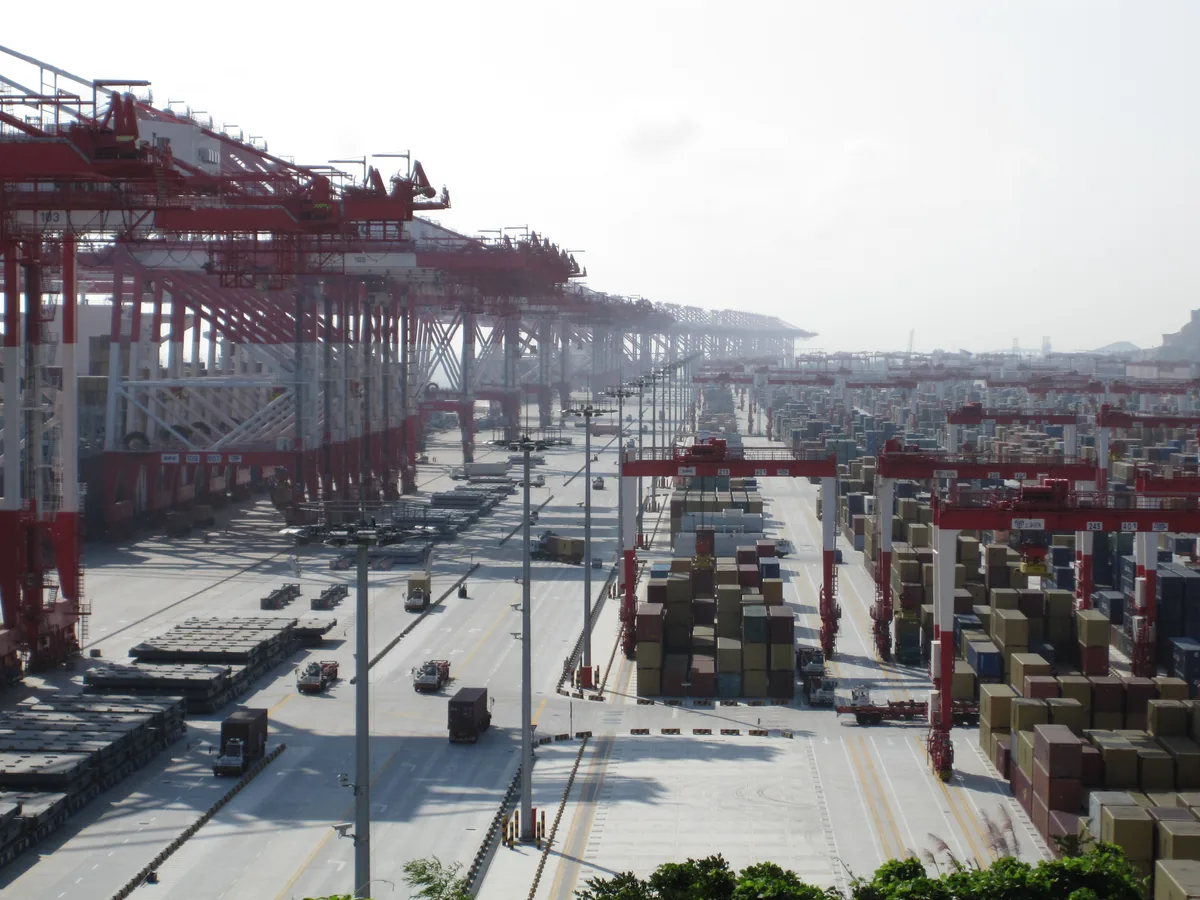
Economists describe a two-speed economy: humming factories and AI-fuelled exports masking weak household spending and private investment. Fixed-asset investment fell 7.2% in the first nine months, real-estate investment plunged 20.6%, and private investment dropped 10.4%, per the NBS data reported by SourceFirst News.
Retail sales of goods rose only 1.1% across the first nine months, and real per-capita disposable income rose 4.4% — but households are choosing to save rather than spend, according to analysts cited by The Finance Economy. The statistics bureau itself acknowledged in its statement that weak domestic demand remained a “relatively prominent problem.”
Economists at Oxford Economics said Beijing’s latest moves came amid “quickly deteriorating” domestic demand conditions, per Nikkei Asia.
Beijing’s 2026 Government Stimulus Package
After the cabinet pledged stronger action to shore up growth, Beijing rolled out a fresh round of support in late September, including targeted interest-rate cuts and mortgage subsidies. Earlier this month, the Ministry of Finance approved an allocation of 550 billion yuan ($82 billion) in unused local-government debt quotas to fund infrastructure investment and emerging industries — the centerpiece of China’s 2026 government stimulus package.
Days before the data, ING’s chief Greater China economist Lynn Song wrote in a note that policymakers could turn to more fiscal stimulus and wider monetary easing if the economy stayed sluggish toward year-end.
However, analysts in the Reuters poll expect benchmark lending rates and bank reserve requirements to stay where they are through the first quarter of 2027, as faster producer-price gains (up 5.0% in September) and firmer consumer inflation leave the central bank limited room for broad easing.
What China GDP Growth Means for Global Markets
The beat gives Beijing breathing room to meet its annual target, but the export-heavy path is raising friction abroad. Reuters reports that a deal with the EU to rein in Chinese hybrid-vehicle shipments could weigh on the booming auto trade, as European capitals grapple with a flood of Chinese goods.
Goldman Sachs analysts noted that while the measures should help the government reach its full-year growth target, local-government financing constraints and weak investment incentives could continue to weigh on policy implementation. For the US economy, the data lands amid close attention to trade balances — see also our report on Venezuela’s $76 Billion Oil Investment Deal With the US.
The surveyed urban unemployment rate eased to 5.2% from 5.3% in August — a small bright spot for a labor market under pressure from the property slump and weak consumption.
Frequently Asked Questions
China GDP 2026: what did the latest Q3 data show?
China’s economy grew 4.5% year-on-year in the third quarter of 2026, according to the National Bureau of Statistics, beating the 4.4% forecast in a Reuters poll and improving on the 4.3% recorded in the second quarter. January–September growth averaged 4.6%, within Beijing’s 4.5%–5% annual target.
Is there a China export shock hitting the global economy?
Exports surged 36.3% in September on semiconductors and automobiles, pushing China’s nine-month trade surplus to $938 billion — on track to beat last year’s record $1.2 trillion. Reuters reports the widening surplus is likely to intensify trade tensions with major partners, including the EU, which is negotiating curbs on Chinese hybrid-vehicle shipments.
What stimulus has China announced for 2026?
Beijing rolled out targeted interest-rate cuts and mortgage subsidies in late September, then allocated 550 billion yuan ($82 billion) in unused local-government debt quotas for infrastructure and emerging industries — the core of its 2026 government stimulus package. More fiscal easing is possible if domestic demand stays weak, ING’s Lynn Song noted.
What does China’s GDP growth mean for the US economy?
The beat signals steadier global demand but also sharper competition: surging Chinese exports are widening the trade surplus and pressuring Western manufacturers. Economists still expect US rate and trade policy to respond to the data as the figures feed into global markets news today.
Sources: Reuters, Nikkei Asia, Channel News Asia, National Bureau of Statistics. Reporting by Emadan News.