Quick Answer: Indonesian stocks crashed to a six-year low on Monday, October 19, 2026, falling more than 5% after an 11.6% plunge on Friday — a record two-day rout. The selloff followed a warning from index giant MSCI that it could expel Indonesia from its global emerging-market indexes over “significant concerns around market dysfunction,” heaping pressure on Jakarta to fix its market governance.
Key Takeaways
- Record rout: Jakarta Composite Index fell over 5% on Monday to a six-year low, extending Friday’s 11.6% crash — the steepest single-day drop since 1998.
- MSCI warning: The index provider proposed demoting Indonesia from “emerging market” to “standalone” status, skipping even “frontier” status, citing persistent market dysfunction.
- Market panic: The Indonesia Stock Exchange called it “market panic” and halved its daily down limit to 7% to slow the selling.
- Contagion: The rupiah weakened to 18,040 per dollar, near its record low, while 10-year bond yields jumped to 7.4%.
- Official response: President Prabowo Subianto was expected to meet top finance officials Monday afternoon, and IDX chief Jeffrey Hendrik insisted Indonesia still meets emerging-market criteria.
Indonesia’s stock market suffered another brutal session on Monday, with the Jakarta Composite Index sliding more than 5% to a six-year low in a record two-day rout, as investors recoiled from a warning by global index provider MSCI that it could expel the country from its emerging-market indexes entirely.
The Indonesia stock market crash deepened three days after MSCI said on Friday, October 16, that it was considering moving Indonesia to “standalone” status — a category that includes markets such as Lebanon and Zimbabwe — rather than merely demoting it to “frontier” status as it had threatened in January. MSCI said reforms to address concerns about market manipulation and opaque ownership structures had made insufficient progress.
Indonesia stock market today: why the panic selling hit a record
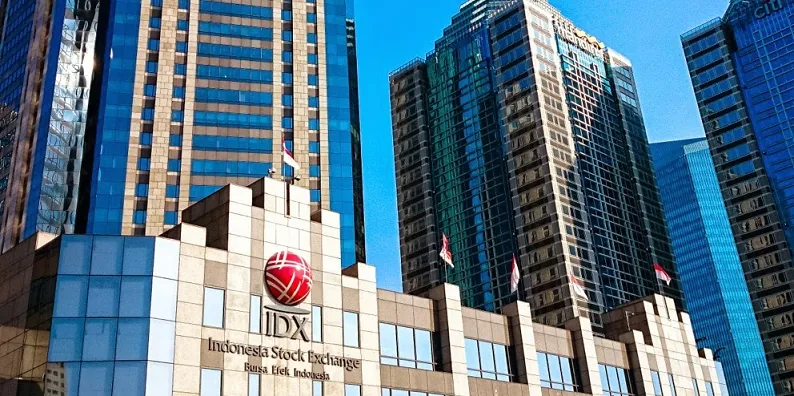
The Indonesia Stock Exchange said it had been caught off guard by the severity of MSCI’s announcement. “The MSCI announcement was unexpected to us, causing a market panic,” the exchange said in a statement, ahead of a meeting between exchange leaders and MSCI executives later on Monday.
To slow the selling, the exchange halved its daily down limit to 7% on Monday. Even so, the benchmark — already the world’s worst-performing major stock market in 2026 — extended a plunge that began on Friday with an 11.6% drop, its steepest single-day fall since 1998, Reuters reported. Year-to-date losses have now reached 40%.
MSCI Indonesia: why the index provider wants out
MSCI first raised concerns in January, freezing Indonesia in its indexes and threatening a downgrade to “frontier” status over opacity in ownership and trading behavior. On Friday, the index provider escalated sharply: “Significant concerns remain around market dysfunction,” it said, adding that Indonesia’s continued classification as an emerging market was “no longer appropriate.”
A move to standalone status would exclude Indonesian stocks from global indexes tracked by billions of dollars in passive investment, forcing index-tracking funds to sell. UBS estimated the move could trigger about $4 billion in passive outflows, with active investors potentially adding a further $15 billion. Goldman Sachs put passive outflows at $5.6 billion, noting that active funds benchmarked to the indexes hold more than $8 billion.
MSCI has opened a formal consultation running until April 2027, with a final decision expected by June 2027. “The burden of proof has shifted,” Goldman Sachs strategists said in a note: avoiding reclassification will require clear evidence that announced reforms have been consistently implemented.
Jakarta Composite Index crash: how it spread to the rupiah and bonds
The jitters spread well beyond equities. The rupiah weakened to 18,040 per dollar, not far from its record low of 18,190 hit in June, while a slide in Indonesian government bonds pushed the 10-year yield to 7.4%, up from 7.169% on Friday, according to traders cited by Reuters.
Foreign investors have already net sold $4.7 billion of Indonesian stocks in 2026, and the market has lost more than $350 billion in capitalization since January, according to the reports.
Indonesia economy latest: Jakarta scrambles to respond
Indonesian officials pushed back against MSCI’s move. Senior economic minister Airlangga Hartarto said there was “a big question mark” over why MSCI did not discuss the standalone proposal during a meeting this week in Bangkok. On Monday, Indonesia Stock Exchange president director Jeffrey Hendrik insisted Indonesia meets the criteria to remain an emerging market, pointing to free capital flows, $146.3 billion in foreign exchange reserves, and a liquid, sanction-free market.
The regulator has also unveiled sanctions against those linked to alleged trading manipulation in the shares of three firms, Reuters reported on Friday.
President Prabowo Subianto was expected to meet with top financial officials on Monday afternoon to discuss “the current economic condition,” according to two government sources cited by Reuters — a sign of how seriously Jakarta is taking a crisis that threatens to cut Southeast Asia’s biggest economy off from international capital.
The rout is the latest blow to Asian markets already rattled by global capital flows — read our coverage of China’s economy beating forecasts in Q3, and how tech-driven capital is shifting in Anthropic’s move toward a public listing.
Indonesia stock market crash: FAQs
What happened in the Indonesia stock market today?
On Monday, October 19, 2026, the Jakarta Composite Index fell more than 5% to a six-year low, extending Friday’s 11.6% crash — a record two-day rout — after MSCI warned it could expel Indonesia from its global emerging-market indexes.
Why is MSCI threatening to remove Indonesia from its indexes?
MSCI cited “significant concerns around market dysfunction,” including market manipulation and opaque ownership structures, and said reforms since its January warning have made insufficient progress. It proposed demoting Indonesia to “standalone” status, skipping even “frontier” status.
What does MSCI “standalone” status mean for investors?
Standalone status would exclude Indonesian stocks from global indexes tracked by billions of dollars in passive investment. Index-tracking funds would be forced to sell: UBS estimated about $4 billion in passive outflows, with active investors potentially adding a further $15 billion.
How far have Indonesian stocks fallen in 2026?
The Jakarta benchmark is down 40% year to date, making it the world’s worst-performing major stock market this year. Foreign investors have net sold $4.7 billion of Indonesian stocks in 2026, and the market has lost more than $350 billion in capitalization since January.
What is Indonesia’s government doing about the market selloff?
The exchange halved its daily down limit to 7%, the regulator sanctioned those linked to alleged trading manipulation in three firms’ shares, and President Prabowo Subianto was expected to meet top finance officials on Monday afternoon. A formal MSCI consultation runs until April 2027, with a final decision due by June 2027.
Reporting based on Reuters, Bloomberg, The Straits Times and MSCI’s statement, October 19, 2026.