US orders for durable goods rose 1.8% in September, the biggest monthly increase in five months, according to figures released on Tuesday by the US Census Bureau, part of the Commerce Department.
New orders for manufactured durable goods — products meant to last at least three years — increased $6.3 billion to $345.4 billion in September, the bureau said. The rise followed an upwardly revised 0.1% gain in August and beat the 1.4% consensus forecast. It was the sixth monthly increase in the past seven months.

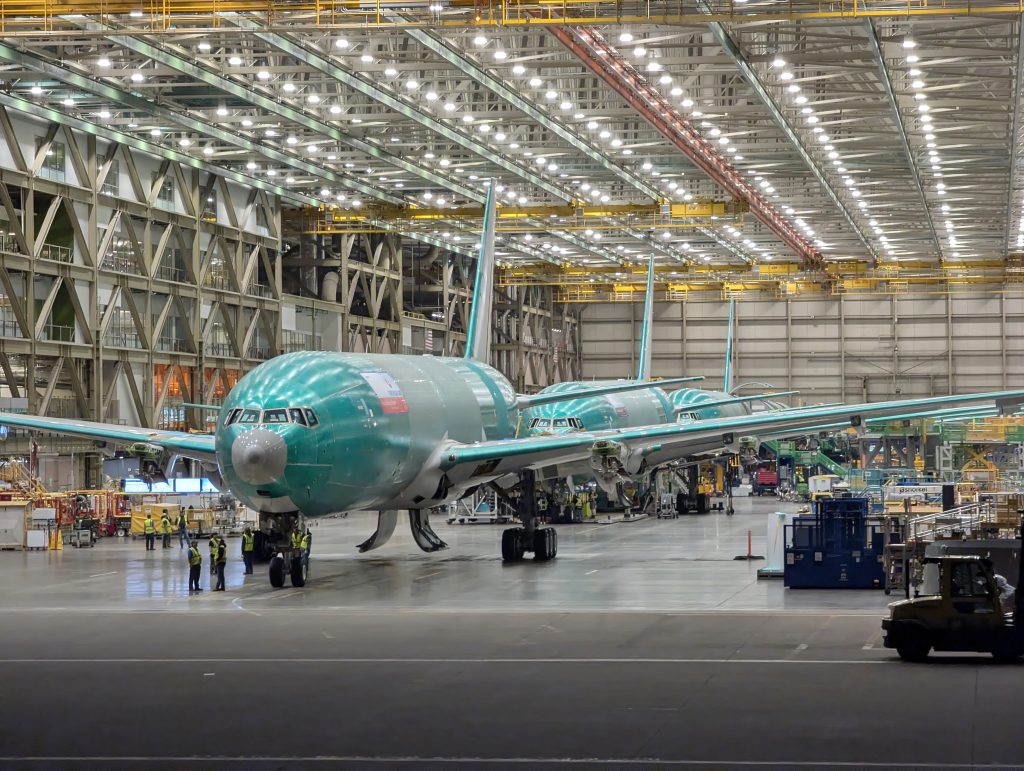
The headline strength was driven largely by transportation equipment. Orders in that category rose 4.6%, or $5.2 billion, to $119.8 billion, including a 28.4% jump in commercial aircraft orders. Boeing reported more orders in September than in the prior month, and bookings for computers, machinery and motor vehicles also rose.
Core reading softer than the headline
The details underneath the headline were more mixed. Orders excluding transportation rose 0.5%, while orders excluding defence increased 2.2%. Non-defence capital goods orders rose 6.2% to $107.8 billion, but defence capital goods orders fell 1.8% to $20.8 billion.
The closely watched core measure — non-defence capital goods orders excluding aircraft, a proxy for business investment in equipment — increased just 0.5%, below the 0.7% expected and down from a revised 1.6% gain in August. Economists watch that figure because it strips out volatile aircraft and military orders.
Shipments told a steadier story. Manufacturers’ shipments of durable goods increased 0.9% to $336.8 billion, while core capital goods shipments rose 1.2%, extending a run of robust advances. Non-defence capital goods shipments including aircraft, which feed into the equipment-investment portion of GDP, rose 1.7%.
Why it matters
Business investment has been robust this year, led by spending related to artificial intelligence, and the September report suggests that trend continued into the end of the third quarter. The data arrive just before two major events: the Federal Reserve’s interest-rate decision on Wednesday and the government’s first estimate of third-quarter GDP on Thursday, for which shipments data serve as an input.
Before the report, the Federal Reserve Bank of Atlanta’s GDPNow model anticipated business spending on equipment would add about one percentage point to third-quarter growth. Strong durable goods orders reversed an early decline in Treasury yields on Tuesday as markets awaited the Fed decision.

What is still uncertain
Durable goods orders are notoriously volatile, driven in large part by lumpy commercial aircraft orders that can swing the headline by several percentage points in a single month. The Census Bureau also cautions that its survey design, which is not based on a probability sample, prevents it from assessing whether the estimates are statistically significant. Revised and more detailed September estimates are scheduled for November 3, with the advance report on October orders due November 25.
Sources
- Bloomberg report on US durable goods orders, October 27, 2026 (The Edge Singapore)
- Reuters durable goods data table, October 27, 2026 (TradingView)
- Seeking Alpha, October 27, 2026
- EconoTimes, October 27, 2026
Frequently asked questions
What are durable goods orders? New orders for manufactured products expected to last three years or more, such as machinery, vehicles, aircraft, appliances and computers.
Why do markets watch core capital goods orders? They exclude volatile aircraft and defence orders, giving a cleaner read on underlying business investment.
What happens next? Revised September data on November 3 and the advance October report on November 25.