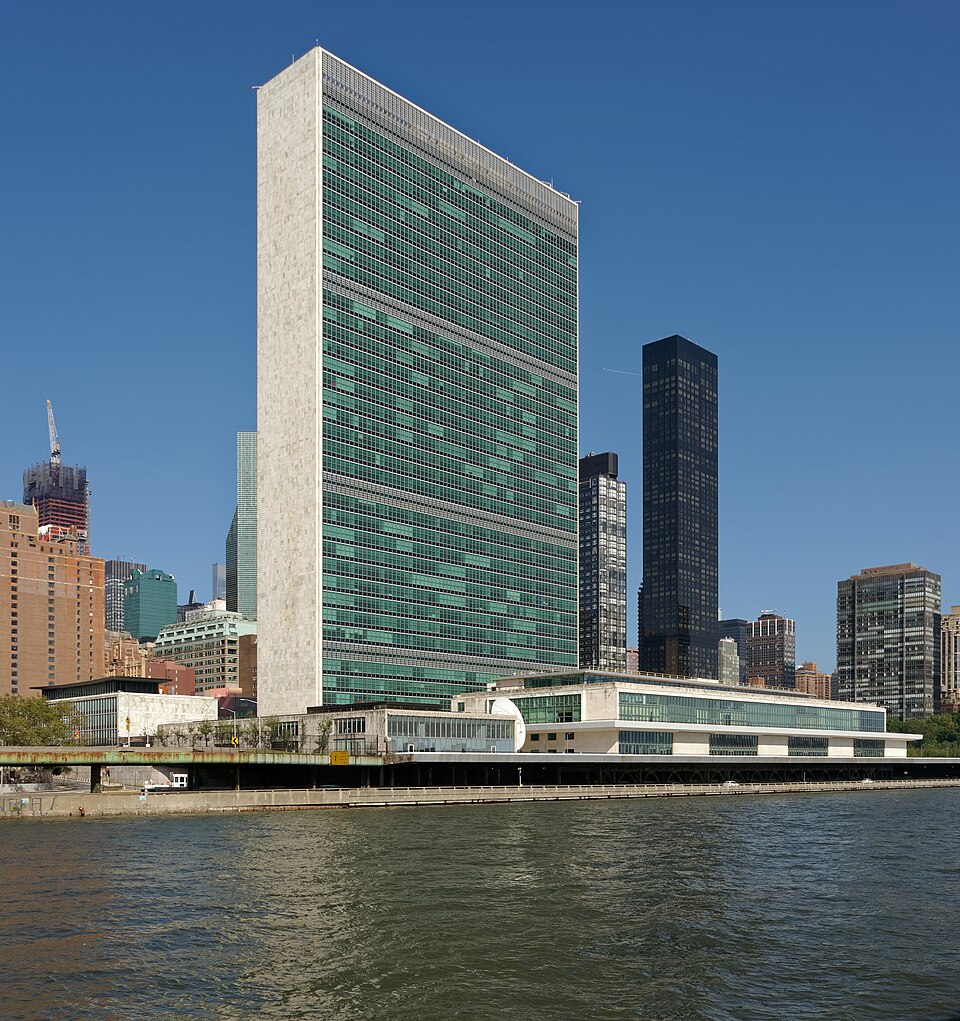
War is growing deadlier for women and girls, who accounted for one in four of the more than 37,000 civilians killed in armed conflict last year — double their share in 2021 — according to the UN Secretary-General’s annual report on Women, Peace and Security, presented at UN Headquarters in New York on Monday 26 October 2026.
At least 25 women and girls were killed every day in conflict settings during 2025, the report finds. Some 750 million women and girls now live within 50 kilometres of an active conflict — 40 million more than in 2024 and more than at any time since 1990.
“War is getting deadlier for women and girls, and the world is allowing it to happen,” UN Women Deputy Executive Director Nyaradzayi Gumbonzvanda told journalists at the briefing. “For them, war is not something they can scroll past. War is outside their door.”
Beyond the battlefield:
The report says the danger for women and girls in war goes far beyond combat. In 2025, the United Nations verified 9,788 cases of conflict-related sexual violence — more than twice as many as the year before and almost four times as many as in 2022. The report notes the real number is likely far higher, since many cases go unreported.
In Haiti, reported cases of sexual violence rose by 163 per cent. A woman giving birth in a conflict-affected country is five times more likely to die from maternal causes than a woman giving birth in a stable country, the report finds. In Gaza, the destruction of hospitals and maternity facilities and the collapse of access to essential supplies contributed to a 41 per cent decrease in live births and a 300 per cent increase in miscarriages.
War also drives women deeper into poverty: around 170 million women and girls live in both conflict zones and extreme poverty, surviving on less than $3 a day, while in conflict-affected countries they spend five times as many hours on unpaid care work as men and boys. The report also warns that the increasing use of drones and long-range weapons in populated areas — including attacks on schools, markets and hospitals — raises further safety concerns.
Shut out of peace:
Yet women remain largely excluded from efforts to end the fighting. In 2025, they made up just five per cent of negotiators across 57 peace processes, down from seven per cent the year before, and not one of 13 ceasefire agreements explicitly prohibited conflict-related sexual violence.
At the same time, global military spending hit a record $2.9 trillion last year, while 40 per cent of women’s organisations in crisis-affected settings expect to close temporarily or permanently within the next year because of severe funding shortfalls.
“More women and girls are trapped in wars than at any point in decades. Yet military spending keeps rising and development assistance keeps falling,” said UN Women Executive Director Sima Bahous.
UN Women is calling for the protection of women and girls, their meaningful participation in peace and security, sustained investment in women-led peacebuilding, and an end to impunity. “War is a human choice. So is peace,” Gumbonzvanda said.
What happens next:
The report’s findings will feed into the Security Council’s annual debate on women, peace and security, where member states face pressure to turn the report’s recommendations — protection, participation and funding for women-led organisations — into concrete commitments. Whether that pressure produces changes in how peace talks are composed, or in funding for frontline women’s groups, remains to be seen.
FAQ:
What does the UN report actually measure? It is the Secretary-General’s annual report on Women, Peace and Security, drawing on UN-verified data on civilian casualties, conflict-related sexual violence and women’s participation in peace processes.
Why has the share of women among civilian deaths doubled since 2021? The report points to more conflicts, more fighting in populated areas, and the growing use of drones and long-range weapons — but it presents the doubling as a measured trend, not a single cause.
Are the sexual-violence figures complete? No. The 9,788 cases are those the UN verified in 2025; the report itself stresses the real number is far higher because many survivors cannot or do not report.
Sources
UN News, “Women and girls’ share of civilian war deaths doubles since 2021“, 26 October 2026
The Manila Times (APP), “Women and girls’ share of civilian war deaths doubles since 2021“
UrduPoint (APP), “UN Report: Women And Girls Made Up One In Four Civilian War Deaths In 2025“