British politicians say Israeli authorities detained them for about eight hours and then refused them entry to the West Bank, in an incident that has now drawn a formal response from the UK government.
Labour MP Clive Lewis, Scottish National Party MP Lara Bird and Scottish Greens MSP Kate Nevens were part of a 23-person international delegation that tried to cross into the West Bank from Jordan on Monday, 26 October. The delegation was organised by Progressive International and also included former Labour MP Sam Tarry and Spanish senator Josu Estarrona Elizondo, along with delegates from France, Luxembourg, Switzerland, Greece, the Netherlands and the United States.
What the politicians say happened
Bird, the MP for Arbroath and Broughty Ferry, said the group was stopped at the Allenby Bridge crossing, also known as the King Hussein Bridge, held for eight hours, interrogated and ultimately prevented from crossing the border.
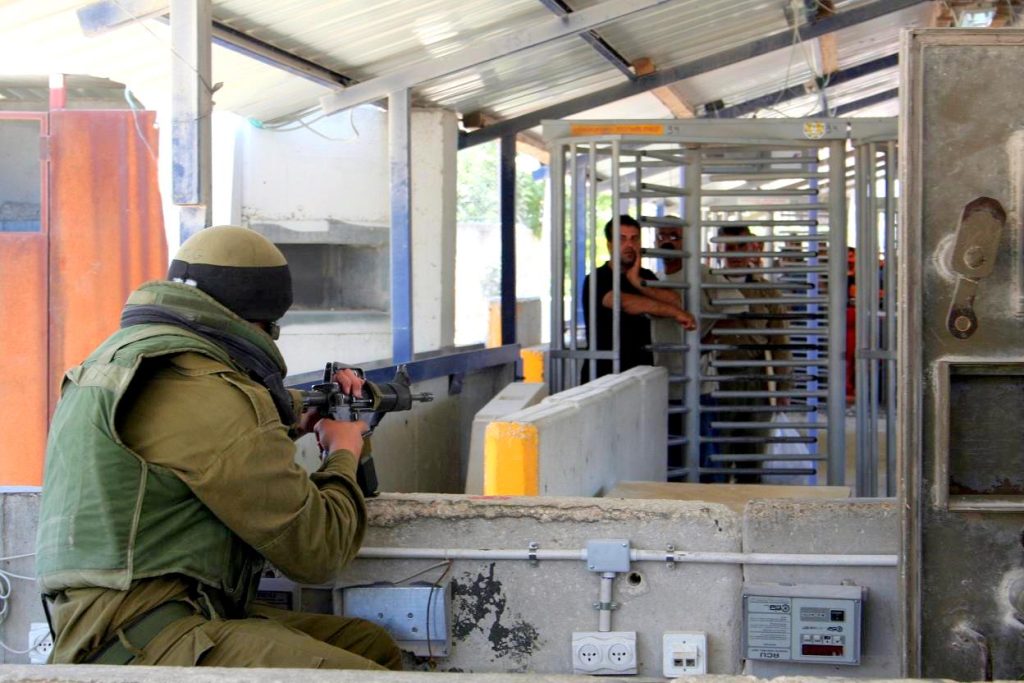
“We were held for eight hours, interrogated and ultimately prevented from crossing the border,” Bird wrote on social media on Monday evening. “I came to stand alongside Palestinians being attacked for harvesting olives on their own land. Instead, we were turned away, with no reason given.”
Lewis gave a similar account. “For more than eight hours, we were held, interrogated and made to feel as though we had done something wrong simply by attempting to enter,” he wrote. “The simple truth is we had done nothing wrong.”
Nevens, the MSP for Edinburgh and Lothians East, said the experience was frightening but that the group was able to leave safely, adding that what the delegation went through was only a small part of what Palestinians endure at the same crossing.
Why the delegation was travelling
According to Progressive International, the delegation had planned a programme of meetings with Palestinian academics, students and civil society organisations, including at Birzeit University near Ramallah, and to support Palestinian farmers during the olive harvest. The group said it was travelling amid mounting attacks on farmers in the territory.
The visit took place on the eve of Israel’s national election, when land crossings were subject to additional restrictions.
Miliband: UK has raised the matter with Israel
The incident was raised in the House of Commons on Tuesday, 27 October, when Labour MP Simon Opher asked Foreign Secretary Ed Miliband whether he would condemn the refusal of entry.
Miliband said the government was deeply concerned and had formally raised the matter with the Israeli authorities.
“We are obviously deeply concerned about the denial of entry to the West Bank for two members of Parliament, and I believe one member of the Scottish Parliament as well,” Miliband told MPs. “We have raised this issue with the Israeli authorities and been in touch with the MPs to offer assistance.”
He added: “More broadly, it’s very, very important that members of this house, as they go about their business — not just in the UK but internationally — have free access so that they can actually do their duties.”
Israel’s stated reason differs
The Israeli embassy said the group was refused entry after providing false information about the purpose of their visit and failing to co-operate with officials. A letter seen by The National said non-MPs in the group were barred on the grounds of the prevention of illegal immigration.
That account conflicts with Bird’s statement that the group was given no reason. The two versions have not been reconciled publicly, and neither side’s account of the reason for refusal should be treated as established fact beyond what each side has said.
Why this matters
The incident is the latest case of British elected representatives being refused entry in the region. Last year, Labour MPs Abtisam Mohamed and Yuan Yang were denied entrance to Israel, prompting a similar diplomatic response.
It also comes as attention on conditions in the West Bank intensifies, with the delegation arguing that barring outside observers makes it harder for people abroad to see what is happening there. Israel maintains that entry decisions are a matter for its border authorities.
What is known and what is not
Known: three British politicians — two MPs and one MSP — say they were held for about eight hours on Monday and refused entry; the UK government says it has raised the matter with Israel; the Israeli embassy has given a different explanation for the refusal.
Not yet established: the full official record of the border interaction, and whether any further diplomatic steps will follow the Commons exchange.
Sources
– Arab News (reporting The Independent): https://www.arabnews.com/middle-east/uk-foreign-secretary-deeply-concerned-over-israels-barring-of-international-delegation-3008565
– The National: https://www.thenationalnews.com/news/uk/2026/10/27/international-delegation-barred-by-israel-from-entering-west-bank-to-support-olive-harvest/
– PA via The Oldham Times: https://www.theoldhamtimes.co.uk/news/national/26674177.miliband-deeply-concerned-mps-say-detained-way-west-bank/
Frequently asked questions
Who was detained? Labour MP Clive Lewis, SNP MP Lara Bird and Scottish Greens MSP Kate Nevens, as part of a 23-person Progressive International delegation.
How long were they held? The politicians say about eight hours, during which they were interrogated before being refused entry.
What has the UK government said? Foreign Secretary Ed Miliband told the Commons on Tuesday that the government was deeply concerned, had raised the matter with Israel and had been in touch with the MPs.