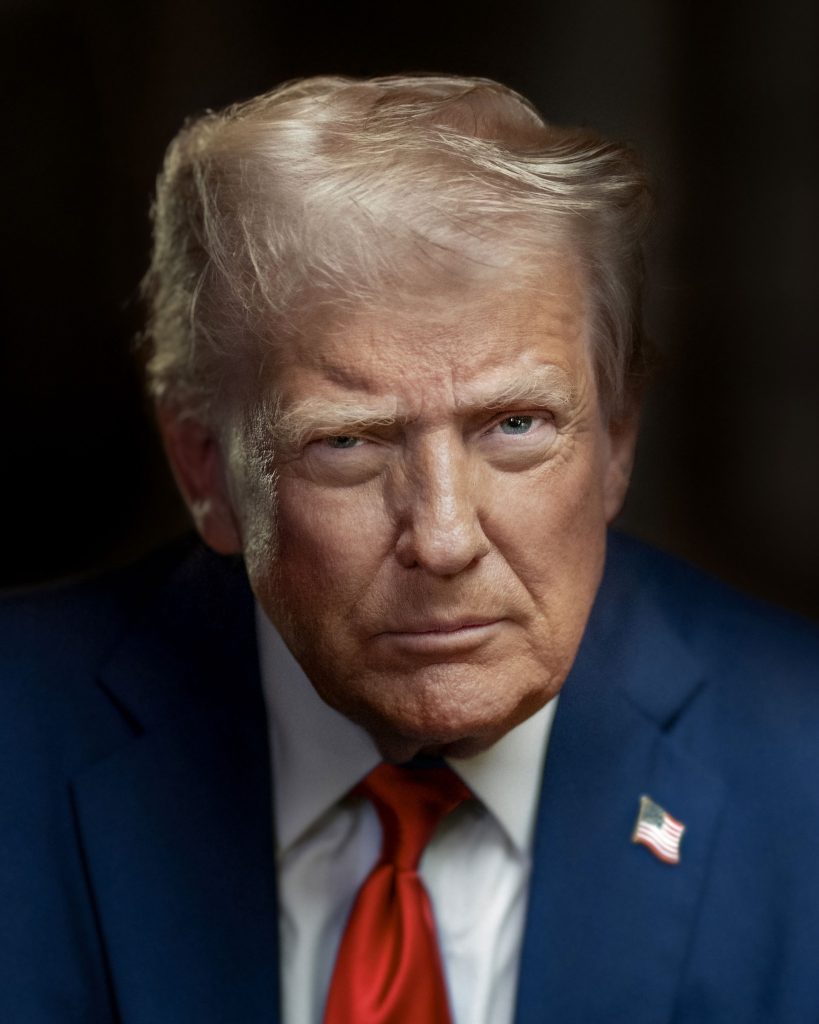
US President Donald Trump said on Tuesday, October 27, that he will ban the term “artificial intelligence” in official documents and elsewhere, pressing instead for his preferred label, “super intelligence” — or “SI” for short.
In a post on Truth Social, Trump questioned why The Wall Street Journal was not using the new term, and vowed that a formal ban would follow soon.
“When will The Wall Street Journal start calling Artificial Intelligence (AI), a very bad and inaccurate name, SI (Super Intelligence), the name which virtually everyone else is using, or soon will be,” Trump wrote.
“In short order, we will be officially BANNING the term, ‘AI/Artificial Intelligence,’ in all relevant documents, and everything else, due to its inaccuracy,” he added.
A vow, not yet a signed order
It is important to be precise about what happened on Tuesday: Trump posted a vow to ban the term. He did not, in that post, sign a new executive order, and he did not outline formal executive actions beyond saying the restriction would take effect quickly.
The post builds on an executive order he already signed on September 30, titled “Inaugurating the Era of Super Intelligence.” That order directs federal departments and agencies to replace the terms “Artificial Intelligence” and “AI” with “Super Intelligence” and “SI” in official communications and operations, to the extent permitted by law.
Under that order, the new terminology is to be used in government correspondence, public communications, official websites, reports and administrative policy documents. Existing regulations, government contracts, grants and historical archival records are not to be changed retroactively.
The September order also gives the Assistant to the President for Science and Technology 60 days to submit proposed legislation to Congress that would define “Super Intelligence” in federal law and recommend corresponding changes to existing laws. Until then, the term is defined by reference to the existing statutory definition of artificial intelligence.
Why Trump wants the new name
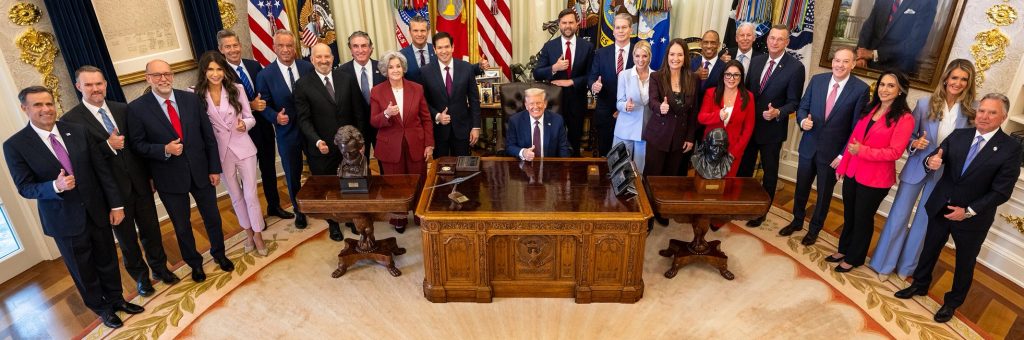
Trump’s stated reasoning is that “artificial” makes the technology sound fake. He has argued that today’s systems do far more than imitate human intelligence, and that the older label understates what they can do. At a White House roundtable on the same day the September order was signed, technology executives signed the White House Accord on Super Intelligence, which Trump described as morally binding on its signatories.
The rebrand has also been presented as a response to public unease about AI, including protests over data centres and fears about job displacement. Advisers have warned that public distrust of AI could hurt Republicans in the midterm elections, and a friendlier name is, in that reading, partly a political answer to a political problem.
What a ban would — and would not — do
A federal terminology order binds the executive branch: the departments and agencies under the president’s authority. It does not, by itself, rename the technology for private companies, newsrooms, researchers or the public, and it cannot compel a newspaper such as The Wall Street Journal to change its style.
That limit matters for Trump’s claim that “virtually everyone else is using” the new term. Most companies and newsrooms still use “AI,” a label in circulation for decades, and the White House itself released an “AI Action Plan” last year. Trump’s post singles out the Journal, but the older term remains the standard wording across the technology industry and the media.
There is also a definitional wrinkle. “Superintelligence” already has an established meaning in the field: intelligence greatly exceeding human cognitive performance in virtually all domains. Applying the same word to today’s chatbots and AI assistants erases the distinction between current systems and a hypothetical machine mind that does not yet exist — a point critics of the rename have raised since September.
The wider context
Earlier in October, Trump declared in another post that people who prefer the older term to his preferred one are “THE ENEMY,” underlining how personally he has taken the terminology fight. The White House has previously tried to enforce a rebrand — of the Gulf of Mexico as the Gulf of America — by barring The Associated Press from the Oval Office; the news agency sued, and a federal judge ruled the White House was likely violating the First Amendment. That decision is on appeal.
For now, the practical question is what the promised “official” ban looks like when it arrives: whether it takes the form of a new executive order, how far it reaches beyond the September directive, and whether Congress takes up the legislation the administration has been asked to propose. Until then, “AI” remains the term the rest of the world uses — and “SI” remains, above all, the president’s preferred word for it.
Frequently asked questions
Has Trump banned the term “artificial intelligence”? Not yet by a new signed order. On October 27 he posted that he will officially ban the term “in short order.” A September 30 executive order already directs federal agencies to use “Super Intelligence” instead of “Artificial Intelligence” in official communications.
What does the September order actually require? Federal departments and agencies must replace “Artificial Intelligence” and “AI” with “Super Intelligence” and “SI” in official communications and operations, to the extent permitted by law. Existing regulations, contracts, grants and historical records are not changed retroactively.
Does the ban apply to newspapers and companies? No. A federal terminology order binds the executive branch. It cannot compel private newsrooms, companies or the public to stop using “artificial intelligence.”
Why does Trump object to the word “artificial”? He argues it is a “very bad and inaccurate name” because it makes the technology sound fake, when in his view today’s systems amplify human ingenuity rather than merely imitating it.
Sources
Reuters, “Trump says he will ban term artificial intelligence” (October 27, 2026) — https://www.reuters.com/world/trump-says-he-will-ban-term-artificial-intelligence-2026-10-27/
Times of India, “Trump says he will ban the term ‘artificial intelligence’, wants it called ‘super intelligence'” (October 27, 2026) — https://timesofindia.indiatimes.com/world/us/trump-says-he-will-ban-the-term-artificial-intelligence-wants-it-called-super-intelligence/articleshow/135241647.cms
TradingView News (Seeking Alpha), “Trump vows to ban the term artificial intelligence” (October 27, 2026) — https://www.tradingview.com/news/seekingalpha:ffc7a6cfe094b:0-trump-vows-to-ban-the-term-artificial-intelligence/