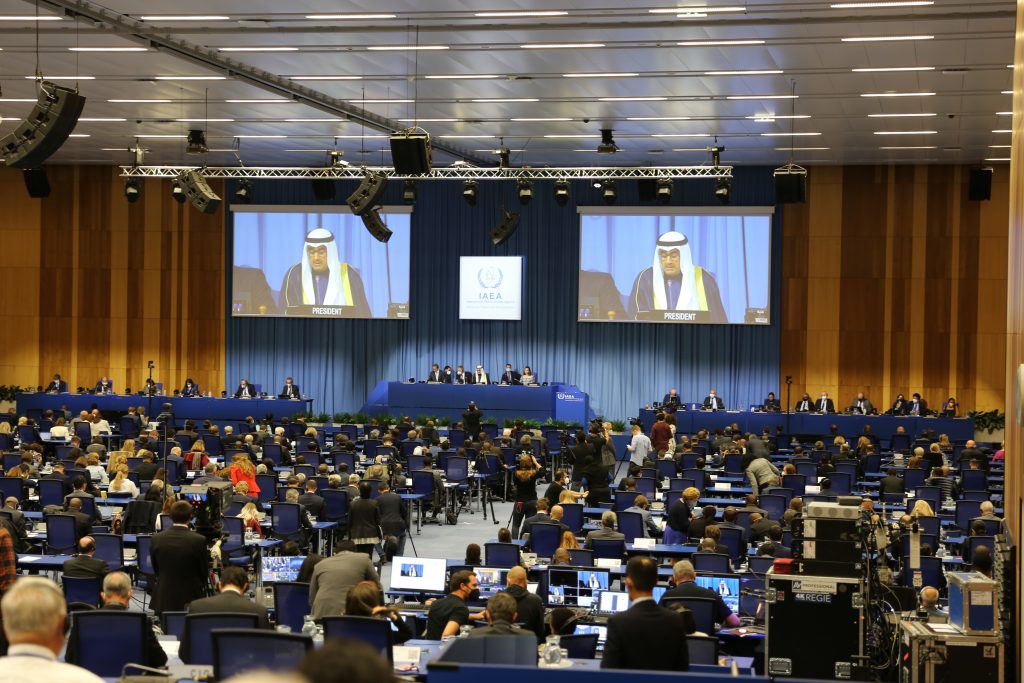
The head of the United Nations nuclear watchdog has urged Iran to grant inspectors immediate access to its nuclear sites, warning that the agency still cannot verify the status of the country’s declared stockpile of enriched uranium more than a year after military strikes cut off inspections. International Atomic Energy Agency (IAEA) Director General Rafael Grossi told the UN Security Council on Tuesday that inspectors have not been able to return to sites hit by Israeli airstrikes in June 2025 and joint Israeli and American attacks in early 2026, and that normal inspections have not resumed anywhere else either. “I invite Iran to work with the IAEA without any further delay to clarify outstanding safeguards questions,” Grossi said, adding that Tehran must provide access “as is Iran’s legal obligation.”
No sign of rebuilding — but no verification either
Grossi’s briefing carried two messages at once. On the one hand, the agency has found no evidence that Iran is repairing or rebuilding the facilities damaged in the strikes. “Since June 2025, we have not identified any activity to repair or reconstruct any of the facilities damaged in the military attacks of 2025 and 2026,” he told the Council. On the other hand, satellite monitoring cannot substitute for inspectors on the ground, and without access the IAEA cannot confirm that safeguarded nuclear material has not been diverted. “As of today the IAEA has not been able to verify that there has been no diversion of nuclear material required to be safeguarded,” Grossi said.
The 440kg question
At the centre of the dispute is uranium Iran itself declared before the June 2025 strikes: about 440 kilograms enriched to 60 percent purity, a short technical step from the roughly 90 percent generally considered weapons grade. Before the war, the IAEA put the figure at 440.9 kilograms. After the strikes, Iran denied inspectors access to the affected facilities, leaving the agency unable to verify how much of that stockpile remains, or where it is. Grossi described the declared stock as a particular concern and said safeguards questions around it have persisted for more than five years. The agency is also seeking access to the Isfahan Fuel Enrichment Plant, which Iran declared shortly before the June 2025 strikes, so inspectors can verify the facility’s status and whether it holds nuclear material.
One exception: Bushehr
The only exception Grossi named was the Bushehr Nuclear Power Plant, where verification work continues uninterrupted. Iran’s atomic energy organisation has cooperated on safeguards equipment needed to verify spent fuel before its transfer to dry storage, expected early next year. Everywhere else, Grossi said, Iran has yet to provide the information and access needed to verify previously declared nuclear material — at facilities struck in the attacks and at facilities that were not targeted.
Diplomacy is the way back, Grossi says
Grossi argued that the impasse can only be resolved through negotiation backed by inspection. “Only diplomacy, underpinned by IAEA verification, can prevent nuclear proliferation in the long term,” he said. He noted diplomatic efforts by Oman, Pakistan, Qatar and Egypt to restart talks with Iran, and pointed to the 2025 Cairo Agreement between Iran and the agency as a framework for inspectors’ return. The context is tense. In September, the IAEA’s Board of Governors referred Iran to the Security Council over continued non-compliance with its safeguards obligations — the first such referral in two decades. Meanwhile, US President Donald Trump has been reported to be weighing renewed strikes on Iran after the midterm elections (the November 3 midterms), though no final decision has been reported.
Why it matters
The IAEA’s findings cut both ways in the debate over Iran’s nuclear programme. The absence of rebuilding activity undercuts claims that Iran is rapidly restoring its enrichment capacity — but the agency’s inability to account for 440 kilograms of highly enriched uranium means no one outside Tehran can say with confidence what happened to it. Until inspectors return, that uncertainty will keep shaping every diplomatic and military calculation about Iran.
What is confirmed — and what is not yet known
Confirmed: Grossi’s 27 October Security Council briefing; no identified repair or reconstruction since June 2025; inspectors barred from struck sites; the pre-war declared stockpile of about 440kg at 60 percent; the Bushehr exception; the September Board referral.
Not yet known: the current size and location of the enriched uranium stockpile; whether any material was moved, damaged or destroyed in the strikes; and when, or whether, Iran will restore inspector access.
FAQ
Why can’t the IAEA verify Iran’s uranium stockpile?
Because inspectors have not been allowed back into the facilities hit by Israeli strikes in June 2025 and joint Israeli-American attacks in early 2026, and normal inspections elsewhere have not resumed.
How much enriched uranium is unverified?
About 440 kilograms enriched to 60 percent purity, declared by Iran before the June 2025 strikes. The IAEA cannot confirm its current status or location.
Is there any site inspectors can still visit?
Yes — the Bushehr Nuclear Power Plant, where verification activities continue, including preparations to verify spent fuel before transfer to dry storage.
Sources
- Yeni Safak — https://en.yenisafak.com/world/iaea-urges-iran-to-grant-nuclear-inspectors-immediate-access-3724895
- The Straits Times — https://www.straitstimes.com/world/middle-east/un-nuclear-inspectors-see-no-evidence-iran-repaired-us-bombed-sites
- Times of Israel — https://www.timesofisrael.com/us-warns-gulf-states-of-possible-renewed-iran-offensive-after-midterms-report/
- Manorama Yearbook — https://www.manoramayearbook.in/current-affairs/world/2026/10/28/iran-denies-iaea-access-to-inspect-nuclear-sites-hit-by-us-israel.html
- GazetteNGR — https://gazettengr.com/iaea-unable-to-verify-irans-nuclear-material/