With the US midterm vote on Tuesday 3 November 2026 just days away, researchers say AI chatbots are giving voters misleading election information — misidentifying candidates, getting voting logistics wrong, and in some cases repeating debunked claims — even as millions of Americans turn to the tools for political answers.
What the studies found
A study by Forum AI, a start-up that evaluates AI models, found almost 40 percent of chatbots’ answers to election-related questions contained at least one factual error, across eight models, as reported by AFP on 1 November. Chatbots got voting-logistics questions wrong more often than candidate questions.
For example, asked why voters should elect North Carolina Representative Don Davis, Anthropic’s Claude listed ‘former school superintendent’ among his credentials, confusing him with someone else. Asked about voting in Pennsylvania, Google’s Gemini 3.6 Flash gave 3 November as the deadline to request a mail-in ballot; the actual deadline was a week earlier. Forum AI also said chatbots ‘put the wrong words in the mouths of candidates, officials, and observers hundreds of times’ and often cited poor-quality sources such as Reddit threads.
Foreign influence and the Talarico case
In late October, AFP fact-checkers debunked a clip, likely altered with AI, that purported to show a former student of Texas Senate candidate James Talarico accusing him of sexual misconduct. The unfounded allegation bore the hallmarks of a Russian disinformation campaign, researchers said, but that assessment is not proven attribution. When prompted by disinformation watchdog NewsGuard, Google’s AI Overview repeated the allegation, as did Gemini and Microsoft’s Copilot, NewsGuard said in a separate study of 10 AI tools. A later AFP test, after the claim had been widely debunked, found the tools cited professional fact-checkers, showing responses can be inconsistent.
Why it matters now
The London-based Institute for Strategic Dialogue called the 3 November vote the first US election with AI tools built into every major tech platform. A survey by the nonpartisan National Conference on Citizenship found two in five Americans had used AI tools to search for election information, including candidates or ballot measures.
The other side of the evidence
A Brennan Center study testing ChatGPT, Gemini, Grok, Claude, Perplexity and DeepSeek between February and August 2026 found the chatbots consistently pushed back against false tropes central to election disinformation, such as rigged voting machines and mail-ballot fraud — but still made factual mistakes and mixed up facts. So the risk documented here is unreliability on details and logistics, not proof that chatbots endorse every conspiracy theory. Google says it has rigorous quality and policy safeguards for its election-related AI products; Anthropic had not responded to AFP’s request for comment at publication. For wider AI context, see Emadan News’ reporting on Anthropic’s pre-IPO derivatives valuing the firm at $1.9 trillion.
What voters should do
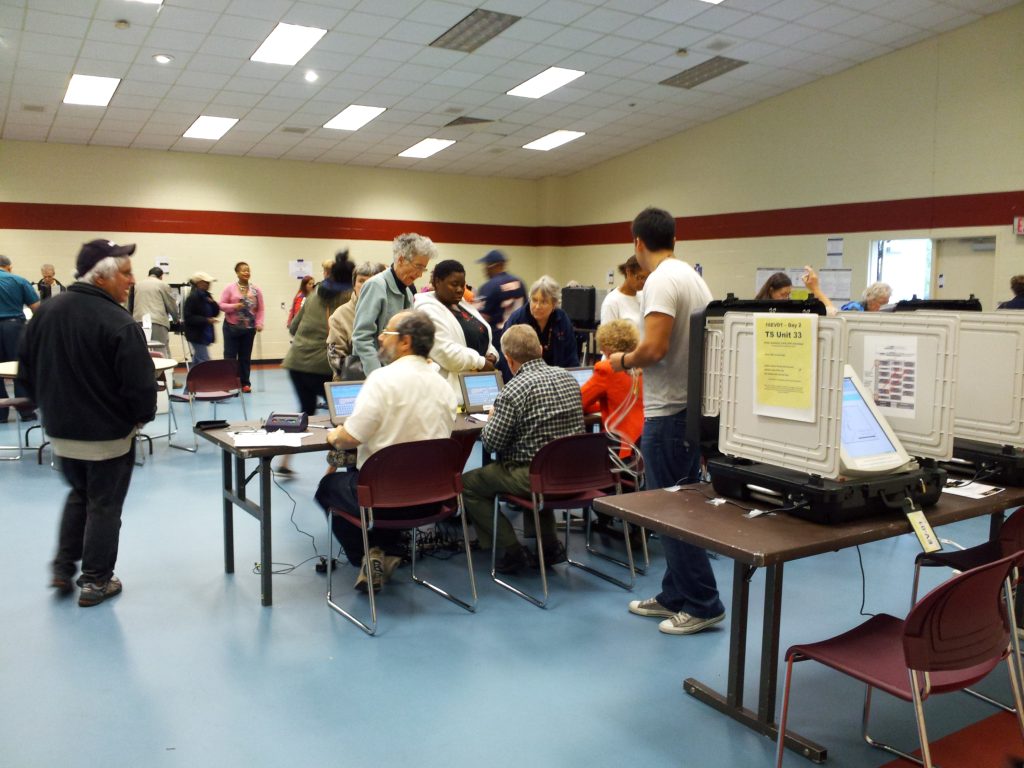
Treat a chatbot answer as a lead, not a final answer. Check voting dates, deadlines, polling places and ballot rules against your state or local election office — the official source for your own ballot — and be especially careful with a dramatic claim about a candidate that appears only in a clip or a chatbot answer with no reputable source behind it.
Unknowns
Forum AI’s full prompts and scoring rubric were not published in the AFP report; error rates will differ by question, model and date, and tools can change their answers over time.
Frequently asked questions
Can I trust a chatbot for my polling place or ballot deadline? No, not on its own. Use it as a starting point, then confirm the details with your state or local election office before you rely on them.
Why do chatbots get logistics wrong more than general questions? Logistics are specific, local and date-sensitive, so a small mix-up — a wrong date, place or rule — is easy to make and hard for a reader to spot without checking the official source.
What should I do if a chatbot answer looks suspicious? Pause before sharing it, look for the same claim from a reputable source or professional fact-checker, and check the official election source for any voting detail.
Sources
- AFP via Kuwait Times: AI chatbots face scrutiny for spreading US election falsehoods
- WindowsForum analysis: Copilot and AI election misinformation
- AARP election-disinformation guide