Quick Answer: Tens of thousands of protesters marched across France on Saturday, October 17, 2026, as Yellow Vest activists joined students, trade unionists and farmers in a nationwide day of action against the rising cost of living. Police reported dozens of arrests in Paris amid fears of renewed Paris riots, and tear gas was used to disperse demonstrators in Lyon and Strasbourg.
France is in the middle of its largest nationwide protest wave in years — and with the Yellow Vests back on the streets, authorities are bracing for unrest. What began weeks ago as student demonstrations over school conditions has merged with a revived gilets jaunes movement, six months before the country’s presidential election, turning Saturday’s day of action into a direct test for President Emmanuel Macron’s government.
Key Takeaways
- National scale: around 500 protest actions and more than 90 demonstrations were planned across France on Saturday, with authorities expecting up to 170,000 participants (Interior Ministry sources via Anadolu Agency).
- Arrests in Paris: 61 people were arrested in the Paris metropolitan area during the day (CNews tally via LaPresse); the Paris police prefecture had earlier reported 40 arrests by 9:30 a.m. (Anadolu Agency).
- Broad coalition: former Yellow Vest protesters marched alongside high school and university students, trade unionists, climate activists and farmers (BFMTV via Anadolu Agency).
- Macron’s message: the president appealed for calm on Friday, saying the right to protest must be exercised “with respect for people, respect for property”.
- Next test: a separate national inter-union strike is planned for November 5 (Reuters via yoopya).
What happened in Paris
The day’s main march in the capital was scheduled to set off from Place de la République at 2 p.m. local time (12:00 GMT) and head to Place de Clichy, with authorities expecting between 30,000 and 60,000 people in Paris alone, according to Anadolu Agency. By mid-morning, tension was already rising at the first rallies, and the Interior Ministry condemned what it called “targeted acts of violence,” including attempts at looting, fires and attacks on police, Le Temps reported.
Authorities banned demonstrations across several areas of central Paris, including the streets around the Élysée Palace, Matignon and the Champs-Élysées, according to LaPresse. Police said many of those arrested in the morning were carrying prohibited protective equipment or weapons (Anadolu Agency).
Tensions beyond the capital
The mobilization stretched far beyond Paris. In Lyon, police used tear gas to disperse around 100 demonstrators, and officers intervened on the banks of the Rhône, where around 100 people described as “hostile” by the Rhône prefecture had gathered, Anadolu Agency reported. In Marseille, garbage bins and scooters briefly blocked the Boulevard du Prado before riot police cleared the route. In Rennes, protesters erected burning barricades to block a road, while in Strasbourg riot police used tear gas against student demonstrators, according to CNN-News18.
Why protesters are back on the streets
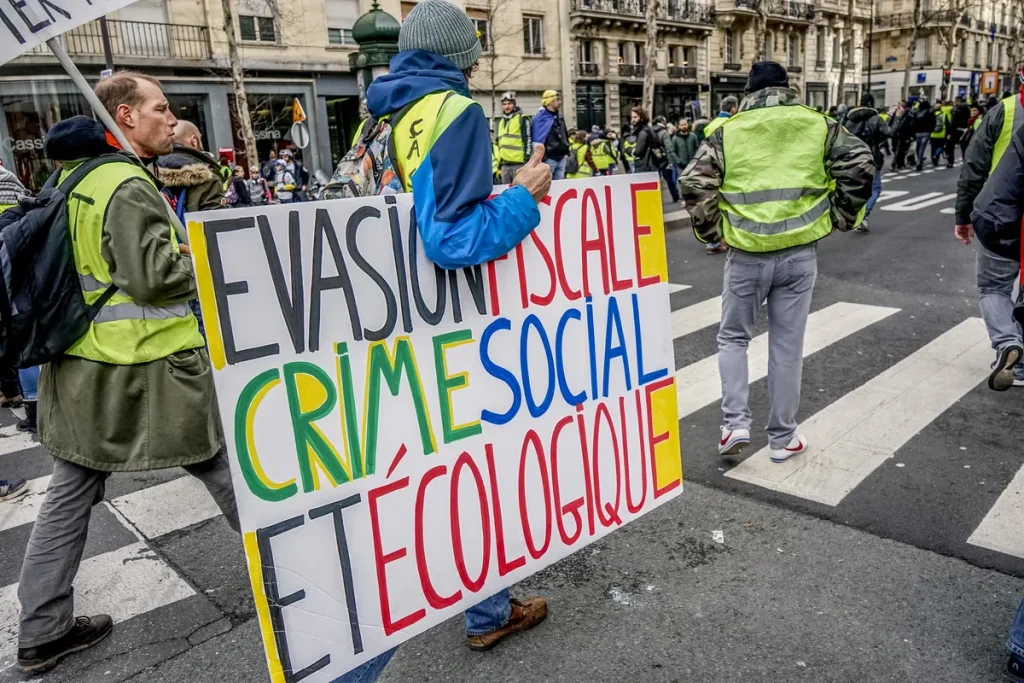
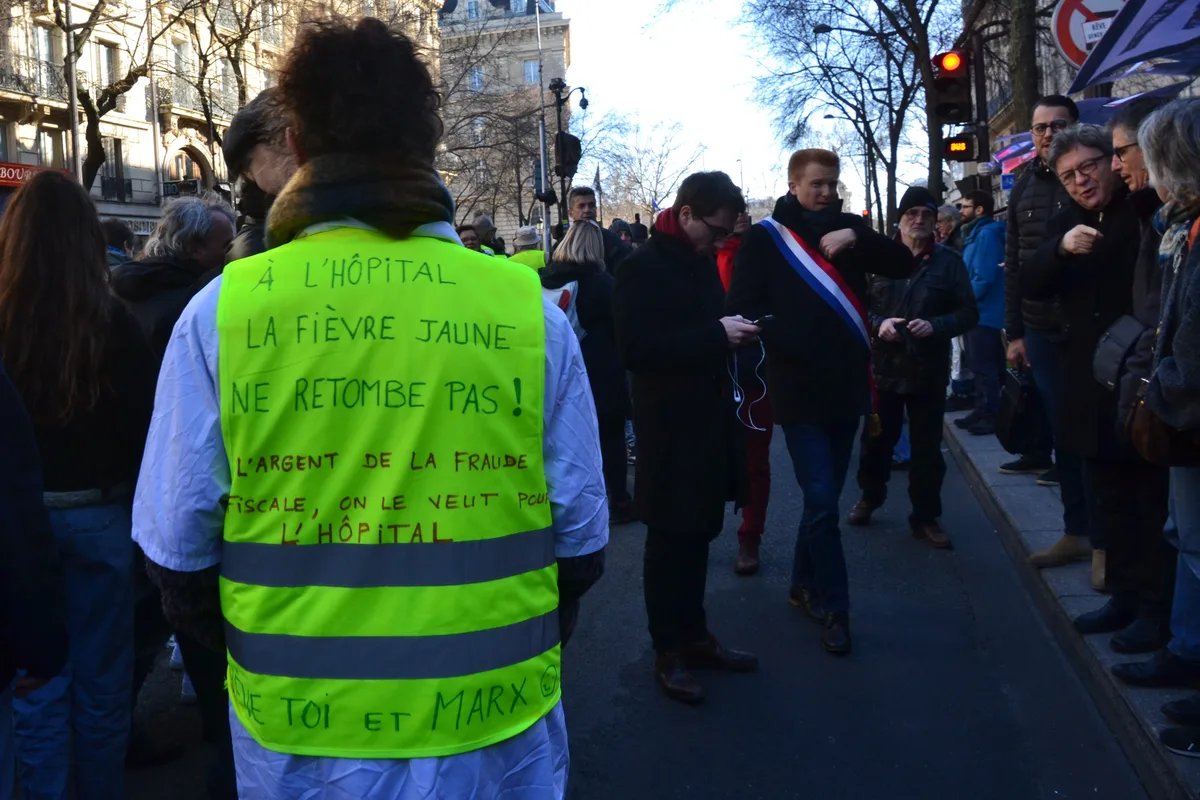
Saturday’s action fused several distinct grievances. For weeks, secondary school and university students have been protesting to demand better study conditions and education funding, alongside criticism of police intervention during those protests (Anadolu Agency). The revival of the Yellow Vest movement — born in 2018 over fuel-tax rises — gave the day a familiar symbol: the fluorescent high-visibility jacket.
“By the end of the month, I have nothing left. Prices go up, but wages don’t. We can’t take it any more, we’re suffocating,” a civil servant named Franck told Le Temps at a demonstration in Guéret, a small town in central France, where around 300 people marched, a quarter of them school pupils.
What comes next
The true scale of Saturday’s mobilization remained uncertain by midday, with final attendance figures still unverified. A separate national inter-union strike is planned for November 5, and Reuters reported that the internal police watchdog is investigating at least two dozen alleged incidents connected to the recent demonstrations (via yoopya). With the presidential election six months away, the government’s handling of the cost-of-living protests is becoming one of the defining political tests of the year. For more, see our World news coverage and Politics.
FAQs
Why are people protesting in France?
The protests target the rising cost of living — fuel prices, wages that lag inflation and strained public services. They bring together weeks of student demonstrations over education funding with a revived Yellow Vest movement, plus trade unionists, farmers and climate activists, according to BFMTV via Anadolu Agency.
How many people were arrested in Paris?
The tally rose during the day: the Paris police prefecture reported 40 arrests by 9:30 a.m., and CNews later counted 61 arrests across the Paris metropolitan area, according to LaPresse. Many were detained for carrying prohibited protective equipment or weapons.
Are these the same Yellow Vests from 2018?
The movement draws on the original 2018 gilets jaunes, who mobilized against fuel-tax rises. Today’s protesters wear the same fluorescent vests, but they now march alongside a new generation of students and union activists in a broader coalition against the cost of living.
Why are people searching for “Paris riots”?
The searches reflect fears of a repeat of the 2018–2019 clashes, when Yellow Vest demonstrations on the Champs-Élysées turned violent. Officials have warned of possible violence this time too: central Paris protest zones were banned and the Interior Ministry condemned “targeted acts of violence.” Saturday’s daytime rallies were largely peaceful, but tear gas was used in Lyon and Strasbourg.
Where are the protests happening?
Around 500 actions and more than 90 demonstrations were planned nationwide — in Paris, Lyon, Marseille, Rennes, Strasbourg, Lille and hundreds of smaller towns, according to Interior Ministry sources via Anadolu Agency. Protests were banned in several areas of central Paris.
Sources: Anadolu Agency, Le Temps, LaPresse/CNews, BFMTV, CNN-News18. Reporting checked October 17, 2026; attendance figures and developments remain subject to official updates.