A former Ukrainian special forces officer went on trial in Hamburg on Wednesday over the September 2022 explosions that ripped apart the Nord Stream gas pipelines under the Baltic Sea — the first time a suspect has faced a court over one of Europe’s biggest acts of sabotage since World War II.
The defendant, identified in court only as Serhii K. under German privacy rules, is accused of helping to organize the clandestine operation. His full name, Serhii Kuznetsov, was revealed during extradition proceedings in Italy. He denies any involvement in the blasts.
Key Takeaways
- The trial of a Ukrainian ex-officer opened Wednesday at the Hanseatic Higher Regional Court in Hamburg.
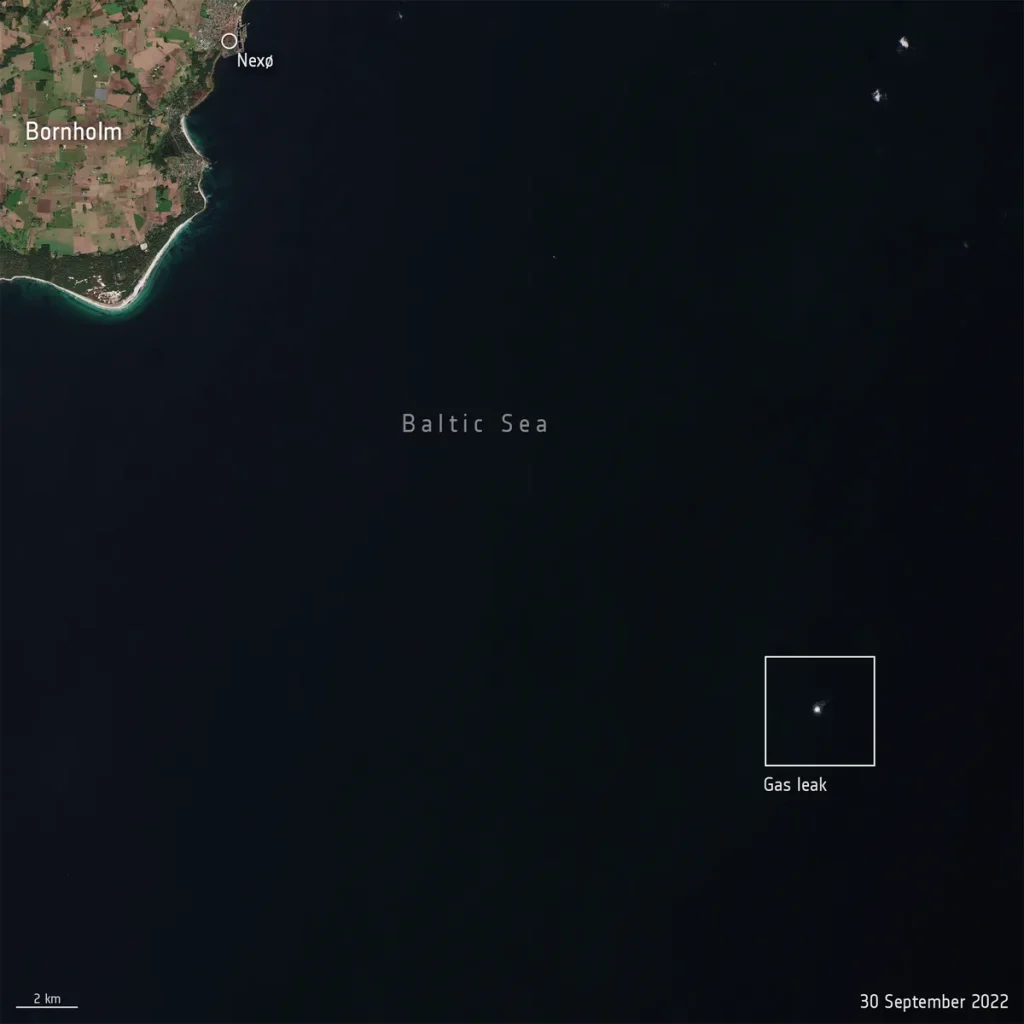
- Prosecutors allege he led a team that planted at least four explosives on the Nord Stream pipelines near Denmark’s Bornholm island in September 2022.
- He is charged with causing an explosion and being an “accomplice to war crimes” for attacking civilian infrastructure.
- Kyiv denies any involvement; the Kremlin says it expects a “just verdict” naming those who ordered the attack.
What prosecutors allege
German prosecutors say the defendant led a group of Ukrainian agents — including divers, an explosives expert and a ship’s captain — that rented a sailing yacht, the Andromeda, from the German port of Rostock using forged identities. Between September 4 and 22, 2022, the team allegedly dived to about 80 metres near the Danish island of Bornholm and attached at least four timed military explosives, weighing up to 27 kilograms each, to the pipelines.
The devices detonated on September 26, rupturing three of the four branches of Nord Stream 1 and Nord Stream 2. Prosecutors say the group acted “on behalf of unidentified Ukrainian state agencies” with the aim of permanently cutting off Russian gas deliveries — and the revenue Moscow was using to finance its full-scale invasion of Ukraine, now entering a phase of fragile ceasefire diplomacy.
A blow to Russian energy — and to Europe
Nord Stream 1 had been Russia’s main gas route to Germany before Moscow cut supplies in August 2022. Nord Stream 2, completed in 2021, never entered service after Berlin suspended its certification process shortly before Russia invaded Ukraine. The blasts sent large amounts of methane into the atmosphere — Le Monde reported nearly 500,000 metric tons — and severed Western Europe from its biggest source of Russian natural gas.
First day in court
At the opening session, prosecutors read the indictment with simultaneous interpretation while the defendant, dressed in civilian clothes, briefly saluted, German broadcaster NDR reported. His defense team asked for a closed hearing, arguing his testimony could touch on Ukrainian military secrets. His lawyers also said he has spent almost 11 months in a solitary cell with virtually no social contact.
The session ended around 2:30 p.m. Kyiv time, and the trial continues on October 27. He is the only person on trial, but Croatian authorities have arrested another man, identified as Vladimir Z., whom German prosecutors believe was one of the team’s divers; a court in Pula approved his extradition to Germany on September 18.
A diplomatically awkward case
The government in Kyiv has repeatedly denied any involvement — a sensitive point in its relations with Germany, its largest European supplier of military aid. The Kremlin said on Monday it expected a “just verdict” that would reveal the names of the perpetrators and those who ordered the operation. The trial is the first public airing of evidence gathered during a years-long investigation that has been diplomatically uncomfortable for Berlin.
Reporting by Reuters, the Associated Press, Le Monde and The Guardian.